Pay in installments of $5.49 with
 ,
,
 and
and

Shipping Estimate
USA
- USA
- CAN
- USA
- CAN
Ships within 48 hours · Estimated delivery Sep 19 - Sep 24
 Promo Codes Available:
For Your Every Summer RSVP, with Code: SUMMER15
Description
ginger red pineapple plant 2 bulbs Ornamental Red Pineapple "Ananas bracteatus " Live Plant 4" PotANANAS BRACTEATUS "ORNAMENTAL RED PINEAPPLE" Scientific Name: Ananas bracteatus Common Name: Ornamental Red Pineapple Plant Type: Perennial, Bromeliad Family: Bromeliaceae Overview: The Ornamental Red Pineapple (Ananas bracteatus) is a stunning, tropical perennial that adds a touch of the exotic to any garden with its striking red fruit and colorful foliage. Unlike the edible pineapple (Ananas comosus), the Ornamental Red Pineapple is primarily grown
ANANAS BRACTEATUS "ORNAMENTAL RED PINEAPPLE"
Scientific Name: Ananas bracteatus
Common Name: Ornamental Red Pineapple
Plant Type: Perennial, Bromeliad
Family: Bromeliaceae
----------------------------------------
Overview:
The Ornamental Red Pineapple (Ananas bracteatus) is a stunning, tropical perennial that adds a touch of the exotic to any garden with its striking red fruit and colorful foliage. Unlike the edible pineapple (Ananas comosus), the Ornamental Red Pineapple is primarily grown for its beauty rather than for consumption. This compact bromeliad produces unique, small red pineapples surrounded by bright, attractive foliage, making it a perfect ornamental plant for containers, tropical gardens, or as an accent plant in landscaped areas. Its vibrant colors and unique fruit make it a conversation piece and a great addition to gardens in subtropical and tropical climates.
Origin and Ecosystem:
The Ornamental Red Pineapple, Ananas bracteatus, is native to South America, particularly in Brazil, Paraguay, and Bolivia. It thrives in tropical and subtropical climates, preferring well-drained, sandy soils. In its native habitat, it plays an ecological role in stabilizing soils and providing shelter for small wildlife, such as birds and mammals. This bromeliad species is well-adapted to tropical ecosystems, where it often grows as part of the understory in forested areas.
Cultural and Historical Significance:
The pineapple has a rich history, symbolizing hospitality and prosperity, particularly since its introduction to Europe in the 16th century. While Ananas bracteatus is not cultivated for its edible fruit like the common pineapple (Ananas comosus), its ornamental value has made it a popular choice in decorative gardening. Its bold, vibrant colors and unique form have made it a symbol of beauty and festivity in many cultures, especially in Brazil, where it is admired for its striking red bracts. Its presence in ornamental gardens across the world celebrates the beauty of tropical flora.
Ecosystem Contribution:
As a member of the bromeliad family, Ananas bracteatus plays a unique role in its ecosystem by collecting and storing rainwater in the rosettes formed by its leaves. This water reservoir provides a microhabitat for various small organisms, such as insects, frogs, and birds. Additionally, the plant’s colorful fruit attracts birds, which helps with seed dispersal, contributing to the overall health and growth of the local environment.
Global Adaptation:
The Ornamental Red Pineapple has been widely adopted by gardeners and plant collectors around the world. It thrives in tropical, subtropical, and warm temperate regions, such as Florida, Hawaii, Southeast Asia, and Australia. It’s especially popular in container gardening and tropical-themed landscapes, where its vibrant red fruit and variegated foliage make it a standout feature. Its drought tolerance and low-maintenance care make it an excellent choice for gardens looking for a unique, eye-catching addition with minimal effort.
----------------------------------------
Mature Size:
* Height: 1 to 2 feet (30 to 60 cm)
* Spread: 1 to 2 feet (30 to 60 cm)
* Growth Rate: Slow to Moderate
----------------------------------------
Light Requirements:
* Full sun to partial shade. The Ornamental Red Pineapple prefers bright, indirect light but can tolerate direct sunlight, especially in cooler climates or in the morning/late afternoon. In areas with intense afternoon sun, some partial shade may help protect the plant’s vibrant leaves from potential sun scorch. In areas with lower light levels, the plant may still grow, but flowering and fruiting could be less abundant.
----------------------------------------
Watering Needs:
* Moderate. Like most bromeliads, Ananas bracteatus prefers consistently moist, well-drained soil. It thrives when watered regularly, but the soil should not be soggy. Water directly into the plant’s central "cup" or rosette, as this is where the plant collects moisture in its natural environment. Be sure to empty any excess water from the central cup if it collects to avoid rot. During the winter months, watering can be reduced as the plant’s growth slows.
----------------------------------------
Soil Requirements:
* Well-drained, slightly acidic to neutral soil (pH 5.5–7.0). The Ornamental Red Pineapple thrives in a rich, well-draining potting mix, such as one designed for bromeliads or cacti. Adding sand or perlite to your potting mix will improve drainage and help prevent root rot. While it prefers moist soil, it does not tolerate waterlogged conditions. A mix of organic material and coarse sand is ideal for growing this bromeliad in containers or in the ground.
----------------------------------------
Foliage and Flowers:
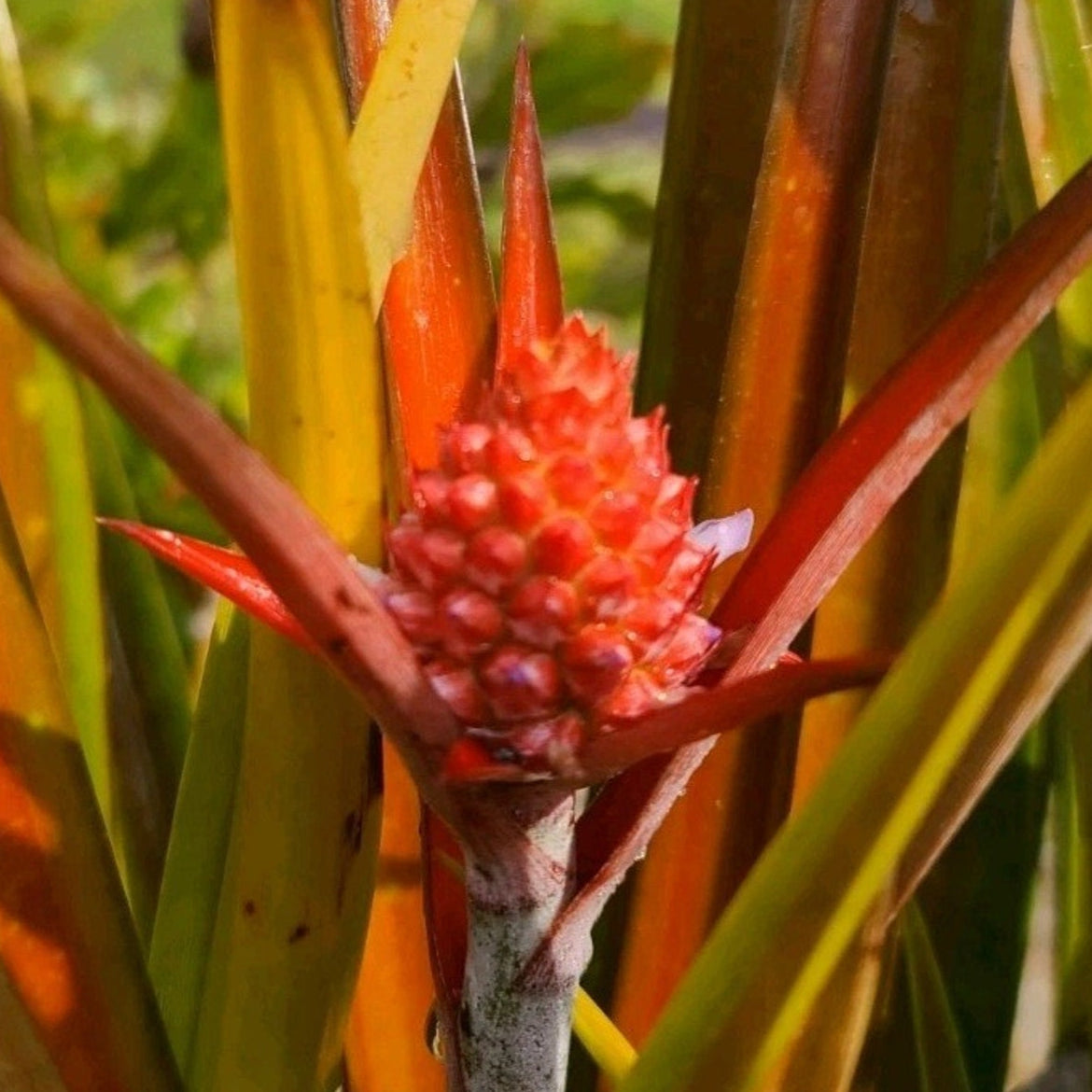
* Leaves: The Ornamental Red Pineapple has long, narrow, arching leaves that are typically green with tinges of red or purple, especially when exposed to more sunlight. The foliage has a spiky, sword-like shape, giving the plant a distinctive, tropical look. The edges of the leaves may be slightly serrated or spiny, adding to its ornamental appeal.
* Flowers: The plant’s flowers are small, tubular, and typically pale pink to lavender in color. These blooms emerge from the central rosette of the plant just before the fruit begins to develop. While the flowers are not as showy as the fruit, they add a lovely touch of color before the fruit ripens.
* Fruit: The defining characteristic of the Ornamental Red Pineapple is its small, red, pineapple-like fruit. The fruit is typically 4–6 inches (10–15 cm) in length, and although it’s technically edible, it’s not commonly consumed due to its small size and tough texture. The vibrant red color of the fruit makes it a striking ornamental feature, especially when paired with the plant's attractive foliage.
----------------------------------------
Seasonal Interest:
* Spring/Summer: The Ornamental Red Pineapple is most active during the warmer months, with its flowers and fruit appearing in spring and summer. During this time, the plant is at its peak, with vibrant foliage and the iconic red fruit adding color to your garden or home.
* Fall/Winter: In cooler months, the plant enters a semi-dormant phase, with slower growth and reduced flowering. It will still retain its ornamental value with its evergreen foliage, making it an attractive addition to the garden or as an indoor plant during winter.
----------------------------------------
Care Instructions:
* Fertilizing: While the Ornamental Red Pineapple is relatively low-maintenance, it will benefit from occasional feeding. Use a diluted, balanced liquid fertilizer or a slow-release fertilizer formulated for bromeliads. Fertilize in spring and summer to encourage healthy growth and fruiting, but reduce fertilization in fall and winter when the plant is not actively growing.
* Pests/Diseases: This plant is generally pest-resistant but may occasionally attract aphids, mealybugs, or scale insects. To control pests, gently wipe the affected areas with a damp cloth or use insecticidal soap. Overwatering or poor drainage can lead to fungal issues, so it’s essential to avoid waterlogged conditions.
* Mulching: A light mulch layer can be applied around the base of the plant to help retain moisture and suppress weeds, especially in outdoor gardens. However, avoid piling mulch around the center of the rosette to prevent moisture buildup, which could lead to rot.
----------------------------------------
Uses in the Landscape:
* Container Plant: The Ornamental Red Pineapple’s compact size makes it perfect for container planting. It can be grown on patios, balconies, or windowsills, bringing a tropical flair to small spaces.
* Tropical Gardens: This plant is a great choice for tropical and subtropical gardens, where it can be used as a focal point in garden beds or as a border plant. Its colorful fruit and unique shape make it an eye-catching feature in any tropical landscape.
* Indoor Plant: In colder climates, the Ornamental Red Pineapple can be grown indoors as a houseplant. Place it in a bright, sunny spot, and it will thrive in a container, adding color and interest to your indoor space.
* Xeriscaping: Due to its low water requirements once established, the Ornamental Red Pineapple is a great option for xeriscaping and drought-tolerant gardens, especially in warmer regions.
----------------------------------------
Hardiness Zone:
* USDA Zones 10–11. Ananas bracteatus thrives in USDA Zones 10 to 11, making it suitable for subtropical and tropical climates. In colder regions, it can be grown as a container plant and brought indoors during winter. It is not frost-tolerant and will not survive freezing temperatures.
----------------------------------------
Special Features:
* Unique Red Fruit: The ornamental, red pineapple-like fruit is the plant’s signature feature, adding a striking visual element to the garden or landscape.
* Low Maintenance: Once established, the Ornamental Red Pineapple is easy to care for and requires minimal attention beyond regular watering and occasional fertilization.
* Tropical Appeal: With its spiky foliage and exotic-looking fruit, this bromeliad provides a true tropical aesthetic, even in non-tropical regions.
* Attracts Pollinators: The plant’s flowers attract bees and other pollinators, making it a beneficial addition to a pollinator-friendly garden.
----------------------------------------
The Ornamental Red Pineapple (Ananas bracteatus) is an eye-catching, low-maintenance plant that brings a tropical vibe to any garden or indoor space. With its vibrant red fruit, attractive foliage, and minimal care needs, it’s a perfect choice for gardeners seeking to add a unique and colorful plant to their collection. Whether grown in containers or in the ground, the Ornamental Red Pineapple is sure to be a striking focal point in your garden.
Shipping Notes
- Free Standard Shipping on $100+ Orders to the USA.
- Except Preorder products are shipped in 48 hours.
- Delivery to the USA:
- Standard Shipping : 3-10 business days
- If time is of the essence, please consider selecting expedited delivery for faster service.
Exchange/Return Notes
- We offer a 30-day return/exchange service after receiving.
- Final sale items are not eligible for returns or exchanges.
- To process your return/exchange, please contact us at [email protected]
- Please click here for more details>>> Return & Exchange Policy