SKU: 15034027163
succulent crassula ovata gollum

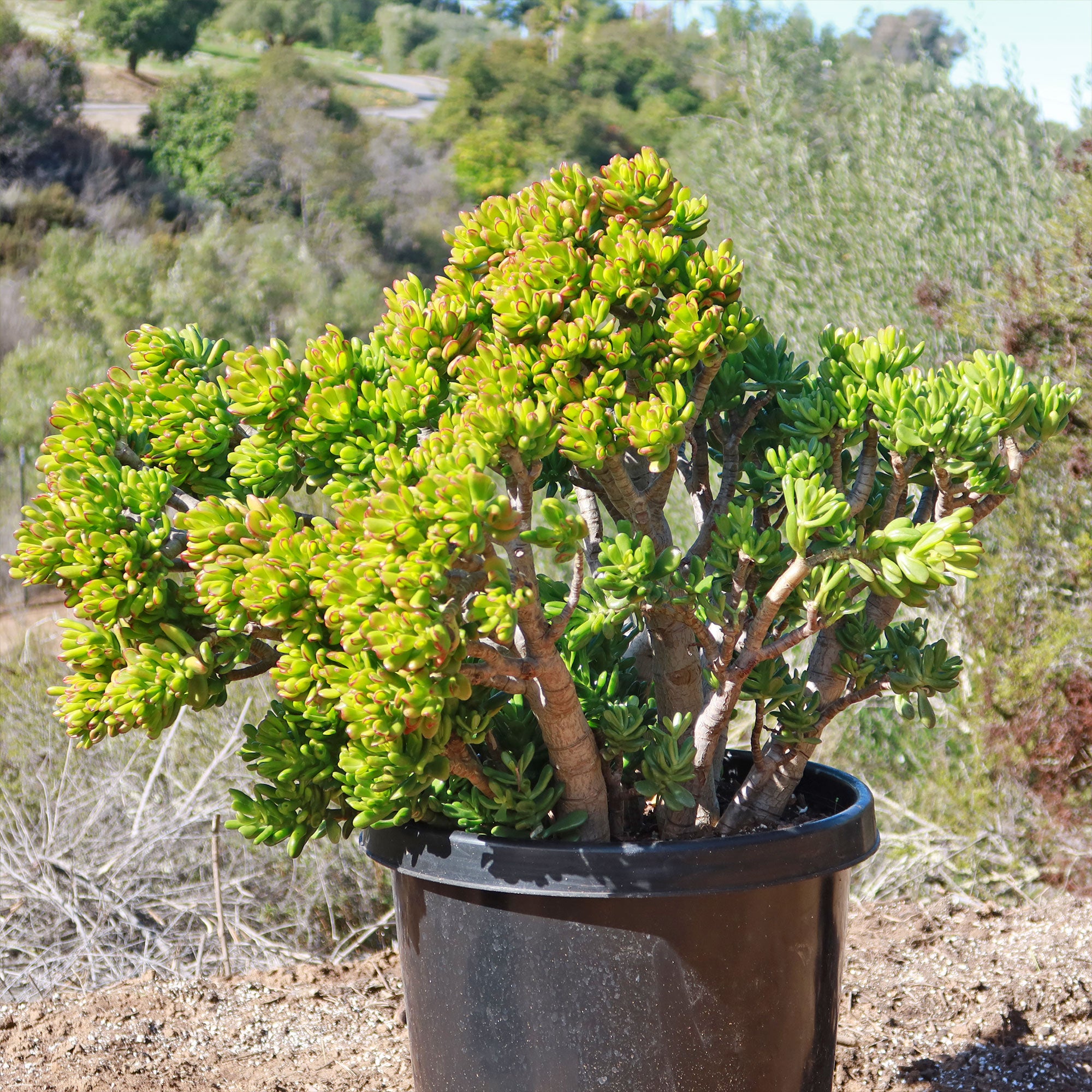
succulent crassula ovata gollum Jade Bonsai Tree

Sale price$25.97 Regular price$28.86
Save 10%

Pay in installments of $7.21 with ShopPay, AfterPay and Klarna

Shipping Estimate
USA
  • USA
  • CAN

Ships within 48 hours · Estimated delivery Sep 29 - Oct 4

Promo Codes Available:

For Your Every Summer RSVP, with Code: SUMMER15

Description

succulent crassula ovata gollum Jade Bonsai TreeIntroducing a stunning jade bonsai tree plant, also known as Crassula ovata 'Hobbit', similar to Gollum jade. It is a cultivar of the Crassula ovata species, originally from South Africa. This lovely plant goes by several common names, such as Hobbit Jade, Shrek's Ears, and Ogre's Ears. It's important to note that while Crassula ovata Hobbit is referred to as a "tree," it is actually a succulent plant that can develop a bonsai like base, giving it a

Introducing a stunning jade bonsai tree plant, also known as Crassula ovata 'Hobbit', similar to  Gollum jade. It is a cultivar of the Crassula ovata species, originally from South Africa. This lovely plant goes by several common names, such as Hobbit Jade, Shrek's Ears, and Ogre's Ears.

It's important to note that while Crassula ovata Hobbit is referred to as a "tree," it is actually a succulent plant that can develop a bonsai-like base, giving it a tree-like appearance. This adds to its unique charm and makes it a popular choice among bonsai enthusiasts.


The jade bonsai tree probably needs to be 10 gal minimum to start looking like a tree; ours is a15gal, which is why it has a more mature trunk and developed appearance compared to dwarf jade bonsai trees. The larger size allows for more intricate shaping and growth potential.

When cultivated as a small bonsai tree, this jade bonsai tree typically reaches a height of around 6-8 inches, showcasing a compact shape and bushy appearance.

However, when grown as a regular potted plant, it can grow up to 3 feet tall.  Imagine adding a rare and beautiful plant to your collection that develops into a woody, branching shrub that makes an excellent large bonsai tree.

If given the proper care, the jade hobbit plant can live up to 70 years. Although it grows slowly, adding only two inches to its height each year, this plant can grow to a maximum height of three to six feet. 

The jade bonsai tree boasts thick, fleshy leaves that are tubular and spoon-shaped, resembling the ears of characters from movies like "The Hobbit" or "Shrek." Its leaves have a glossy, jade-green hue, and when exposed to direct sunlight, they may develop reddish edges.

The flowers of this jade bonsai tree are pinkish-white, star-shaped, and bloom from late winter to late spring, making it a true showstopper. Although it typically does not bloom indoors, this jade succulent's green and white variegated leaves are attractive.

When and How to Water Your Hobbit Jade Plants

The jade bonsai tree is drought-tolerant by nature, and its fleshy, water-storing stems can hold a lot of water.  However, their root structure is easily susceptible to overwatering, so make sure that you don't overwater, as it can lead to root rot and fungal infections. The Hobbit Jade prefers watering once every 1-2 weeks in the growing season, and once a month in the dormant season.

The Crassula ovata hobbit prefers to be watered using the "soak and dry" technique. This involves thoroughly watering the jade hobbit plant before allowing it to completely dry out between watering sessions. 

Both potted and outdoor variegated jade hobbit plants should receive a deep soak once or twice a month during their growth periods, ensuring proper drainage so that the roots don't become waterlogged. Avoid watering your outdoor Crassula species when it's raining or during the winter months.

Light Requirements - Where to Place Your Jade Hobbit Plant

If growing indoors, place your Crassula ovata hobbit directly in front of a west- or south-facing window.

If they don't receive enough light, their stems may grow leggy and become paler, and their spines will shorten. So, make your jade hobbit plant happy and give it plenty of light.

When grown outdoors, providing enough light for these desert jade hobbit plant (Crassula ovata Hobbit) succulents is one of the most important aspects of their care.

It is important to grow your jade plants in areas that receive at least 4-6 hours of bright, indirect light daily to keep them happy. Under bright sunlight, bright red margins appear on leaves that are up to 2 inches long.

It's critical to remember that during a heatwave, during long periods of extreme heat, your jade hobbit tree could still sustain sun damage or get sunburned. You can protect the plant in this situation by moving it indoors or to a shaded area.

Optimal Soil & Fertilizer Needs 

The hobbit jade plants prefer sandy, well-drained soil, as excess moisture can promote root and stem rot. Planet Desert specializes in succulents and has a specialized succulent potting soil that includes an organic substrate with mycorrhizae to help with the growth of a healthy root system to help your Crassula ovata hobbit jade succulents thrive.

When it comes to fertilizing your jade hobbit plant, organic fertilizers with an equal mixture of 5-10-5 (NPK) once a year in the growing season (spring) will keep your soil alive. So, skip those harsh chemicals and give your hobbit jade succulent some love with some awesome organic fertilizer!

Hardiness Zones & More 

In the United States, this is mostly an indoor plant, but if you live in southern Florida or Hawaii, then you can cultivate it outdoors in USDA zones 9-11.

If you live in a colder climate, it's best to keep the bonsai indoors during winter or provide protection from frost.

When placing the Jade Bonsai Tree outdoors, choose a location that receives bright, indirect sunlight or partial shade. Avoid exposing it to direct, intense sunlight, as it can scorch the leaves. Additionally, ensure the soil has excellent drainage to prevent waterlogging.

How to Grow Best Indoors Jade Bonsai Tree

When it comes to indoor bonsai cultivation, the Crassula ovata hobbit prefers average room temperatures between 60-75°F. It can tolerate slightly cooler temperatures during winter, around 50-55°F, but avoid exposing it to freezing temperatures. The Jade Bonsai Tree is adaptable and can tolerate average indoor humidity levels. However, it appreciates a slightly more humid environment, especially during the dry winter months. To increase humidity, you can place a tray filled with water near the growing bonsai or use a humidifier.

Wildlife - Hobbit Jade Plant Attracts the Following Friendly Pollinators

The Hobbit Jade Plant is known to attract butterflies, bees, and hummingbirds due to its vibrant flowers and sweet nectar. These pollinators play a crucial role in the plant's reproduction and overall ecosystem health.

Butterflies
Bees
Hummingbirds
Lady Bugs
Multi Pollinators
Other Birds

Key Takeaways

  1. The curled, tubular leaves resemble little green fingers or trumpet-shaped tubes, which inspired its name ‘Hobbit’ after J.R.R. Tolkien’s mythical characters.
  2. Unlike the standard jade, the ‘Hobbit’ grows more compact and twisted, making it a naturally ideal candidate for bonsai without needing extensive shaping.
  3. In feng shui, it is considered a “money magnet” plant, and the unusual tubular leaves are thought to resemble fingers grasping prosperity.
  4. The tips of its tubular leaves can turn bright red when exposed to plenty of sunlight or cool night temperatures, adding seasonal color variation.

How to Propagate Your Crassula ovata 'Hobbit'

Crassula ovata 'Hobbit' can be propagated through stem cuttings or leaf cuttings. To propagate through stem cuttings, simply cut a healthy stem from the plant and allow it to callous before planting it in well-draining soil. Leaf cuttings can be taken by gently twisting a leaf from the plant and allowing it to dry out before planting it in soil.

Final Thoughts

Overall, the Jade Bonsai tree (Crassula ovata Hobbit) is a super cool plant with some awesome features. It's got these thick, succulent leaves that give it a unique and tree-like appearance. Crassula ovata Hobbit, often referred to as a "tree," is actually a succulent plant that can create a bonsai-like base, enhancing its unique charm and making it a popular choice among bonsai enthusiasts. Provide bright, indirect sunlight or partial shade, and use well-draining soil. Protect it from frost during colder months.

Shipping Notes
  • Free Standard Shipping on $100+ Orders to the USA.
  • Except Preorder products are shipped in 48 hours.
  • Delivery to the USA:
  1. Standard Shipping : 3-10 business days
  • If time is of the essence, please consider selecting expedited delivery for faster service.
Exchange/Return Notes
  • We offer a 30-day return/exchange service after receiving.
  • Final sale items are not eligible for returns or exchanges.
  • To process your return/exchange, please contact us at [email protected]
  • Please click here for more details>>> Return & Exchange Policy
SKU: 15034027163

Discover Niche Categories That Outsell succulent crassula ovata gollum

Top-Converting Item to Boost Your Average Order

4.0 ★★★★★
Based on 30 reviews
Sort
Highest Rating
Newest First
Oldest First
Product Reviews
A
Verified Purchase
A M Wells
Whiting, US
★★★★★ 5
What is silence? Something of the sky in us.
Format: Paperback
Maybe the best poetry collection I've ever read. I rarely enjoy an entire collection. I usually like individual poems or even individual lines within a poem. Deaf Republic is a masterpiece. If I ever meet Ilya Kaminsky in real life, I might cry.
WAS THIS REVIEW HELPFUL?YesReportShare
Reviewed in the United States on July 23, 2023
A
Verified Purchase
Allegra C.
San Leandro, US
★★★★★ 5
Worth the hype on NPR that led me here--I've found my new favorite book!
Format: Hardcover
As an Asian-American creative, I knew I'd love this when I first read a positive review for this online, and I was not disappointed once! The perspective is so unique--a Chinese girl in 1800s Georgia!--and the writing's mesmerizing. I wished this book could never end, and LOVED it for so many reasons: The quick version: -Have you ever read anything about Chinese-Americans living in the Reconstructionist South? Thought not. This book provides such a necessary historical lens into highly underrepresented people and untold stories--and does it with remarkable talent and grace. This alone is worth heavy consideration. -Jo is a protagonist you can't help admiring - she's witty, a nonconformist by circumstance and by choice, and unafraid of getting back a little (or a lot) at people who've done her wrong. -The narrative voice is unlike any I've ever seen before ("Mischief dangles from his smile") and there are great humorous moments. -Great pun one-liners here and there - even Yours Truly, who admits to hating puns, likes how they're done here. -A wonderful and dynamic supporting cast, including Jo's wry adoptive father, a socialite who reveals her cleverness with pepper, an enigmatic Southern Belle who becomes Jo's employer for the second time, and a stout-of-heart black boy that'll melt your cold dead heart. Also a very enthusiastic herding dog. -A climax that honestly almost moved me to tears from the poignancy, but also the deep symbolism of how Jo's actions come to stand for so, so much more in those several pages. -If you like to learn cool new words, you'll definitely learn a few by reading this. -On a personal note, I was ecstatic to find references to Chinese knotting and barley tea, which I've grown up with, but never encountered in print before. Stacey Lee isn't afraid to show how difficult it was to be Asian-American in post-Civil War Georgia: In the opening scene, Jo is fired from her job at a hat shop because of her ethnicity. Due to the Chinese Exclusion Act in effect at the time, Jo and her adoptive father are legally not US citizens and cannot even own land or rent; they're forced to live secretly as squatters in the basement of a family who prints a struggling local newspaper. We also see realistic depictions of other social issues, like the initial implementation of segregation laws (which confuses Jo and her father, as they're neither black nor white), the erecting of Confederate statues, calls for women's suffrage (as well as the emergence of modern bicycles) treated with derision by many women who think the idea foolish, and white suffragists rejecting black women who support their ideals. In all seriousness, get this book. If you have kids, get this for your kids. I rarely write book reviews, but I'm breaking the pattern because this novel is THAT good. Come for the incredibly unique historical perspective that's surely the first of its kind ever published and shines a spotlight on sorely underwritten stories. Stay for Jo's incredible strength, role model-ism, one-of-a-kind journey, and how her story reminds us all not just of the power of devastatingly clever puns, but the power that words give all of us in finding who we are and making the world a better place.
WAS THIS REVIEW HELPFUL?YesReportShare
Reviewed in the United States on September 25, 2019
J
Verified Purchase
Jamie McQuiston
Draper, US
★★★★★ 4
"Luck rides a horse named Joy"
Format: Kindle
What a delightful book! I was constantly rooting for the protagonist, Jo. She grew up without a true mother or father but found guidance and love with a Chinese man named Old Gin. They both found work with an aristocratic family as servants, while living secretly in the basement of a printing company. It was there that Jo learned to read and write through listening to the family who owned the printing press upstairs. She discovers the paper they publish, The Focus is in trouble and decides to help them out by secretly writing a column under the name Miss Sweetie. An adventure begins and secrets are revealed, but Jo emerges as a local hero as a result. I loved the author's prose and they way she incorporated Chinese anecdotes. I laughed out loud and cried in equal measure. It is a story about overcoming the struggle of race and poverty, but also about love and fighting for what you believe in. I highly recommend if your in the mood for something uplifting to read.
WAS THIS REVIEW HELPFUL?YesReportShare
Reviewed in the United States on May 14, 2021
N
Verified Purchase
Nicole @ Nicoles' Novel Reads
Lowell, US
★★★★★ 5
Excellent historical novel during the Gilded Age
Format: Hardcover
During the late 1800's Jo Kuan lives with her stand-in father, Old Gin, in a basement. She works as a milliner's assistant until she is let go one day because her employer deems that she is too opinionated and makes customers uncomfortable. However, there is one customer, Mrs. Bell, who admires Jo's craftmanship making intricate knots, which happens to be the lady who resides in the same residence as Jo. However, Mrs. Bell doesn't know Jo and Old Gin take refuge below the residence. Jo is given the opportunity to write as Miss Sweetie for the Focus's advice column when she sends an anonymous letter to the Bells. Miss Sweetie creates a huge buzz in her community. Jo anonymously writes articles regarding societal norms during the Gilded Age time period. What a great opportunity for someone who is "too opinionated." While she works as a lady's maid at the Paynes household during the day, she moonlights as Miss Sweetie at night. Stacey Lee tells a wonderful and insightful story of what it means to be Asian in the South of the United States in the late 1800's. I am always delighted to read historical fiction with characters I can relate to. I often wonder how life was for Chinese-Americans in the past. There is hardly any information about the history of Chinese-Americans living in the United States and how life was for them. Lee is one of my favorite historical fiction novelists. Her characters are relatable and I love being transported to a different time period and a different location every time I pick up one of her books. I absolutely love the voice of Jo. She is sassy but she knows her place. Jo is an advocate of women's rights and equality for all races. Being of Chinese descent, she teeters in between Whites and Blacks. It's hard to find a place in society, especially since there are not many Asian people living in the United States at the time. Most Chinese in the States at the time are men working on the railroad. Jo is longing to know more information regarding her parents. Who is her birth father? Who is her birth mother? Why was she given up? Jo is fortunate to have Old Gin raise her. The twist at the end caught me off guard for sure. Although Jo may feel out of place, she has Old Gin as her family. I also enjoyed reading how Jo finds solace in Sweet Potato and she finds friendship with Noemi. Jo even has a complex relationship with Caroline Payne, who can be very cruel. The Downstairs Girl shows readers a glimpse of the Gilded Age and what is it like to live as an Asian American during that time period. Jo defies the stereotype of Asian women being docile and quiet. Not only does she defy the stereotype for Asian women but she defies the gender stereotype of being a lady. Jo is quite capable of doing what a man does and she is quite outspoken. From writing in a newspaper to horse racing, Jo can do anything!
WAS THIS REVIEW HELPFUL?YesReportShare
Reviewed in the United States on September 11, 2019
G
Verified Purchase
G. R. Jack
Waukegan, US
★★★★★ 5
A story of someone who refuses to settle for less
Format: Hardcover
Stacey Lee takes you into a world you’re probably familiar with if you paid any attention in your U.S. History class and helps you see it in new ways. Most of us are familiar with the agonies of post reconstruction era South, but few stories shine a spotlight on the Chinese laborers who were shipped in by Southern plantation owners to replace emancipated slaves. This is the world seventeen-year-old Jo Kwan lives in. Much of Jo’s life is lived in secret. She can’t rent, let alone own, property, so she’s forced to live with her uncle in the basement of a white family who owns a failing newspaper. She can’t interact directly with the white patrons of the hat store because her boss says she makes the customers “uncomfortable.” She can’t even participate in the growing Suffrage movement because the women are only concerned with advancing the rights of white women. What’s a strong, opinionated girl to do? Start an advice column. She starts submitting columns to the paper under the pseudonym Miss Sweetie and immediately attracts attention, both good and bad, from Atlanta’s high society. Through the column, Jo finds her voice and an outlet to express views on her segregated and chauvinistic society. The more freedom she experiences, the more she wants and soon she is uncovering secrets of her past that threaten to ruin her. The Downstairs Girl never lets the reader forget how crushing life was for Chinese and Black Americans during this time, but the book isn’t a downer. Mostly this is due to Jo Kwan being such a spirited and sympathetic character. Her story is one of someone who refuses to settle for less and it’s fun watching her get the best of some of her antagonists. Lee’s writing is also witty and engaging, filled with the kind of southern colloquialisms that help transport the reader to this time and place.
WAS THIS REVIEW HELPFUL?YesReportShare
Reviewed in the United States on December 4, 2019

recommand products