Pay in installments of $6.09 with
 ,
,
 and
and

Shipping Estimate
USA
- USA
- CAN
- USA
- CAN
Ships within 48 hours · Estimated delivery Sep 25 - Sep 30
 Promo Codes Available:
For Your Every Summer RSVP, with Code: SUMMER15
Description
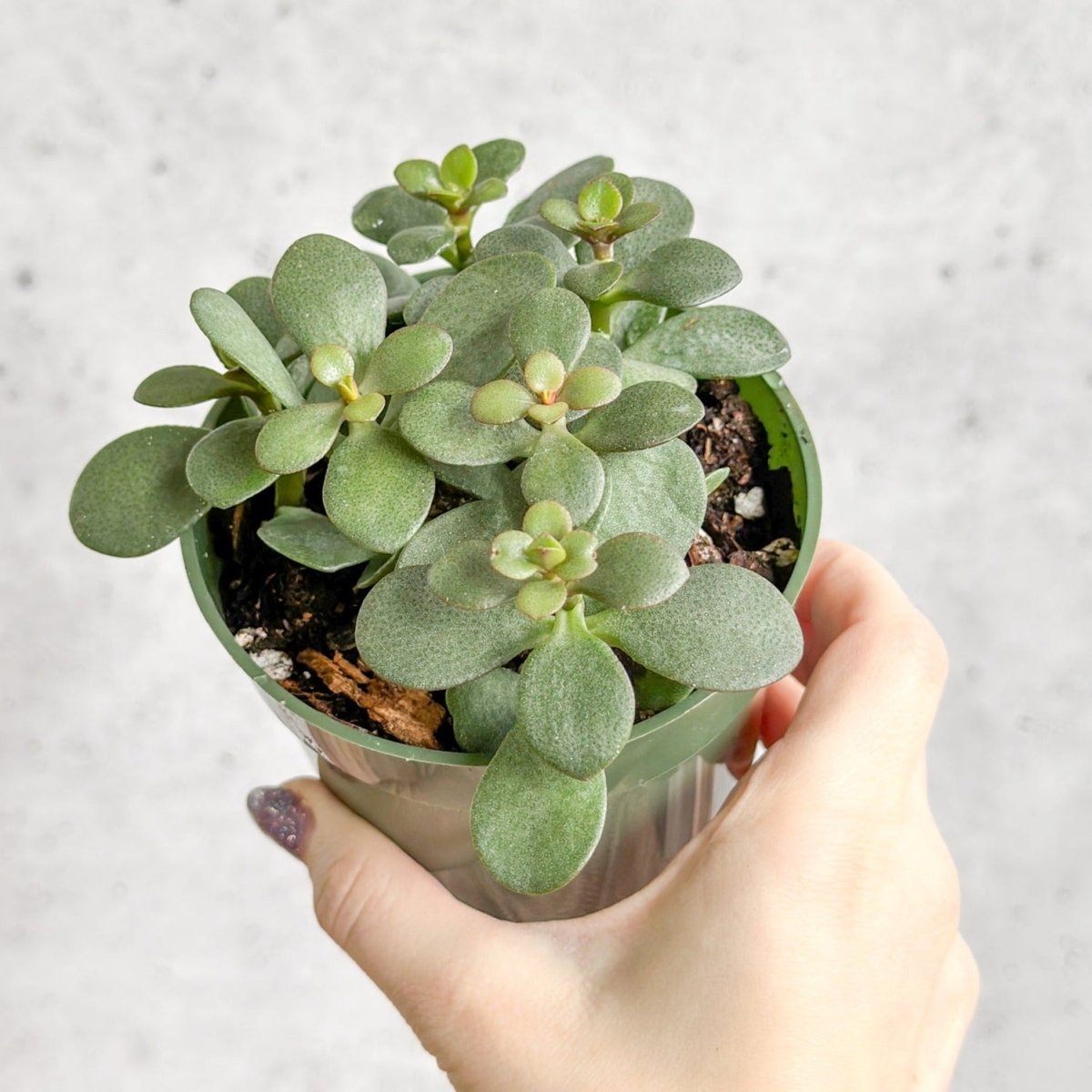
plant jade leaf Jade Plant (Crassula ovata) – Easy-Care Money SucculentProsperity in a Pot: The Resilient Jade Plant Crassula ovata (syn. Crassula argentea), known as the Jade Plant or Money Plant, features thick, glossy, water storing leaves that exude architectural elegance. Under bright light, its margins flush with pink to red, adding seasonal flair. Exceptionally drought tolerant and low maintenance, it brings longevity and positive energy to any indoor setting. Plant Profile Botanical Name: Crassula ovata (syn.
Prosperity in a Pot: The Resilient Jade Plant
Crassula ovata (syn. Crassula argentea), known as the Jade Plant or Money Plant, features thick, glossy, water-storing leaves that exude architectural elegance. Under bright light, its margins flush with pink to red, adding seasonal flair. Exceptionally drought-tolerant and low-maintenance, it brings longevity and positive energy to any indoor setting.
Plant Profile
- Botanical Name: Crassula ovata (syn. Crassula argentea)
- Common Names: Jade Plant, Money Plant, Friendship Tree
- Family: Crassulaceae
- Native Range: South Africa & Mozambique
- Mature Size: Up to 3 ft tall & wide indoors; easily pruned for compact displays
Care & Cultivation
- Light: Full sun to bright, indirect light; 4–6 hrs of direct sun encourages rosy leaf edges.
- Water: Water thoroughly when soil is completely dry; ensure excellent drainage to prevent root rot.
- Soil: Use a well-draining cactus/succulent mix or amend potting soil with perlite.
- Temperature: 65–75 °F (18–24 °C); tolerates down to 45 °F (7 °C) but not frost.
- Humidity: Low to moderate; average home humidity suffices.
- Fertilizer: Apply a balanced, diluted fertilizer (10-10-10 NPK) monthly during spring and summer.
- Pruning: Trim leggy stems to promote branching; remove spent leaves to maintain form.
- Propagation: Leaf or stem cuttings root in 2–4 weeks in a dry, well-draining medium.
- Pests: Monitor for mealybugs, scale, and spider mites; treat early with neem oil or insecticidal soap.
- Toxicity: Mildly toxic if ingested; keep out of reach of pets and children.
Why You’ll Love It
Jade Plants symbolize prosperity and friendship—ideal for gifting or as a focal accent. Their sculptural branching and glossy foliage enhance both minimalist and eclectic interiors.
Fun Fact
Jade Plants can live for decades and develop a thick, bonsai-like trunk, making them living heirlooms and conversation pieces.
History
Native to the dry regions of southern Africa, Jade Plants were collected by European explorers in the 18th century. In Asia, they quickly became tokens of wealth and good fortune, often displayed in homes and businesses.
Ready to Invite Prosperity?
Shipping Notes
- Free Standard Shipping on $100+ Orders to the USA.
- Except Preorder products are shipped in 48 hours.
- Delivery to the USA:
- Standard Shipping : 3-10 business days
- If time is of the essence, please consider selecting expedited delivery for faster service.
Exchange/Return Notes
- We offer a 30-day return/exchange service after receiving.
- Final sale items are not eligible for returns or exchanges.
- To process your return/exchange, please contact us at [email protected]
- Please click here for more details>>> Return & Exchange Policy