SKU: 24256754212
hanging plants turtle vine

hanging plants turtle vine Creeping Inch Plant

Sale price$22.14 Regular price$24.60
Save 10%

Pay in installments of $6.15 with ShopPay, AfterPay and Klarna

Shipping Estimate
USA
  • USA
  • CAN

Ships within 48 hours · Estimated delivery Aug 29 - Sep 3

Promo Codes Available:

For Your Every Summer RSVP, with Code: SUMMER15

Description

hanging plants turtle vine Creeping Inch PlantIntroducing the stunning Creeping inch plant, known as Callisia repens Gold, which is a miniature trailing plant that adds a touch of vibrant gold hues to any indoor or outdoor space. Belonging to the Bolivian Wandering Jew family, this variety of Callisia repens is also known as bolivian jew or turtle vine. Native to South and Central America, the creeping inch plant is a popular choice for hanging baskets, terrariums, or ground cover in gardens. The

Introducing the stunning Creeping inch plant, known as Callisia repens Gold, which is a miniature trailing plant that adds a touch of vibrant gold hues to any indoor or outdoor space. Belonging to the Bolivian Wandering Jew family, this variety of Callisia repens is also known as bolivian jew or turtle vine.

Native to South and Central America, the creeping inch plant is a popular choice for hanging baskets, terrariums, or ground cover in gardens.

The Callisia repens turtle vine has other varieties like the Pink Lady (Callisia repens variegated) and Pink Panther (Tradescantia Callisia repens), which are known for their beautiful pink foliage and trailing growth habit. 

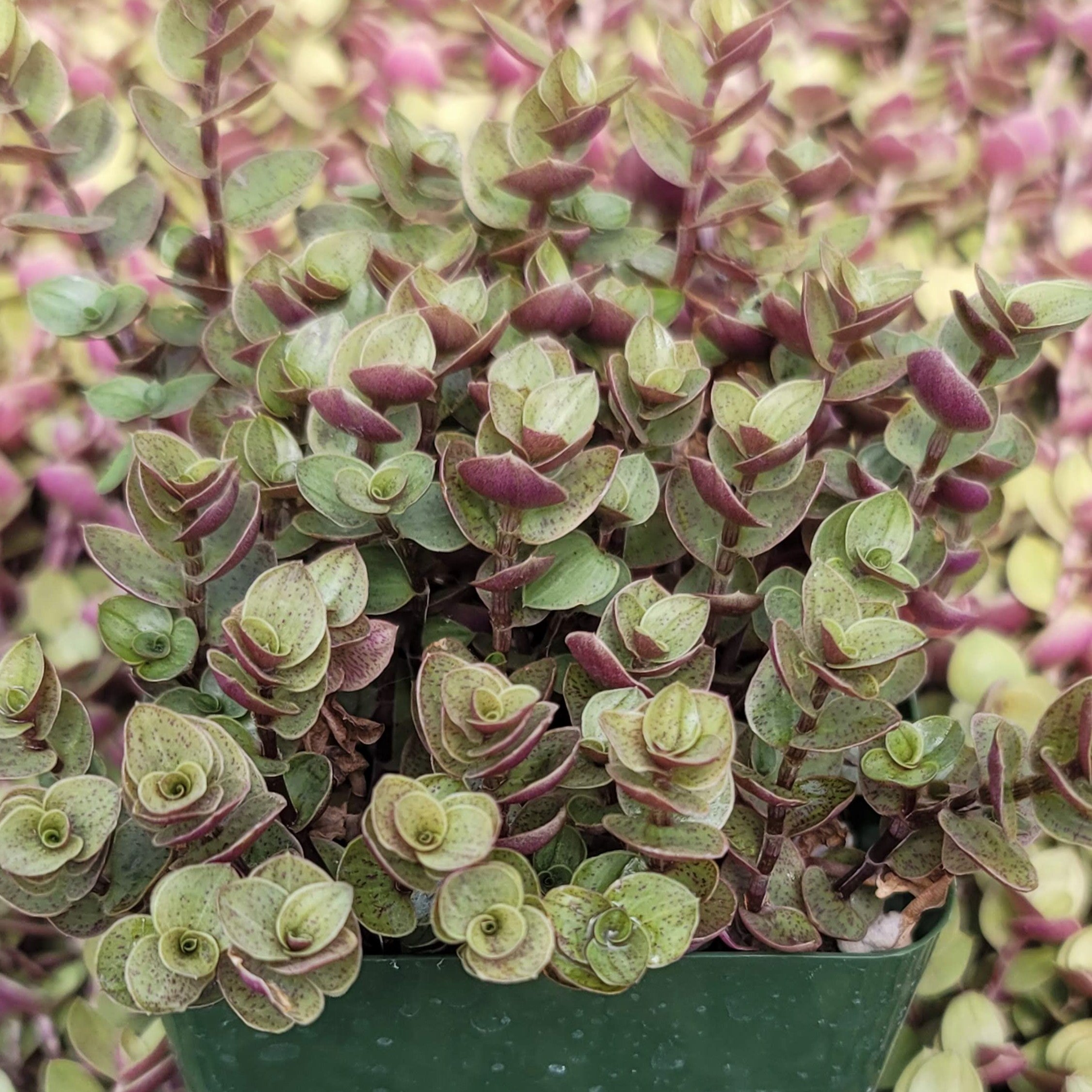
This creeping inch plant Callisia repens is characterized by its bright golden-yellow foliage, which stands out beautifully against its trailing stems. 

The stunning golden oval-shaped leaves contrasted with a pink or purple underside are a true show-stopper. It contrasts well with its purple stems.

Callisia repens planthas a typical bushy growth with trailing habit. It is a miniature plant that grows between 4 to 12 inches tall. 

The flowers of the creeping inch plant bloom during summer and fall with small white flowers. These flowers add a delicate touch to the creeping plant's overall appearance. So, along with its vibrant golden leaves, you can enjoy the occasional blooms of this lovely plant. 

When and How to Water Your Creeping Inch Plant

Like other Callisia repens varieties, the creeping inch plant does not need too much water. The best way of Callisia repens  gold is to water it adequately when the soil is completely dry. It's important to strike the right balance to keep this beautiful creeping inch plant happy and healthy. 

As a general rule, it's best to keep the soil evenly moist but not overly saturated. Overwatering can lead to root rot, so it's crucial to allow the top inch of soil to dry out between waterings. Gently press your finger into the soil to measure the moisture content. It's time to water if it seems dry. 

In the spring and summer, during the drowing season, your creeping inch plant Callisia repens gold prefers consistent moisture. During warmer months, you may need to water more frequently, while in cooler months, you can reduce the frequency.

Light Requirements - Where to Place Your Creeping Inch Plant 

If you are growing Callisia repens indoors, placing it near a window in partial shade or in a well-lit room would be ideal. An essential aspect of creeping inch plant care is that it should be placed in a place where it is exposed to bright but indirect or filtered sunlight. It thrives in a spot with moderate to high light levels, but direct sunlight should be avoided as it can scorch the leaves. 

When grown outdoors, the creeping inch plant can handle partial shade to full sun, but it prefers bright, indirect light or dappled sunlight.

Find a spot that receives 4-6 hours of morning or late afternoon sun, while providing some shade during the hottest part of the day. This will help prevent the leaves from burning or drying out.

If you notice that your creeping inch Callisia repens leaves start to lose their vibrant golden color or become pale, it may be an indication that it needs more light. On the other hand, if the leaves start to turn brown or develop sunburn spots, they may be getting too much direct sunlight. 

Pro Tip

Callisia repens is suited for outdoor cultivation only in specific regions like southern Florida and Hawaii, where the warm, tropical climate matches its needs. In all other regions, it thrives best as a charming indoor houseplant.

Additionally, make sure to rotate your Callisia repens occasionally to ensure even growth and prevent it from leaning toward the light source. These creeping inch plant care tips will help to maintain its compact and trailing form. Providing this Callisia repens gold with the right amount of light will contribute to its overall health and enhance the beauty of its golden foliage. 

Optimal Soil & Fertilizer Needs 

To keep your creeping inch plant Callisia repens Gold happy, you'll want to provide it with well-draining soil and the right kind of fertilizer. It is best to use a succulent potting mix for the Callisia repens plant. Planting them in ordinary soil will result in compacted roots, stunted growth, and most likely root rot. Instead, make or buy a well-draining potting mix, or ideally use our specialized succulent potting mix that contains 5 natural substrates and mycorrhizae to promote the development of a strong root system that helps your succulent to thrive. 

When it comes to fertilizing your creeping inch plant, you can use a balanced (5-10-5), water-soluble natural NPK fertilizer. Feed your Callisia repens once a year during the growing season in the spring. During the dormant season (fall and winter), you can reduce or even stop fertilizing, as the plant's growth slows down. Always remember to water your inch plant before applying fertilizer to avoid any potential root burn. 

Hardiness Zone & More 

The creeping inch plant is typically grown indoors as a houseplant. Native to tropical regions of North and south America, it is not frost-hardy and prefers temperatures between 65-75°F. This Callisia repens thrives in average room temperatures and can tolerate slightly cooler temperatures, but it's best to avoid extreme temperature fluctuations.

For outdoor cultivation, your Callisia repens gold, is generally hardy in USDA zones 10-11, only in specific regions like southern Florida and Hawaii, where the warm, tropical climate matches its needs.

If you live in a colder climate, it's recommended to keep your creeping inch plant indoors in a hanging pot or provide it with protection during colder months. 

In terms of humidity, the gold creeping inch plant prefers moderate to high humidity levels. You can increase humidity by placing a tray of water near your turtle vine plant or by using a humidifier. Misting the leaves with water can also help create a more humid environment. 

Remember to monitor the temperature and humidity levels to ensure the optimal conditions for your gold creeping inch plant's growth and well-being. 

Wildlife - Creeping Inch Plant Attracts the Following Friendly Pollinators

The creeping inch plant has small yet vibrant blooms that attract several friendly pollinators, making it an excellent choice for pollinator-friendly gardens. Bees, butterflies, hummingbirds, and other beneficial insects are commonly seen visiting the flowers, helping to support biodiversity and maintain the ecosystem balance. Whether planted in pots, hanging baskets, or ground covers, this plant invites these vital pollinators to your outdoor spaces.

Butterflies
Bees
Hummingbirds
Lady Bugs
Multi Pollinators
Other Birds

According to the ASPCA, the creeping inch plant is mildly toxic to cats, dogs, and horses if ingested in a large amount. It contains compounds that may cause skin irritation or gastrointestinal upset, such as vomiting or diarrhea, in pets. For pet owners, keeping the plant in elevated spots or using hanging baskets can help ensure both your plant and furry friends remain safe.

How to Propagate Your Creeping Inch Plant

To propagate a creeping inch plant, start by selecting a healthy stem with at least a few nodes. Using clean scissors or pruning shears, cut a stem just below a node, as this is where roots will form. Remove the lower leaves to expose the nodes and either place the stem directly in water or plant it in moist, well-draining soil. If propagating in water, ensure the nodes are submerged, and roots should appear within a week or two. For soil propagation, keep the soil consistently moist but not soggy, and place the cutting in bright, indirect light. Once roots are established, the new plant can be potted or planted in its desired location. This easy process makes the creeping inch plant perfect for beginners or those looking to expand their indoor or outdoor plant collection.

Key Takeaways

  1. In the United States, the creeping inch plant is primarily grown indoors due to its sensitivity to colder temperatures. However, it can thrive outdoors in regions with milder climates such as Southern Florida and Hawaii.
  2. The creeping inch plant showcases a low-growing, trailing habit, making it perfect for ground covers, hanging baskets, or cascading from planters in both indoor and outdoor settings.
  3. Its hardy, fleshy leaves retain moisture, enabling the plant to thrive in drought-prone conditions with minimal watering.
  4. The ‘Gold’ variety is known for its eye-catching golden and green variegation, adding a pop of color and visual interest to rock gardens, xeriscaping projects, and modern interiors.
  5. Adaptable to a wide range of light conditions, from bright indirect light to partial shade, this plant is a low-maintenance choice for beginner gardeners and plant enthusiasts alike.

Final Thoughts

Overall, the creeping inch plant (Callisia repens gold) is a lovely and versatile houseplant that can bring a touch of greenery and beauty to any space. With its trailing stems, vibrant golden leaves, and easy care requirements, it's a popular choice among plant enthusiasts. Additionally, being mindful of minimal watering, and optimal light, and providing proper drainage can help prevent fungal diseases and promote healthy growth. Callisia Repens 'Gold' is a highly recommended plant for those without a green thumb or those seeking a unique creeping basket plant to their collection because of its stunning coloring, and fast growth. 

Don't miss out on adding the Callisia repens Gold - Creeping inch plant to your garden! Order now and enjoy its beauty for years to come.

Shipping Notes
  • Free Standard Shipping on $100+ Orders to the USA.
  • Except Preorder products are shipped in 48 hours.
  • Delivery to the USA:
  1. Standard Shipping : 3-10 business days
  • If time is of the essence, please consider selecting expedited delivery for faster service.
Exchange/Return Notes
  • We offer a 30-day return/exchange service after receiving.
  • Final sale items are not eligible for returns or exchanges.
  • To process your return/exchange, please contact us at [email protected]
  • Please click here for more details>>> Return & Exchange Policy
SKU: 24256754212

Discover Niche Categories That Outsell hanging plants turtle vine

Top-Converting Item to Boost Your Average Order

4.2 ★★★★★
Based on 19 reviews
Sort
Highest Rating
Newest First
Oldest First
Product Reviews
D
Verified Purchase
D. Alexander
Massapequa, US
★★★★★ 5
Buy this one, forget the rest
This is one of the most powerful handheld electric blowers available. If you're serious about getting the job done quickly, this is the baseline. The next power tier is a gas backpack blower at five times the cost, then an even more powerful backpack, and then four-digit specialty tools from companies like Billy Goat. I bought the Worx because I didn't want to spend three hours raking a half-acre of grass. My trial run was an hour of continuous use with matted wet leaves and driveway sand. It fast became apparent that to be efficient, a blower has to move leaves without being on top of them. Blowing from six inches just makes everything scatter as piles build up. You end up crisscrossing the section you just cleared to deal with the strays. The further your breeze carries, the more direct the flight path of the leaves. This range, and the ability to scour stubborn leaves from the ground, comes from air speed (MPH). At the same time, though, you need a big enough wall of air to move more than one leaf at once. That comes from the size of your pipe opening. The two multiplied together determine your total air volume over a duration, or CFM (cubic feet per minute). In physics-land (with spherical cows and turbulence-free pipes, spared from the icy hand of marketing), CFM is the best measure of a blower's work capacity. MPH, you can change by varying the size of the pipe; a smaller pipe makes a smaller column of air moving at a faster speed (and more impressive advertising), which is why a lot of consumer-class blowers have tiny nozzles. (I'm looking at you, Sun Joe SBJ601E.) But there's a cost to adding MPH: it kills efficiency. The energy to move a volume of air goes up with the square of speed, so if you design your blower for 160 MPH, you'll get half the CFM of a 110 MPH blower from the same power. Something to mull if the blower is powered by a battery. Still, if you know either speed or CFM, and the size of the pipe, you can calculate the other (assuming the manufacturer isn't misleading you by quoting CFM at the fan and MPH at the end of the pipe). To get CFM from MPH and the radius of a round pipe, the calculation is (radius^2)*(mph)*(1.92). That's (1.69^2)(110)(1.92) for this blower's 110 MPH and 3 3/8" pipe, with the result arriving right at the rated number of 600 CFM. Anyway, the Worx has enough volume and speed to blow mounds of wet leaves from six feet and dry ones from ten or more. It's impressively powerful. I was switching arms every few minutes as they wore out from the backward force. Only some really baked-on mud would have benefited from a pipe-reducer attachment. Thanks to ape-like proportions or the secure fit of my spandex leaf-blowing onesie, clothing suction from the rear-directed air intake hasn't been a bother. ALTERNATIVES: I almost bought Toro's highly-rated "Ultra" combination blower to minimize bagging, but the vacuum functionality didn't seem that useful in videos. Maybe it'd be adequate to clean an enclosed deck area or a small yard with a scattering of dry leaves. For a larger yard, it looks like a time sink relative to a standalone mulcher. Likewise the blowing capacity, which, at 410 CFM, trails the Worx by quite a lot. Cordless tools were also tempting. There's a 20V DeWalt people seem to like that's rated at (a perhaps optimistic) 400 CFM. Because it's a similar fan design to the Worx, we can compare power directly. DeWalt's standard battery is 20V (or so we'll stipulate; it's closer to 18V under load) and 5 amp-hours, so we're looking at 100 watt-hours total output. 15 minutes of runtime translates to a sustained draw, best case, of 400W. Assuming 90% efficiency in the brushless motor, that's 360W actually moving air. (When new. Expect a performance drop over time and battery replacements by year three.) Compare this Worx: 12 amps at 120V equates to 1440 watts sustained, in this case feeding a 2-pole AC/DC motor that's perhaps 55% efficient. 12A is close to the maximum a device can reasonably expect from a typical 15A household socket. Even with nearly half of our power lost to heat and noise, the remaining 790W is over double what the DeWalt can manage. It's no coincidence that 600 CFM cordless blowers (Greenworks and Kobalt come to mind) have 80V/2.5Ah batteries with twice the DeWalt's capacity. Their runtime at full tilt? The same fifteen minutes, with three extra pounds to lug around from a chunk of lithium that costs more than the blower it attaches to. And what of gas blowers? The handheld versions have around 1 HP with CFM from 450 to 500. They're usually tuned for higher MPH than the Worx, so they're likely to be a little better with wet leaves and a little worse with dry ones. Backpack blowers up the displacement and make between 1.5 and 5 horsepower. The models that you might find on the back of a professional landscaper can manage nearly 1000 CFM with speeds around 200 MPH. That's a considerable difference, but you pay for it at the checkout and in weight: figure 10 pounds or so for a handheld (relative to 7ish for this unit, plus some cord) and 20 or more for a backpack. As of mid-2020, two other corded blowers are worth a hard look: Toro's F700 and Worx's WG521. The Toro arrived first in 2019 with a hefty 720 CFM rating, a bigger two-arm handle, and a better cord retention mechanism. The WG521 is the response: 800 CFM and 135 MPH (claimed) from a ~4" nozzle, albeit still intended for one arm. All three blowers are beastly and often close in price; pick whichever best channels your inner Tim Allen. ACCESSORIES: A motor this powerful benefits from a thick (low gauge) cord for longer runs. You lose a bit of performance with thinner cord. The generic orange 50-foot extension everyone has is 16-gauge. Feeding a 12A load for 50 feet, it'll have a voltage drop of about 5V. Heavier 14-gauge loses 2.5V on the same run, and industrial 12-gauge, only 1.5V. The scale is linear, so if you double up that 16-gauge cord for a 100-foot run, you'll lop off 10V. How's that play out here? From a short and fat cable (that the cheesy plastic strain-relief piece won't actually accommodate; just tie an overhand knot over the two plugs instead), we'd expect a 1440W draw (12A * 120V, or a bit less because the house wiring itself has some drop). Losing 5V drops the total to 1380W. That's about what I found when I tested the Worx with a watt meter. 12ag / 3 ft = 1423W 14ag / 100 ft = 1352W 16ag / 50 ft = 1351W 16ag / 50 ft + 14ag / 100 ft = 1280W With the progressive thumb dial at the lowest setting, minimum draw was 260W. For shorter runs, disconnect extensions you don't actively need. Every cable sheds a percentage of the energy it carries to heat. As above, skinny cables lose more. Coiled on the ground and coupled with a high-load device like the Worx, they can build up enough heat to start melting insulation, which tends to cause sheepish expressions and insurance claims. This blower is also loud enough to merit hearing protection. On an A-weighted scale (approximating human hearing), measured outdoors from three feet, it makes 82 dB on low and 91 dB on high. Indoors or near a wall, volume jumps by 10 dB and subjectively doubles. While the sound character emulates a vacuum, my Shark only measures 72 dB indoors; you'd have to run over a rat's nest of lamp cords to make one this loud. Amazon has a number of comfortable muffs for less than a Jackson that'll keep your ears intact. You can find electric blowers with more toys, but few that'll get the job done as fast as this one. It's a bargain at the asking price. I'll update if I catch any reliability problems.
WAS THIS REVIEW HELPFUL?YesReportShare
Reviewed in the United States on December 1, 2016
R
Verified Purchase
R. Klein
Waukegan, US
★★★★★ 5
Light, and easy to use for blowing leaves
I bought this in the fall of 2025, and found it very easy to use. I also have a Toro blower/vac, that I use to grind up leaves in the fall. While this appliance is only good for blowing leaves, it does a good job of it. It's quieter than the Toro, and considerably lighter in weight. I find it much less fatiguing on the hand than the Toro. It has multiple speeds, so is versatile. You don't ALWAYS want maximum wind from these things, depending on the job and the space. The weight, comfortable handle, balance, and lower noise are the top advantages to this machine. Because this is a corded model, there's no concern over battery life. You can blow the afternoon away without a care. Only time will tell when it comes to durability. 🤞🏻
WAS THIS REVIEW HELPFUL?YesReportShare
Reviewed in the United States on January 13, 2026
T
Verified Purchase
Teng Ma
Carnegie, US
★★★★★ 5
Great Power for the Price
Really impressed with this blower. It’s lightweight, easy to handle, and has plenty of power to clear grass and leaves quickly. Perfect for quick yard cleanups. Definitely worth.
WAS THIS REVIEW HELPFUL?YesReportShare
Reviewed in the United States on April 18, 2026
O
Verified Purchase
Over and Under
Boise, US
★★★★★ 5
The Black and Decker BESTA510 is a KEEPER plus it's made in the USA 🇺🇲
Style: String Trimmer
Well folks🙂 I have to tell you this has been a nice weed eater that cuts really good and it's LIGHTWEIGHT and it's powerful👍 and at a PRICE that can't be beat...it's way more powerful than some battery and electric weed eaters that I have.. like a Ryobi... And supposedly a commercial grade Ryobi $200 😤.. Anyway 🙂 This electric weed eater is very good and I'll take that PEPSI challenge any day 😀 when comparing it to some other weed eaters PLUS it doesn't USE LINE like other electric weed eaters that I've used.. at least that's been my experience.. This is a KEEPER weed eater from Black & Decker👍....it handles tall grass and even some hedge... though it probably shouldn't be used for hedge but it's TOUGH 😀 and better than any battery weed eater I used especially with the power and cutting... The power alone and convenience of NOT rushing through the job with the battery pack and charging ect imo is worth the cord drag 🙂... and much better than a battery weed eater or other electric weed eaters.. This just cuts better 👍... With MORE power consistently and constantly through the whole job... So in conclusion 🙂 the Black & Decker BESTA510 weed eater in my opinion is a KEEPER and this model has been around for a while which speaks for itself not to mention Black & Decker has been around for years.... This weed eater OVERALL (pound for pound ) is a solid performer with many mostly liking this weed eater and Black & Decker products overall.. Thanks for reading🙂.. I hope my review helps... and Did I mention It's made in the USA...🇺🇲..🙂...
WAS THIS REVIEW HELPFUL?YesReportShare
Reviewed in the United States on September 6, 2025
L
Verified Purchase
Lucas B Hager
Chelsea, US
★★★★★ 5
No problems all the way to the end of the spool
Style: String Trimmer
I had an old Greenworks string trimmer that I found in the basement after I moved into my new home. Maybe it was just old, but the auto-feed didn't work well, the line was always running out, and I spent more time rewinding the spool than cutting down weeds. I had almost lost my faith in string trimmers entirely. You can spend $300 on one, but how much better are they? I didn't know. This Black & Decker was only $50, and although it's corded, my roommate convinced me it was worth not having to do the dance of recharging batteries, plus having full 110v power. Some (easy) assembly required out of the box, and this thing was basically plug & play. I did read through the owner's manual first, which gave amateur me some confidence through a few helpful tips. I use it not only for cutting down weeds, but also for cleaning out weeds from the cracks in my sidewalk, and the edger wheel is very helpful for that. More importantly, the line had no problems all the way to the end of the spool. Faith restored, there are good string trimmers in the world. That being said, be aware that the line it comes with isn't very long. My lawn is medium-size, and it ran out about halfway through. The Black & Decker replacement spools are $10 / 30 ft (much longer), but it goes through line, so this could really add up. Replacing the spool was easy, and I was able to finish my lawn with plenty line to spare. A quick search on Amazon reveals off brand spools at $15 / 12-pack. I haven't tested them yet, but the price difference is so great that I'm going to give them a chance.
WAS THIS REVIEW HELPFUL?YesReportShare
Reviewed in the United States on August 19, 2023

recommand products