Pay in installments of $7.07 with
 ,
,
 and
and

Shipping Estimate
USA
- USA
- CAN
- USA
- CAN
Ships within 48 hours · Estimated delivery Sep 30 - Oct 5
 Promo Codes Available:
For Your Every Summer RSVP, with Code: SUMMER15
Description
plastic trellis for climbing plants Common Culture Plastic Trellis Netting Bulk Roll 6.5 ft x 4,920 ft w/ 6 in Squares + Trojan 2 Inch Straight ScissorsCommon Culture Plastic Trellis Netting Bulk Roll 6. 5 ft x 4,920 ft w 6 in Squares + Trojan 2 Inch Straight Scissors The Common Culture Plastic Trellis Netting is the ultimate solution for supporting climbing vegetables, heavy crops, and decorative plants. With dimensions of 6. 5 ft x 4,920 ft, this trellis netting provides a vast area to cultivate a lush garden or efficient commercial crop. Made from a resistant, lightweight thermoplastic material,
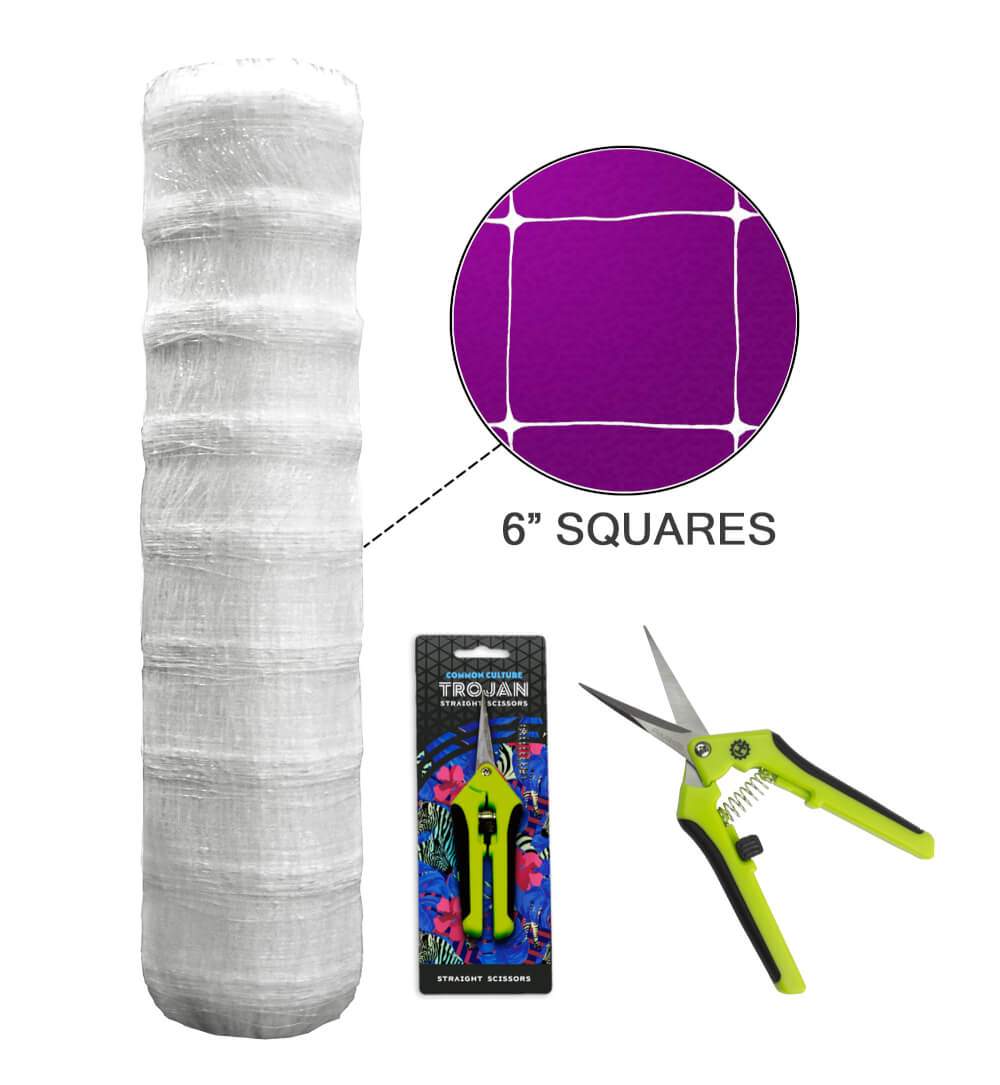
Common Culture Plastic Trellis Netting Bulk Roll 6.5 ft x 4,920 ft w/ 6 in Squares + Trojan 2 Inch Straight ScissorsThe Common Culture Plastic Trellis Netting is the ultimate solution for supporting climbing vegetables, heavy crops, and decorative plants. With dimensions of 6.5 ft x 4,920 ft, this trellis netting provides a vast area to cultivate a lush garden or efficient commercial crop. Made from a resistant, lightweight thermoplastic material, it's designed for durability in all types of growing environments.
The 6-inch x 6-inch reach-through mesh offers numerous benefits:
- Durability: The high-density polyethylene construction is chemical resistant, UVA stabilized and can withstand challenging weather conditions, ensuring long life.
- Support: Its heavy-duty design allows it to handle more weight, remain taut, and provide robust support for growing crops.
- Protection: The netting not only supports growth but also shields plants from ground rot, insects, rodents, and other potential threats, resulting in bigger, healthier, and earlier harvests.
- Versatility: Perfect for a wide range of plants including tomatoes, beans, grapes, clematis, sweet peas, and other vining plants.
Common Culture Trellis Netting Features:
- 6" Mesh
- 6.5' (78") wide x 4920' long
- Made from high-density polyethylene
- Chemical resistant and UVA stabilized for long life
- Reduces damage from ground-rot, insects, rodents, and garden pests
- Produces bigger, healthier, and earlier harvests
- Rot and rustproof
- Increases harvest from small garden spaces and keep produce clean
- Trellis netting rolled in bulk commercial size for easy application
- Ideal for tomatoes, beans, grapes, clematis, sweet peas, and other vining plants
6.5' x 4,920' trellis netting is made to be used in growing operations of all types and sizes including indoor, outdoor, and greenhouse. Common Culture trellis netting is made specifically for serious cultivators. The plastic is durable and can withstand high humidity, temperatures, and intense direct sunlight including UV and IR wavelengths. Common Culture trellis netting can be used in both horizontal, vertical, and any orientation in between.
Using Trellis Netting Horizontally
When using Common Culture trellis netting horizontally in layers, it is best to allow plants to grow up through the trellis netting and be supported without the need to monitor growth and to continually handle the plants and tie them to supports or stakes. Common Culture trellis netting is amazing for any commercial crop that needs training for types of cultivation methods such as sea of green, SCROG, super cropping, and more.
When installed horizontally in layers, Common Culture trellis netting encourages better air circulation limiting powdery mildew, improves exposure to the sun, and optimizes canopy area. When applied horizontally over plants, the trellis netting provides perfect stem support for heavy-yielding plants.
Installing Trellis Netting Horizontally
To install the Common Culture trellis netting horizontally for larger crops such as tomatoes or hemp, where you would need only 1 or 2 layers, you could install the netting over a polytunnel or a similar frame and allow the plant to grow through the netting. If you are growing on rolling or fixed tables, we recommend getting posts on the extremities of your tables and securing the trellis netting to those posts via zip ties.
For smaller plants such as flowers, you need several layers of trellis netting that are closer together. Start by putting four wood or metal posts in the ground. The first two should be placed in the ground the width of your netting, the second 2 should be placed 6' - 20' away (2 to 6.5 meters). The height of the posts will depend on what you are growing.
Next screw or bolt wooden cross bars between posts 1 and 2 and also between posts 3 and 4 at the different heights you are going to space your layers of trellis netting support. This will depend on how tall you intend to grow your plants.
Next, attach your trellis netting to the cross bars by wrapping them around the cross bar and then tying string or zip ties around the trellis netting and cross bar to hold in place.
Next, unroll the trellis support netting and attach it to the cross bars between posts 3 and 4. You can continue the row by putting support posts and cross bars every 20' (6.5 meters) apart and make the layer as long as you want. Then do the next layer the same way.
You may be advised to strengthen the edges with monofilament or string to stop the edges from sagging. Your plants should now be very well supported as they grow up through between the layers.
Using Trellis Netting Vertically
Common Culture trellis netting can be used for vertical support that is ideal for growing vegetables, flowers, and fruits that need support like peas, tomatoes, hemp, pole beans, and cucumbers because the plants attach easily to the net with no additional tying necessary. This vertical use of trellis netting is a technique that provides greater exposure to air circulation (reducing powdery mildew and spore buildup), and sun, and reduces ground contact which can result in rotten crops.
Using trellis netting increases plants' exposure to air and light, maximizes available space to increase plant canopy, and reduces ground contact, thus minimizing spoilage due to mold, bacteria, and fungi. Common Culture trellis is white, UV-resistant, lightweight polypropylene mesh designed to be economical and sturdy. Common Culture trellis netting is strong, easy to install, will not rot, rust, or mold, and lasts for years.
Installing Trellis Netting Vertically
To install Common Culture trellis support netting vertically, make sure you have support posts approximately every 20 to 25 feet (6 to 7.5 meters). Next attach Common Culture trellis netting to the posts using rope, twine, zip ties, or screws. Then snake a support cable such as monofilament support wire (available separately) or other strong cable or string through the netting at the top to support the trellis netting. Lastly, tie your plants to it as they grow. If you're growing large outdoor plants, we recommend using bamboo stakes or metal takes around your plant and then snaking our trellis netting within those stakes. You can then train the branches of your plant to get more exposure to sunlight.
Common Culture Plastic Trellis Netting 78" x 4920' is the most effective and economical way to support climbing vegetables and heavy crops using its versatile polypropylene mesh. Common Culture Plastic Trellis Netting 78" x 4920' is a resistant but lightweight trellis between and over gardens, flower beds or hydroponic systems. Common Culture Trellis Netting 78" x 3280' facilitates the desired growth form of lush vegetables, rich foliage, and beautiful flowering plants. Theromoplastic product subject to +/-5% variations in size. Extruded and stretched in hot water, roll may contain moisture and condensation which affect neither the product nor the crop.
Due to its durability and practical nature, Common Culture Trellis Netting is being used by many agriculturalists and floriculturists. Common Culture Trellis Netting works extremely well for a variety of growing techniques, both vertical and horizontal. It is easy to handle, simple to install and will not tangle. 6 in x 6 in reach-through holes. Heavy-duty, long-lasting trellis netting features 6" reach-through mesh that allows the trellis to handle more weight, remain taut, and provide strong support for growing crops.
Common Culture Trellis Netting Features:6.5' x 4,920' trellis netting is made to be used in growing operations of all types and sizes including: indoor, outdoor, and greenhouse. Common Culture trellis netting is made specifically for serious cultivators. The plastic is durable and can withstand high humidity, temperatures, and intense direct sunlight including UV and IR wavelengths. Common Culture trellis netting can be used in both horizontal, vertical and any orientation in between.
Using Trellis Netting Horizontally
When using Common Culture trellis netting horizontally in layers, it is best to allow plants to grow up through the trellis netting and be supported without the need to monitor growth and to continually handle the plants and to tie to supports or stakes. Common Culture trellis netting is amazing for any commercial crop that needs training for types of cultivation methods such as sea of green, SCROG, super cropping, and more.
When installed horizontally in layers, Common Culture trellis netting encourages better air circulation limiting powdery mildew, improves exposure to the sun, and optimizes canopy area. When applied horizontally over plants, the trellis netting provides perfect stem support for heavy yielding plants.
Installing Trellis Netting Horizontally
To install the Common Culture trellis netting horizontally for larger crops such as tomatoes or hemp, where you would need only 1 or 2 layers, you could install the netting over a polytunnel or a similar frame and allow the plant to grow through the netting. If you are growing on rolling or fixed tables, we recommend getting posts on the extremities of your tables and securing the trellis netting to those posts via zip ties.
For smaller plants such as flowers you need several layers of trellis netting that are closer together. Start by putting four wood or metal posts in the ground. The first two should be placed in the ground the width of your netting, the second 2 should be placed 6' - 20' away (2 to 6.5 meters). The height of the posts will depend on what you are growing.
Next screw or bolt wooden cross bars between the posts 1 and 2 and also between posts 3 and 4 at the different heights you are going to space your layers of trellis netting support. This will depend on how tall you intend to grow your plants.
Next attach your trellis netting to the cross bars by wrapping them around the cross bar and then tying string or zip ties around the trellis netting and cross bar to hold in place.
Next unroll the trellis support netting and attach to the cross bars between posts 3 and 4. You can continue the row by putting support posts and cross bars every 20' (6.5 meters) apart and make the layer as long as you want. Then do the next layer the same way.
You may be advised to strengthen the edges with monofilament or string to stop the edges from sagging. Your plants should now be very well supported as they grow up through between the layers.
Using Trellis Netting Vertically
Common Culture trellis netting can be used for vertical support that is ideal for growing vegetables, flowers, and fruits that need support like peas, tomatoes, hemp, pole beans, and cucumbers because the plants attach easily to the net with no additional tying necessary. This vertical use of trellis netting is a technique that provides greater exposure to air circulation (reducing powdery mildew and spore buildup), sun, and reduces ground contact which can result in rotten crops.
Using trellis netting increases plants' exposure to air and light, maximizes available space to increase plant canopy, and reduces ground contact, thus minimizing spoilage due to mold, bacteria, and fungi. Common Culture trellis is white, UV resistant, lightweight polypropylene mesh designed to be economical and sturdy. Common Culture trellis netting is strong, easy to install, will not rot, rust or mold, and lasts for years.
Installing Trellis Netting Vertically
To install Common Culture trellis support netting vertically, make sure you have support posts approximately every 20 to 25 feet (6 to 7.5 meters). Next attach Common Culture trellis netting to the posts using rope, twine, zip ties, or screws. Then snake a support cable such as monofilament support wire (available separately) or other strong cable or string through the netting at the top to support the trellis netting. Lastly, tie your plants to it as they grow. If you're growing large outdoor plants, we recommend using bamboo stakes or metal takes around your plant and then snaking our trellis netting within those stakes. You can then train the branches of your plant to get more exposure to sunlight.
Whether you're an agriculturalist, floriculturist, or hobby gardener, this trellis netting caters to a variety of growing techniques, both vertical and horizontal, while ensuring minimal tangling. Its bulk commercial size roll ensures easy application, and the included 2" Trojan Straight Scissors make your gardening experience even more convenient.
For horizontal applications, the netting facilitates better air circulation and sun exposure, ensuring optimal plant health and yield. When used vertically, plants attach effortlessly to the net, eliminating the need for additional tying. This reduces the risk of ground contact and subsequent rotten crops.
To assist growers, Common Culture provides comprehensive guidelines on installing the netting both horizontally and vertically, ensuring plants receive the best support possible. This trellis netting, with its robust design, easy installation, and versatility, is a game-changer for anyone serious about maximizing their garden or crop yield.
Shipping Notes
- Free Standard Shipping on $100+ Orders to the USA.
- Except Preorder products are shipped in 48 hours.
- Delivery to the USA:
- Standard Shipping : 3-10 business days
- If time is of the essence, please consider selecting expedited delivery for faster service.
Exchange/Return Notes
- We offer a 30-day return/exchange service after receiving.
- Final sale items are not eligible for returns or exchanges.
- To process your return/exchange, please contact us at [email protected]
- Please click here for more details>>> Return & Exchange Policy