Pay in installments of $5.75 with
 ,
,
 and
and

Shipping Estimate
USA
- USA
- CAN
- USA
- CAN
Ships within 48 hours · Estimated delivery Sep 26 - Oct 1
 Promo Codes Available:
For Your Every Summer RSVP, with Code: SUMMER15
Description
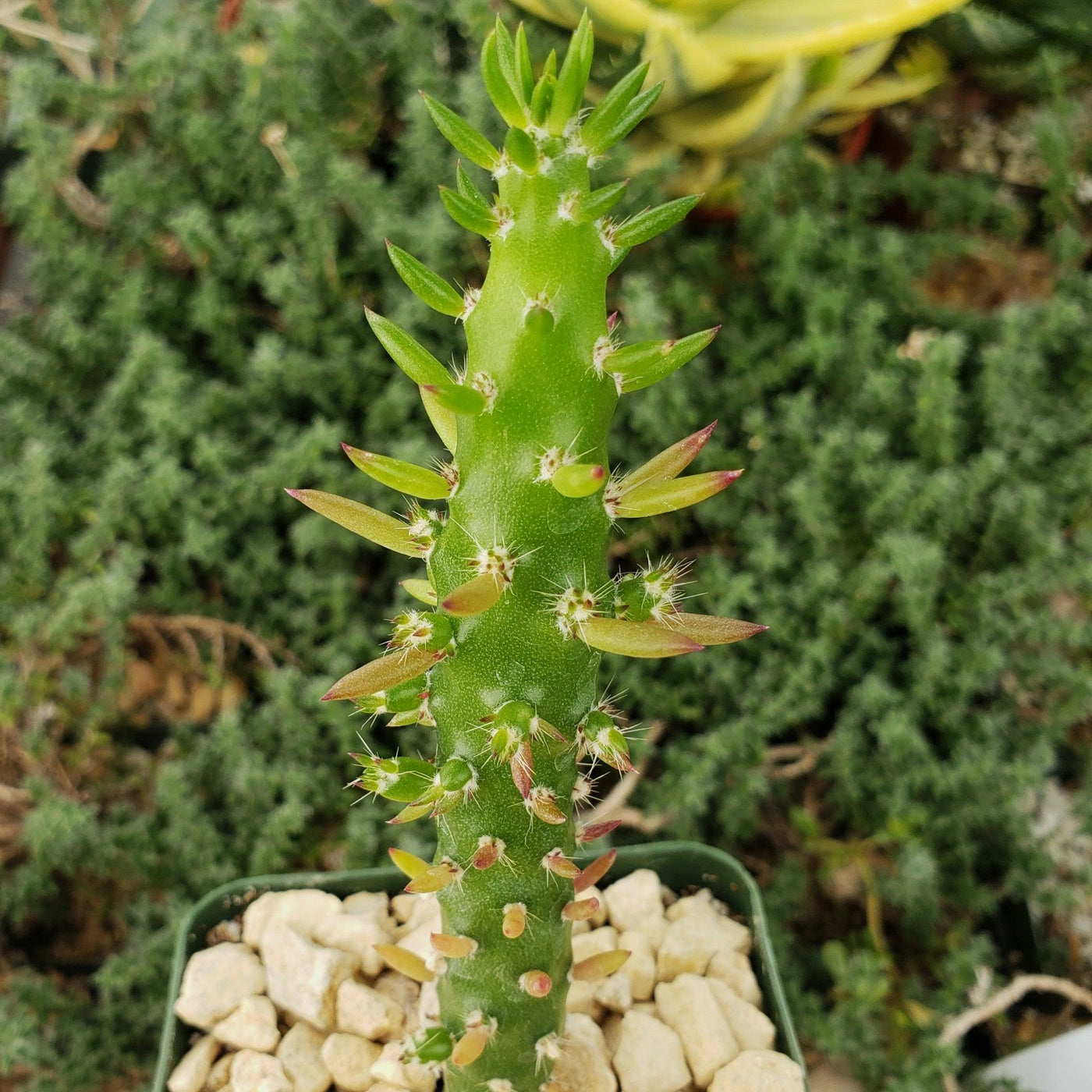
eve's pin succulent Eve's Needle CactusIntroducing the Eve's needle cactus, also known as Austrocylindropuntia subulata. Native to South America, particularly Argentina, Bolivia, and Peru, this Austrocylindropuntia subulata belongs to the Cactus family and is known for its unique appearance and interesting growth habits. Austrocylindropuntia subulata was previously known as Opuntia subulata and has several other names, including Eve's Pin cactus, long spine cactus, and Cane Cholla. These
Introducing the Eve's needle cactus, also known as Austrocylindropuntia subulata. Native to South America, particularly Argentina, Bolivia, and Peru, this Austrocylindropuntia subulata belongs to the Cactus family and is known for its unique appearance and interesting growth habits.
Austrocylindropuntia subulata was previously known as Opuntia subulata and has several other names, including Eve's Pin cactus, long spine cactus, and Cane Cholla. These names are inspired by its long, slender, and needle-like stems. The name "Eve's Needle" may also refer to the legend of the biblical Eve sewing with a cactus spine.
Austrocylindropuntia subulata, is a small tree-like cactus with an erect trunk, elongated branches, and cylindrical joints, and can grow to be 16 feet tall in its native habitat. It has ovate bumpy tubercles on its glossy-green stems, as well as awl-like curved, fleshy, greenish-yellow leaves. The spined areole at the tip contains one to four straight, grayish-white spines; which act as a defense mechanism against herbivores on a mature plant.
The flowers of Eve's needle Austrocylindropuntia subulata are tubular and come in shades of yellow, or orange-red. They typically appear in late spring or early summer, followed by red fruits covered in fine stinging hairs.
To propagate Austrocylindropuntia subulata, you can collect its seeds and sow them in well-draining soil. Alternatively, you can take stem cuttings of these prickly pear pads and allow them to callus before planting them in a suitable growing medium.
Austrocylindropuntia subulata has a couple of intriguing variations. The monstrous variety, also known as "Austrocylindropuntia subulata Monstrose Gumby," displays abnormal growth patterns, resulting in contorted, twisted, or bulbous stems. It's a delightful deviation from the typical cactus form. On the other hand, the crested form, known as "Austrocylindropuntia subulata Cristata," exhibits a beautiful, fan-like shape with undulating ridges. These variations add a touch of uniqueness to an already captivating plant.
Additionally, the Austrocylindropuntia subulata is friendly to both humans and pets. This makes it a great choice for those who want to add a touch of greenery to their homes without worrying about any potential harm.
Watering Needs
When it comes to watering the Austrocylindropuntia subulata Eve's needle cactus, it’s best to water the Austrocylindropuntia subulata sparingly. This cactus is native to arid regions, so it's adapted to survive with minimal water. Overwatering can actually be detrimental to its health. In between waterings, let the soil dry out completely. This can vary depending on factors like temperature and humidity, so it's a good idea to check the moisture level of the soil before watering. When you do water, make sure to give it a thorough soak, allowing the water to reach the roots.
In the spring and mid-summer, during the growing season, the Austrocylindropuntia subulata may require slightly more frequent watering. However, even during this time, it's important to avoid overwatering. Remember, this Eve's needle cactus is adapted to survive in dry conditions.
In the winter months, when your Eve's needle cactus goes into a period of dormancy, it requires even less water. You can reduce the frequency of watering to prevent the soil from staying consistently damp. It's always better to underwater than to overwater your cacti.
Light Requirements
When it comes to indoor Eves needle cactus care, it prefers bright, indirect light. Place it near a window where it can receive plenty of sunlight, but make sure to protect your Austrocylindropuntia subulata from direct, intense sunlight, especially during the hottest parts of the day. If you notice that the cactus is stretching towards the light or becoming pale, it may be an indication that it needs more bright light. In that case, you can consider providing supplemental artificial light, such as a grow light, to ensure it gets enough brightness.
When it comes to outdoor care, the Austrocylindropuntia subulata thrives in full sun. It loves basking in the direct sunlight for at least 4-6 hours a day. Just keep in mind that if you're transitioning it from indoors to outdoors, it's important to acclimate it gradually to the increased sunlight to avoid sunburn. Start by placing your Eve's needle cactus in a partially shaded area and gradually move it to a sunnier spot over a few weeks.
Remember, providing the right amount of light is crucial for the health and growth of your Austrocylindropuntia subulata, whether it's indoors or outdoors. So, find that sweet spot and watch it thrive.
Optimal Soil & Fertilizer Needs
When it comes to the soil, this Austrocylindropuntia subulata cactus prefers well-draining soil that mimics its natural habitat. Cactus potting soil mixed with perlite or pumice works well. The cactus potting soil provides the necessary nutrients, while the perlite or pumice helps with drainage, preventing the roots from sitting in water. This combination allows for better air circulation around the roots and helps prevent root rot. Use a clay pot with several drainage holes. Instead, make or buy a well-draining potting mix, or ideally use our specialized cactus potting mix that contains 5 natural substrates and mycorrhizae to promote the development of a strong root system that helps your Eve's needle cactus to thrive.
As for fertilizing, these desert cacti Austrocylindropuntia subulata don't require frequent or heavy feeding. In fact, it's best to use a diluted, balanced (5-10-5) NPK fertilizer only during the growing season, which is typically spring. Follow the instructions for the correct dilution ratio. Applying the fertilizer once a year should be sufficient to provide the necessary nutrients for healthy growth.
Remember, it's important not to overfeed your Eve's needle cactus, as this can lead to excessive growth and weak stems. Always err on the side of caution and use a weaker dilution rather than a stronger one.
By providing well-draining soil and occasional, diluted fertilizer during the growing season, you'll be giving your Austrocylindropuntia subulata the optimal conditions to thrive and grow beautifully!
Hardiness Zone & More
When growing indoors, the Austrocylindropuntia subulata generally enjoys warm and dry conditions. It can tolerate higher temperatures, ranging from 70°F to 90°F. Avoid exposing your container plants to extreme heat or cold drafts, as it may cause stress or damage to the plant. As for humidity, this cactus is adapted to arid climates and prefers low humidity levels. So, it's best to keep the humidity levels low, around 30% to 50%, to prevent any issues like rot or fungal growth.
If you are living in USDA zones 9-11, you can grow your Austrocylindropuntia subulata Eve's needle cactus outdoors year-round. It can handle temperatures as low as 20°F to 40°F, making it suitable for various hardiness zones. However, it's always a good idea to provide some protection during extreme weather conditions, such as frost or heatwaves, to ensure the best chances of survival.
Remember, maintaining the right temperature range and humidity levels is vital for the health and well-being of your Austrocylindropuntia subulata, whether it's indoors or outdoors. So, keep an eye on the thermometer and create a comfortable environment for your Eve's needle cactus to thrive!
Final Thoughts
Overall, the Austrocylindropuntia subulata (Eve's Needle cactus) is a fascinating cactus native to South America. With its long, slender stems and sharp spines, it's a visually striking plant that can add a touch of uniqueness to any collection. Additionally, the Austrocylindropuntia subulata produces beautiful tubular flowers, adding a vibrant splash of color. It is a fast-growing and low-maintenance plant that thrives in arid and desert-like conditions with minimal watering, full sun to partial shade lighting, and warm indoor temperatures. You can grow them outdoors in rock gardens in USDA zones 9-11. Whether you're a cactus enthusiast or simply appreciate the beauty of nature, this cactus is worth exploring and adding to your plant family.
Shipping Notes
- Free Standard Shipping on $100+ Orders to the USA.
- Except Preorder products are shipped in 48 hours.
- Delivery to the USA:
- Standard Shipping : 3-10 business days
- If time is of the essence, please consider selecting expedited delivery for faster service.
Exchange/Return Notes
- We offer a 30-day return/exchange service after receiving.
- Final sale items are not eligible for returns or exchanges.
- To process your return/exchange, please contact us at [email protected]
- Please click here for more details>>> Return & Exchange Policy