Pay in installments of $7.36 with
 ,
,
 and
and

Shipping Estimate
USA
- USA
- CAN
- USA
- CAN
Ships within 48 hours · Estimated delivery Sep 25 - Sep 30
 Promo Codes Available:
For Your Every Summer RSVP, with Code: SUMMER15
Description
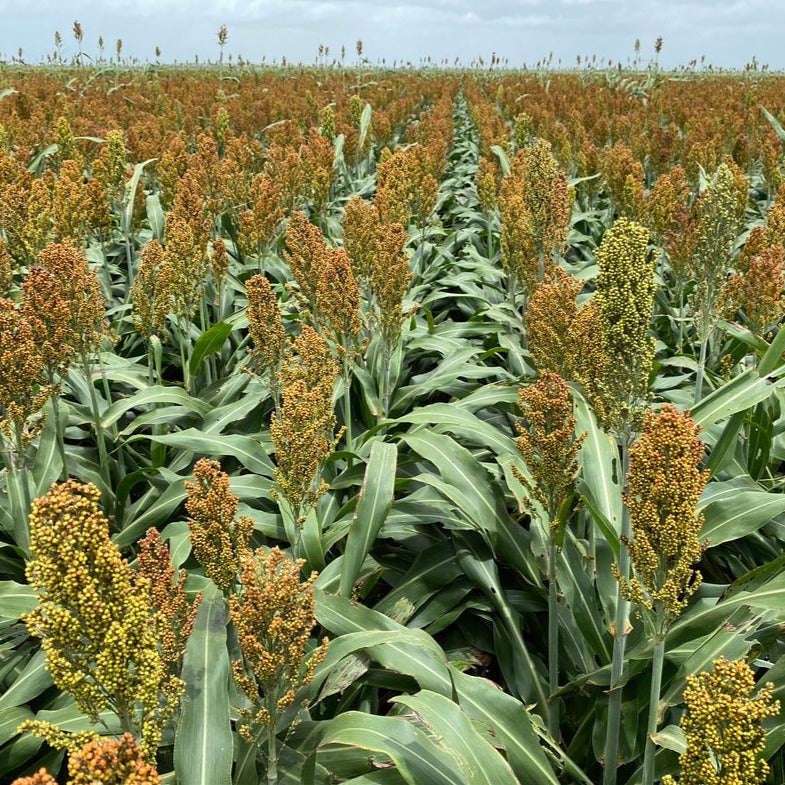
milo seeds for planting Hancock's Milo Grain Sorghum SeedHancock's Grain Sorghum is also commonly known as milo. It is an early medium maturity bronze grain sorghum hybrid variety that is well adapted to varied soil types. Hancock's Milo has exceptional stress tolerance and dependable yields under adverse conditions. Hancock's Milo Grain Sorghum is widely used as feed grain for livestock and food plots. This is due to its higher amounts of protein and fat. ~~~ Hancock's Grain Sorghum is also commonly know
Hancock's Grain Sorghum is also commonly known as milo. It is an early/medium maturity bronze grain sorghum hybrid variety that is well adapted to varied soil types. Hancock's Milo has exceptional stress tolerance and dependable yields under adverse conditions. Hancock's Milo Grain Sorghum is widely used as feed grain for livestock and food plots. This is due to its higher amounts of protein and fat. ~~~
Hancock's Grain Sorghum is also commonly know as milo. It is an early/medium maturity bronze grain sorghum hybrid variety that is well adapted to varied soil types. Hancock's Milo has exceptional stress tolerance and dependable yields under adverse conditions. It has consistently made 5,000-6,000 lbs./acre or 80-120 bushel yields even in the most stressful conditions. Hancock's Milo Grain Sorghum is widely used as feed grain for livestock and food plots. This is due to its higher amounts of protein and fat. This grain sorghum also has extremely strong disease resistance and performs best planted south of I-94, so majority of the United States.
Product Information
- Application or Use: Food Plot, Ground Cover, Cover Crop, Livestock Grazing, Silage
- Germination Time: 7 - 14 days; under optimal conditions
- Growing Locations: Warm Season, Transition Zone & Cool Season
- Height: Approximately 38 - 42 inches
- Sunlight Requirements: 8+ hours; full sun for best results
- Grain Color: Bronze
- Threshability: Excellent
- Root Strength: Very Good
- Head Type: Semi-Open
- Head Exertion: Very good even on dryland
- Tolerance: Exceptional stress tolerance and dependable yields under adverse conditions.
- When to Plant: Recommended planting time is spring and summer when nighttime temperatures are consistently 65+ degrees and 3 months prior to first frost.
Characteristics
- Not Treated
- Relative Maturity: Medium - Early
- Days to Midbloom: 58-65 days
- Yield Potential: 5,000-6,000lbs. or 80-120 bushels
- Strong dryland stress tolerance
- Strong disease resistance and weatherability
-
Seed per pound: 15,000
Hancock's Milo Grain Sorghum Seed grows approximately 38 - 42 inches tall with large, bronze colored seed heads and very good stalk quality and dependable yields under adverse conditions. For sorghum to reach its maximum growing ability it needs average temperatures of at least 80 degrees or higher for maximum yields, and 90 degrees for maximum photosynthesis. This grain sorghum flourishes in hot, dry climates. grain sorghum is more flood resistant than the traditional sorghum. Sorghum planted late into the season is more susceptible to insect infestation and increases the possibility of lesser yields.
*Product packaging may appear different than what is pictured. ~~~
Soil Prep
- When choosing to seed a clean seedbed, remove old vegetation by using a dethatcher, power rake or tiller to kill the existing vegetation. Rake or drag the area to remove debris and dead thatch for a clean area. Ensure the soil is leveled and loosened to allow the seed to have good soil contact once spread on a clean seed bed.
- If you have an area with heavy weed coverage, we recommend starting fresh by killing and removing the existing vegetation. If you choose to use chemicals, herbicides or fertilizers, you must check with the product’s manufacturer prior to planting new seed to ensure the proper waiting period.
- When overseeding an existing area, mow your lawn at the lowest setting and bag the clippings. Rake or drag any areas that have dead thatch or debris.
Seeding
- Seeding Rate: .5 lb. per 1,000 sq. ft. or 15 - 20 lbs. per acre
- Overseeding Rate: .25 lb. per 1,000 sq. ft. or 10 - 15 lbs. per acre
-
Drilling Rate: 7-10 lbs. per acre
- Spread at the recommended rate based on total area and whether it is bare ground or pre-existing vegetation.
- Spreader Settings: There is not any one setting that applies for all brands of spreaders. We recommend reviewing the seed settings chart that came with your spreader or contact the manufacturer directly. Ensure you are choosing a seed on the list by the manufacturer that closely resembles the seed you are choosing to plant.
- If you have any concerns on what setting you should use, we recommend always starting with the smallest option then adjusting it to match the recommended seeding rate.
Fertilizer
- We recommend fertilizing with 10-10-10 All Purpose Fertilizer. 10-10-10 All Purpose Fertilizer can be spread at a rate of 10 lbs. per 1,000 sq. ft. for 1 lb. of Nitrogen per 1,000 sq. ft. or 500 lbs. per acre for 50 lbs. of N per acre. The most probable cause of a declining growth or soil is poor nutrition. If you have any concerns about your soil, we recommend getting your soil tested to determine what nutrients you are low in as well as your pH. The results of the soil testing will give you the best information to amend your soil for the best grass growth.
Watering Schedule
- For best results, keep the soil moist while not over-watering the area or creating puddles.
Germination Time
- 7 - 14 days; under optimal conditions
Mowing Requirements
- Grain sorghum is typically harvested at time of maturity using a row crop or sickle bar headers. Harvest at about 20% moisture and harvest as little leaves and stalks as possible. this will minimize harvest loss and maintain quality.
- Cattle grazing is recommended once the sorghum has been harvested.
Shipping Notes
- Free Standard Shipping on $100+ Orders to the USA.
- Except Preorder products are shipped in 48 hours.
- Delivery to the USA:
- Standard Shipping : 3-10 business days
- If time is of the essence, please consider selecting expedited delivery for faster service.
Exchange/Return Notes
- We offer a 30-day return/exchange service after receiving.
- Final sale items are not eligible for returns or exchanges.
- To process your return/exchange, please contact us at [email protected]
- Please click here for more details>>> Return & Exchange Policy