Pay in installments of $5.91 with
 ,
,
 and
and

Shipping Estimate
USA
- USA
- CAN
- USA
- CAN
Ships within 48 hours · Estimated delivery Sep 28 - Oct 3
 Promo Codes Available:
For Your Every Summer RSVP, with Code: SUMMER15
Description
nangaritense philodendron Philodendron nangaritense – Foliage FactoryPhilodendron nangaritense Philodendron nangaritense is an Araceae species from southern Ecuador, known for creeping terrestrial growth, broad green leaves, rough red to maroon petioles and warm pink to copper toned emergent foliage. New leaves mature through softer tones into broader green blades, while the textured petioles remain a key feature as the plant develops. The stem extends across the substrate surface, so Philodendron nangaritense needs
Philodendron nangaritense
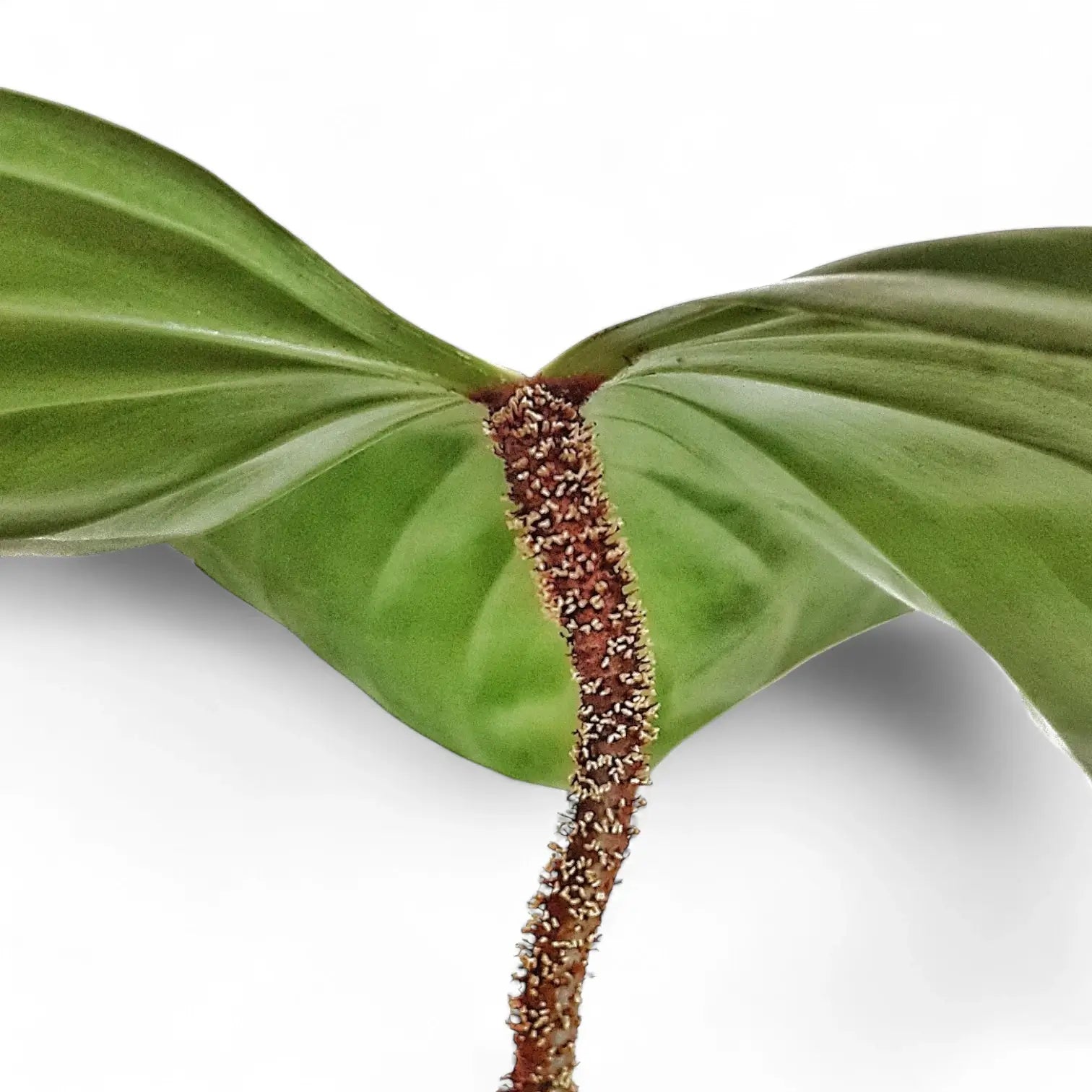
Philodendron nangaritense is an Araceae species from southern Ecuador, known for creeping terrestrial growth, broad green leaves, rough red to maroon petioles and warm pink to copper-toned emergent foliage. New leaves mature through softer tones into broader green blades, while the textured petioles remain a key feature as the plant develops.
The stem extends across the substrate surface, so Philodendron nangaritense needs horizontal room and an airy mix that holds light moisture without staying dense around the roots.
Copper new growth and creeping stems in Philodendron nangaritense
- Family: Araceae, the aroid family.
- Leaf colour: Pink to copper new growth matures into broader green leaves.
- Petioles: Red to maroon petioles with pale tubercles and a rough surface.
- Growth habit: Creeping terrestrial growth with the stem extending across the pot surface.
- Indoor spread: Can broaden steadily across a wide pot as the creeping stem produces spaced nodes.
- Growth rate: Usually moderate in warm, bright, humid conditions, with slower growth during cooler darker periods.
- Name origin: The epithet refers to the Nangaritza area of southern Ecuador.
Philodendron nangaritense care for a creeping stem
Choose a wider pot that gives the creeping stem room to move across the surface. Keep the stem sitting on top of the substrate, with roots growing into a chunky mix that holds some moisture while draining quickly.
Philodendron nangaritense is associated with humid forest in the Nangaritza region of southern Ecuador. Indoors, warm temperatures, filtered light, steady moisture and good root aeration help the creeping stem and textured petioles develop cleanly.
- Pot choice: A wider container gives the creeping stem more usable surface than a narrow deep pot.
- Repotting: Repot when the stem reaches the pot edge, the roots fill the container or the mix has compacted.
- Substrate: Use an airy aroid mix with bark, coarse fibre and mineral structure around the roots.
- Water: Water after the upper substrate begins to dry, then allow full drainage.
- Light: Bright indirect light, with protection from harsh direct sun on tender new leaves.
- Humidity: Higher humidity helps new leaves expand without sticking or tearing.
- Temperature: Keep warm and avoid cold, wet root conditions.
- Fertilising: Feed lightly during active growth; reduce feeding when light levels and growth slow.
- Propagation: Root stem cuttings with at least one node in warm humid conditions and an airy propagation medium.
- Pruning: Remove damaged leaves at the petiole base or trim an overlong creeping stem above a healthy node.
- Semi-hydroponics: Semi-hydro can work when roots are adapted gradually and the reservoir stays clean and oxygenated.
Philodendron nangaritense petiole, stem and leaf issues
- Stem softness: Check whether the creeping stem has been buried or kept against wet, compact substrate.
- Stuck new leaves: Improve humidity around active growth and avoid sharp dry-to-wet swings in the mix.
- Leaf-edge stress: Look for dry air, irregular watering or root stress.
- Pests: Inspect emergent leaves and textured petioles for spider mites, thrips, mealybugs and scale.
Philodendron nangaritense toxicity
Philodendron nangaritense contains insoluble calcium oxalate crystals, so keep leaves, petioles and stems away from pets and children that may chew plant material.
Botanical background of Philodendron nangaritense
The genus Philodendron was published by Heinrich Wilhelm Schott in Wiener Zeitschrift für Kunst, Litteratur, Theater und Mode 3: 780 in 1829, and the genus name comes from Greek-derived roots meaning “tree-loving.” Philodendron nangaritense was described by Thomas B. Croat and published in Aroideana 44: 430 in 2021. The epithet nangaritense is formed from Nangaritza with the Latin place-name ending -ense, meaning “from” or “of” Nangaritza.
A creeping Ecuadorian Philodendron with copper-toned new growth, rough red petioles and broad green leaves that spread across a wide pot.
Shipping Notes
- Free Standard Shipping on $100+ Orders to the USA.
- Except Preorder products are shipped in 48 hours.
- Delivery to the USA:
- Standard Shipping : 3-10 business days
- If time is of the essence, please consider selecting expedited delivery for faster service.
Exchange/Return Notes
- We offer a 30-day return/exchange service after receiving.
- Final sale items are not eligible for returns or exchanges.
- To process your return/exchange, please contact us at [email protected]
- Please click here for more details>>> Return & Exchange Policy