Pay in installments of $6.82 with
 ,
,
 and
and

Shipping Estimate
USA
- USA
- CAN
- USA
- CAN
Ships within 48 hours · Estimated delivery Sep 19 - Sep 24
 Promo Codes Available:
For Your Every Summer RSVP, with Code: SUMMER15
Description
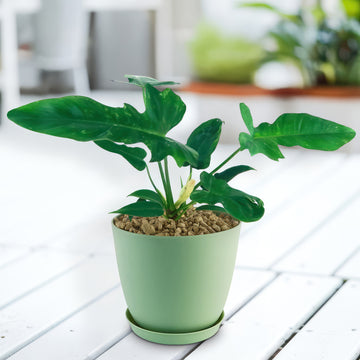
philodendron golden dragon australia Golden Dragon 'Philodendron' 6" Pot / Light Green / Without PotThe 'Golden Dragon' Philodendron is a striking tropical climbing plant known for its uniquely shaped foliage and vibrant, ever changing variegation. Some leaves may exhibit bold golden streaks, while others may have subtle lime green marbling. Additionally, as the plant matures, the leaf shape evolves significantly, transitioning from simple juvenile leaves to complex, dragon like formations. This transformation makes it a highly dynamic and visually
The 'Golden Dragon' Philodendron is a striking tropical climbing plant known for its uniquely shaped foliage and vibrant, ever-changing variegation. Some leaves may exhibit bold golden streaks, while others may have subtle lime-green marbling. Additionally, as the plant matures, the leaf shape evolves significantly, transitioning from simple juvenile leaves to complex, dragon-like formations. This transformation makes it a highly dynamic and visually interesting houseplant.
While Philodendron 'Golden Dragon' is its most widely recognized name, it is sometimes referred to as the Dragon Mask Philodendron due to its unusual leaf shape.
The popular climbing houseplant Philodendron 'Golden Dragon' is a cultivated hybrid from Thailand.
While its exact parentage is not widely documented, it shares many traits with Philodendrons native to humid, tropical regions.
It thrives in warm, shaded environments, mimicking the understory of dense jungle habitats.
The most distinctive feature of Philodendron 'Golden Dragon' is its dramatic, deeply lobed leaves.
When young, the leaves appear simple and elongated, but as they mature, they develop intricate splits and jagged edges resembling the face of a mythical dragon.
The foliage boasts a variegated mix of green, yellow, and gold hues, which adds to its ornamental appeal. Unlike many Philodendrons that require high humidity to develop large leaves, this hybrid can adapt well to average household conditions.
The Golden dragon Philodendron is a climbing variety that can grow up to 8 feet tall when supported by a moss pole or trellis. The leaves can grow up to 2 feet in length, creating a lush, jungle-like appearance. Without support, it may sprawl outward and produce smaller leaves, but its natural growth habit is to climb rather than crawl.
If placed next to a wall, it might lean against it, but it won’t truly climb unless there’s something for its aerial roots to attach to. A rough surface, like a moss-covered board or textured wall, can help encourage climbing.
The flowers of your golden dragon plant emerge as a spadix wrapped in a pale green or cream-colored spathe. However, since the plant is primarily grown for its foliage, most growers do not focus on encouraging blooms. Instead, the energy of the plant is best directed toward leaf development.
When and How to Water Your Philodendron Golden Dragon
It is a drought-tolerant plant that stores moisture in its thick stems and can endure short dry spells without much stress. While it thrives in consistent moisture, overwatering can lead to root rot, making well-draining soil essential. The plant’s ability to tolerate dryness makes it an excellent low-maintenance choice for those who may forget to water frequently.
In the spring and summer, during the active growing season, the plant requires more frequent watering. Watering once every 7–10 days is ideal, ensuring the soil remains slightly moist but not soggy. The frequency may vary depending on humidity and temperature. If grown outdoors in warm climates, checking the top inch of soil before watering is essential. If it feels dry, it’s time to water. Indoor plants may need slightly less frequent watering compared to those grown outdoors.
In fall and winter, during the dormant seasons, the Philodendron Golden Dragon enters a slower growth phase and requires less water. During these months, watering should be reduced to once every 2–3 weeks to prevent root rot. It’s crucial to let the soil dry out between watering sessions, as the plant’s metabolism slows down, requiring less moisture intake.
Light Requirements – Where to Place Your Golden Dragon Plant
For outdoor growth, this plant does best in partial shade with exposure to morning sunlight and afternoon shade.
It thrives in 4–6 hours of bright, indirect sunlight daily, making it ideal for placement under large trees, shaded patios, or greenhouses.
While it can tolerate some direct sunlight, prolonged exposure to harsh afternoon sun can scorch the leaves, causing browning and damage.
When grown in different light conditions, the plant’s leaf variegation may change.
More light results in brighter, well-defined variegation, while lower light can lead to darker, more uniform green foliage.
Optimal Soil & Fertilizer Needs
The Philodendron Golden Dragon thrives in well-drained, nutrient-rich soil. Avoid compact or heavy soils that hold excess moisture, as this can lead to root rot. Ideally, you want to use our specialized potting mix, opens in a new tab that contains 5 natural substrates and organic mycorrhizae to promote the development of a strong root system that helps your Philodendron to thrive.
Fertilization is essential during the growing season in the spring to encourage robust growth and vibrant foliage. A liquid NPK fertilizer (5-10-5) diluted to half strength, applied once a year, provides the necessary nutrients. Slow-release fertilizers can also be used for sustained feeding over time. During the fall and winter dormant season, stop fertilization since the plant’s growth slows down. Over-fertilizing during this period can lead to salt buildup in the soil, potentially harming the roots.
Hardiness Zones & More
When growing indoors as a houseplant, the Golden Dragon Philodendron prefers temperatures between 65°F to 80°F. It thrives in moderate to high humidity levels, ideally 50% or higher. Using a pebble tray or humidifier can help maintain optimal humidity, especially in drier environments. Bright, indirect light is crucial indoors, ensuring the plant remains healthy and vibrant.
In the United States, this is mostly an indoor plant, but if you live in southern Florida or Hawaii, then you can cultivate it outdoors in USDA zones 9-11.
It can be grown in the ground or in pots placed under partial shade.
It requires humidity levels above 50%, making tropical and subtropical regions ideal.
In cooler climates, it should be brought indoors when temperatures drop below 55°F, as prolonged exposure to cold can cause leaf damage.
Wildlife – Golden Dragon Flowers Attract the Following Friendly Pollinators
While Philodendron Golden Dragon is mainly grown for its decorative foliage, its flowers do attract some pollinators. When mature, it produces an inflorescence similar to other aroids, which can attract insects like beetles and certain bees that are naturally drawn to these plants. However, it rarely blooms indoors.
According to the ASPCA, Philodendron Golden Dragon is mildly toxic to humans, cats, dogs, and other pets due to the presence of insoluble calcium oxalates. If ingested in a large amount, it can cause irritation, drooling, and gastrointestinal discomfort. However, it is safe to touch and handle, making it a popular choice for indoor houseplants.
How to Propagate Your Philodendron Golden Dragon
The Philodendron Golden Dragon propagation can be done through stem cuttings. Select a healthy stem with at least one or two nodes and trim it using sterilized shears. The cutting can be placed in water or directly in soil. If you propagate in water, change the water every few days to prevent bacterial growth. After 2–4 weeks, roots will develop, and the cutting can be transferred into soil. If propagating in soil, keep it slightly moist until roots establish.
Key Takeaways
- The leaves of Philodendron 'Golden Dragon' feature a dynamic mix of green, yellow, and golden variegation that changes as the plant matures, making each leaf unique.
- This Philodendron is a climbing variety, using aerial roots to attach to supports like moss poles or trellises. Providing a climbing structure helps it develop larger, more defined foliage.
- It thrives best indoors in bright, indirect light and warm temperatures, making it an excellent houseplant.
- This plant has moderate drought tolerance and can withstand occasional missed waterings, but it still prefers consistent moisture without being overwatered.
- Its jagged, deeply lobed leaves resemble a dragon’s face, giving it a distinct, exotic look that sets it apart from other Philodendrons.
The Bottom Line
Overall, the Philodendron 'Golden Dragon' is a unique and visually captivating hybrid that combines ease of care with an exotic appearance. Its ability to adapt to a range of conditions, along with its bold, deeply lobed leaves, makes it an excellent choice for both beginner and experienced plant collectors. Whether grown indoors as a statement piece or allowed to climb in a tropical garden, this plant adds an unmatched touch of wild beauty to any space. With minimal watering needs, well-draining soil, and proper humidity, it rewards growers with lush, dragon-shaped leaves that enhance any space. Order your very own Philodendron Golden Dragon for sale today!
Shipping Notes
- Free Standard Shipping on $100+ Orders to the USA.
- Except Preorder products are shipped in 48 hours.
- Delivery to the USA:
- Standard Shipping : 3-10 business days
- If time is of the essence, please consider selecting expedited delivery for faster service.
Exchange/Return Notes
- We offer a 30-day return/exchange service after receiving.
- Final sale items are not eligible for returns or exchanges.
- To process your return/exchange, please contact us at [email protected]
- Please click here for more details>>> Return & Exchange Policy