SKU: 50407251519
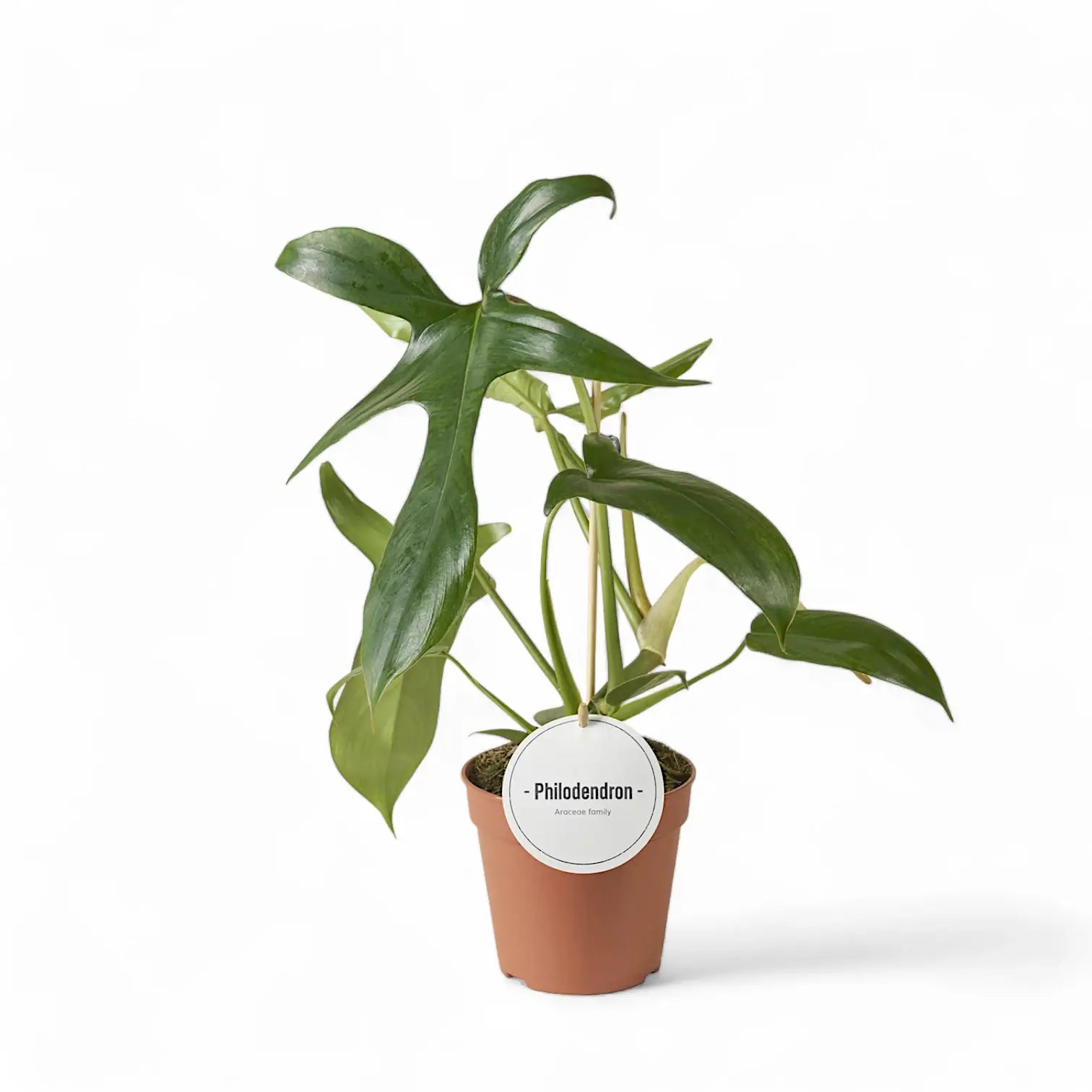
philodendron gladhands

philodendron gladhands Philodendron Glad Hands

Sale price$19.87 Regular price$22.08
Save 10%

Pay in installments of $5.52 with ShopPay, AfterPay and Klarna

Shipping Estimate
USA
  • USA
  • CAN

Ships within 48 hours · Estimated delivery Sep 30 - Oct 5

Promo Codes Available:

For Your Every Summer RSVP, with Code: SUMMER15

Description

philodendron gladhands Philodendron Glad HandsPhilodendron 'Glad Hands' (quercifolium) Philodendron 'Glad Hands' is a narrow form of Philodendron pedatum, grown for deeply divided leaves with long, slim lobes that spread from the blade like fingers. The full leaf shape develops over time, so young plants can look slimmer and less divided before the stem gains size and support. This plant grows from a climbing stem with clear nodes and aerial roots. As the stem extends, each node can produce

Philodendron 'Glad Hands' (quercifolium)

Philodendron 'Glad Hands' is a narrow form of Philodendron pedatum, grown for deeply divided leaves with long, slim lobes that spread from the blade like fingers. The full leaf shape develops over time, so young plants can look slimmer and less divided before the stem gains size and support.

This plant grows from a climbing stem with clear nodes and aerial roots. As the stem extends, each node can produce another leaf and attach to support through new root points. A pole, plank, or trellis helps the plant anchor, keeps the stem upright, and gives divided leaves space to spread.

Narrow lobes and node-by-node growth

  • Growth habit: Climbing Philodendron with nodes, aerial roots, and a stem that responds well to vertical support.
  • Leaf shape: Long, narrow lobes give older leaves a hand-like outline.
  • Development: Leaf divisions become clearer as the plant gains size, support, and stronger root growth.
  • Petiole spread: Leaves are held away from the stem, so established plants need space around the support.
  • Root behaviour: Aerial roots help the climbing stem attach and support larger foliage over time.

Pedatum background and quercifolium name

Philodendron pedatum (Hook.) Kunth was published in Enumeratio Plantarum 3:49 in 1841. It is an accepted South American species that grows as a climber in wet tropical habitats. Philodendron quercifolium Engl., published in Botanische Jahrbücher für Systematik 26:546 in 1899, is now placed under Philodendron pedatum.

The quercifolium name refers to oak-like divided leaves and still appears around this plant in cultivation. This narrow form shows a slimmer, more finger-like expression of pedatum-style leaf division once the stem is rooted and climbing. Older leaves gain a more defined outline, not just a larger size.

Care for divided leaves

  • Light: Provide bright filtered light. Strong indirect light supports shorter internodes and more developed leaves, while harsh direct sun can scorch exposed lobes.
  • Watering: Water thoroughly once the upper substrate has dried slightly. Keep moisture steady during active growth, but do not leave the pot standing in water.
  • Substrate: Use a chunky aroid mix with bark or coco chips, perlite or pumice, and a moisture-holding base. The roots need both moisture and air around them.
  • Pot choice: Choose a pot with drainage holes and enough depth to hold the support firmly. Avoid oversized pots that keep the lower stem wet for too long.
  • Repotting: Repot when roots fill the pot or the support becomes unstable. Move up gradually so the root zone stays aerated.
  • Support: Add a pole, plank, or trellis early. Attach the stem loosely so aerial roots can reach the support without being crushed.
  • Humidity: Aim for moderate to high humidity. Around 50–70% helps the narrow lobes open without dry tips or tears.
  • Temperature: Keep at about 18–28°C. Cool, wet conditions slow root activity and can damage the lower stem.
  • Feeding: Feed lightly during active growth with a balanced fertiliser. Reduce feeding when light and leaf production slow down.
  • Growth rate: Expect moderate climbing growth once rooted and supported. Leaf shape improves gradually as the stem strengthens.
  • Pruning: Remove yellowing leaves and trim stretched stems above a node if the plant needs reshaping. Healthy cut sections can be used for propagation.
  • Placement: Give the plant room around its support so the lobed leaves can spread without rubbing against walls, shelves, or neighbouring plants.
  • Semi-hydroponics: This Philodendron can adapt to mineral or semi-hydro substrates if roots are transitioned gradually and the reservoir is kept clean.
  • Propagation: Take stem cuttings with at least one node and preferably an aerial-root nub. Keep cuttings warm and humid while roots form.

Juvenile leaves, torn lobes and stem stretch

  • Leaves staying juvenile: Check support, light, and root health. A divided leaf shape develops more reliably on a climbing, well-rooted stem.
  • Yellow lower leaves: Inspect the substrate and roots. Persistent wetness around the lower stem can cause older leaves to decline quickly.
  • Brown lobe tips: Look for dry roots, low humidity, fertiliser buildup, or hot sun through glass.
  • Long gaps between leaves: The stem may be reaching for light or growing away from its support. Move it into brighter filtered light and secure new growth.
  • Torn new leaves: New lobes can catch while unfurling. Keep watering stable and humidity moderate rather than forcing the leaf open.
  • Loose stem attachment: If the stem pulls away from the support, retie it gently at the nodes and guide new aerial roots toward the surface.
  • Pests: Check leaf undersides, petiole bases, and cataphylls for thrips, mites, scale, and mealybugs.

Pet safety and skin irritation

Philodendron 'Glad Hands' should be kept away from pets and children that may chew leaves or stems. Philodendron contains calcium oxalate crystals, which can irritate the mouth, throat, and digestive tract if ingested. Sap may irritate sensitive skin after pruning or propagation.

Name meaning and botanical background

Philodendron means “tree-loving”, a reference to the climbing habit common in the genus. The epithet pedatum means foot-like, matching the divided leaf outline of Philodendron pedatum. Quercifolium combines Latin roots for oak and leaf, referring to an oak-like leaf shape. The name 'Glad Hands' suits the hand-like spread of the leaf lobes.

Choose Philodendron 'Glad Hands' for a climbing Philodendron with slim, fingered leaves and a distinctive narrow-lobed outline.

Shipping Notes
  • Free Standard Shipping on $100+ Orders to the USA.
  • Except Preorder products are shipped in 48 hours.
  • Delivery to the USA:
  1. Standard Shipping : 3-10 business days
  • If time is of the essence, please consider selecting expedited delivery for faster service.
Exchange/Return Notes
  • We offer a 30-day return/exchange service after receiving.
  • Final sale items are not eligible for returns or exchanges.
  • To process your return/exchange, please contact us at [email protected]
  • Please click here for more details>>> Return & Exchange Policy
SKU: 50407251519

Discover Niche Categories That Outsell philodendron gladhands

Top-Converting Item to Boost Your Average Order

4.2 ★★★★★
Based on 15 reviews
Sort
Highest Rating
Newest First
Oldest First
Product Reviews
E
Verified Purchase
Em D
Natrona Heights, US
★★★★★ 5
Bridge Between Energy Work and Nervous System Healing
Format: Kindle
I’ve been trained in Reiki and am certified in breathwork, which drew me to this book. The connection the author makes between suppressed emotions, nervous system dysregulation, and physical symptoms is impressive. In my own work with energy and breath, I’ve seen firsthand how unresolved experiences become stored in the body. This book explains why that happens. The explanation of energetic blockages and the chakra system are accurate and explained well. There is an emphasis on safety and nervous system support, which is essential in breathwork and trauma-informed healing. The symptom guide is also thorough and helps you decide where and what you need to work on. Highly recommended.
WAS THIS REVIEW HELPFUL?YesReportShare
Reviewed in the United States on February 21, 2026
B
Verified Purchase
Bryan Driscoll
Bozeman, US
★★★★★ 4
What Your Body Is Telling You
Format: Kindle
This book makes a strong impression right from the start. The tone is calm and steady, and it never feels like it’s trying to scare you or sell quick answers. Instead, the author takes a simple, grounded approach to understanding physical sensations and why they show up in daily life. The book connects stress, emotions, and the body. These ideas can sound complicated, but here they’re explained in plain language that makes sense right away. You don’t need any special background to follow along, just a willingness to pay attention. The book doesn’t preach or push a strict method. It encourages awareness rather than control, which feels refreshing. It gives you space to reflect and notice patterns without judgment. Overall, this is a thoughtful and approachable read that feels supportive without being soft.
WAS THIS REVIEW HELPFUL?YesReportShare
Reviewed in the United States on January 18, 2026
V
Verified Purchase
Val
Grantham, US
★★★★★ 5
empowering
Format: Kindle
The Energy Code offers a thought-provoking look at healing from a mind-body perspective. I appreciated how it encourages readers to see symptoms not as enemies, but as signals worth listening to. The breathwork and grounding exercises were practical and surprisingly calming. That said, some concepts lean heavily into spiritual language, which may not resonate with everyone. Overall, it’s an empowering read if you’re open to exploring healing beyond traditional medicine and want to take a more active role in understanding your body.
WAS THIS REVIEW HELPFUL?YesReportShare
Reviewed in the United States on February 13, 2026
T
Verified Purchase
TW
Lexington, US
★★★★★ 5
Great Resource for Holistic Healing
Format: Kindle
When I came across this book it reminded me of Louise Hayes “You Can Heal Your Life”. It addresses many issues that manifest physically in the body and how to release it by releasing the emotional energetic aspect that relates to it by knowing the cause, it provides a solution along with key words for energetic healing and a strengthening affirmation and tips. Some ailments or issues listed I was surprised to see as one would think you can’t do anything about it, but you can - and the author makes clear from the beginning this book is not a substitute for medical advice or treatment but rather to complement it and to provide alternative options for those who want to take a holistic approach.
WAS THIS REVIEW HELPFUL?YesReportShare
Reviewed in the United States on December 21, 2025
J
Verified Purchase
JWL
Louisville, US
★★★★★ 3
Comprehensive and helpful, but is it correct?
Format: Kindle
The authors put a lot of work into creating this 70,000-word book, based upon their personal experiences and their work with others to find and alleviate the energetic causes of diseases and maladies. The book covers a comprehensive list of medical conditions, explains their energetic cause, and offers energetic solutions. Certainly, there are many traumas, particularly childhood traumas, that can affect people mentally and emotionally and scar them for life, and affect many aspects of their personality, habits, and proneness to mental and emotional challenges, as well as contribute to worsening some physical problems. The book covers those well and gives some particularly good examples of how a parent's reaction to a child's mistakes, understanding and supportive, or condemning or belittling, can affect their subsequent behavior, personality, and health for years, maybe even for life. Where I found the book lacking, is it seems to assume that basically every medical condition or disease comes from past trauma and gives no space for the physical causes of many health challenges, or how many of those issues can be greatly alleviated or eliminated with diet and lifestyle changes. An example of the part right, part missing, explanation found for many issues listed in the book is for Adult Acne. According to the authors, the energetic cause is "something from your teenage years that hasn't yet healed." According to Harvard Health, "The four factors that directly contribute to acne (in teenagers or adults) are: excess oil production, pores becoming clogged by "sticky" skin cells, bacteria, and inflammation." This is further broken down by Harvard into actions and body functions that directly contribute to those four points, including, • "hormones, stress, and the menstrual cycle in women, all of which can influence oil production • hair products, skin care products, and makeup, which can clog pores • diet, which can influence inflammation throughout the body." Of those listed items only "stress" can be an energetic contributing cause. Some of the other items are mostly out of an individual's control, such as hormones and menstrual cycles. Other items are controllable, such as makeup, hair care, and diet choices. This same pattern of overlooking all other causes except "energetic" and offering no other solutions except "energetic", and applying that remedy to some conditions that have purely or mostly physical causes, and/or can be remedied by changes in diet or lifestyle choices, is why I only gave the book 3 stars. However, this is not a negative review. Many of the suggestions by the authors for finding the source of emotional and mental traumas, and changing the negative energy still reverberating from past experiences to help alleviate present-day maladies are insightful, and many people will find to be beneficial.
WAS THIS REVIEW HELPFUL?YesReportShare
Reviewed in the United States on January 24, 2026

recommand products