Pay in installments of $7.26 with
 ,
,
 and
and

Shipping Estimate
USA
- USA
- CAN
- USA
- CAN
Ships within 48 hours · Estimated delivery Jul 22 - Jul 27
 Promo Codes Available:
For Your Every Summer RSVP, with Code: SUMMER15
Description
anthurium clidemioides for sale Anthurium clidemioides – Compact Textured AnthuriumAnthurium clidemioides Fine scandent stems carry the compact, bullate leaves of Anthurium clidemioides. The blades are cordate, matte green above and textured by sunken basal veins, giving the plant a detailed surface on small, closely held leaves. The thin internodes can suffer if they sit wet inside dense substrate. Keep the base visible above the mix so moisture drains away from the stems while the roots remain lightly moist. Foliage and stem
Anthurium clidemioides
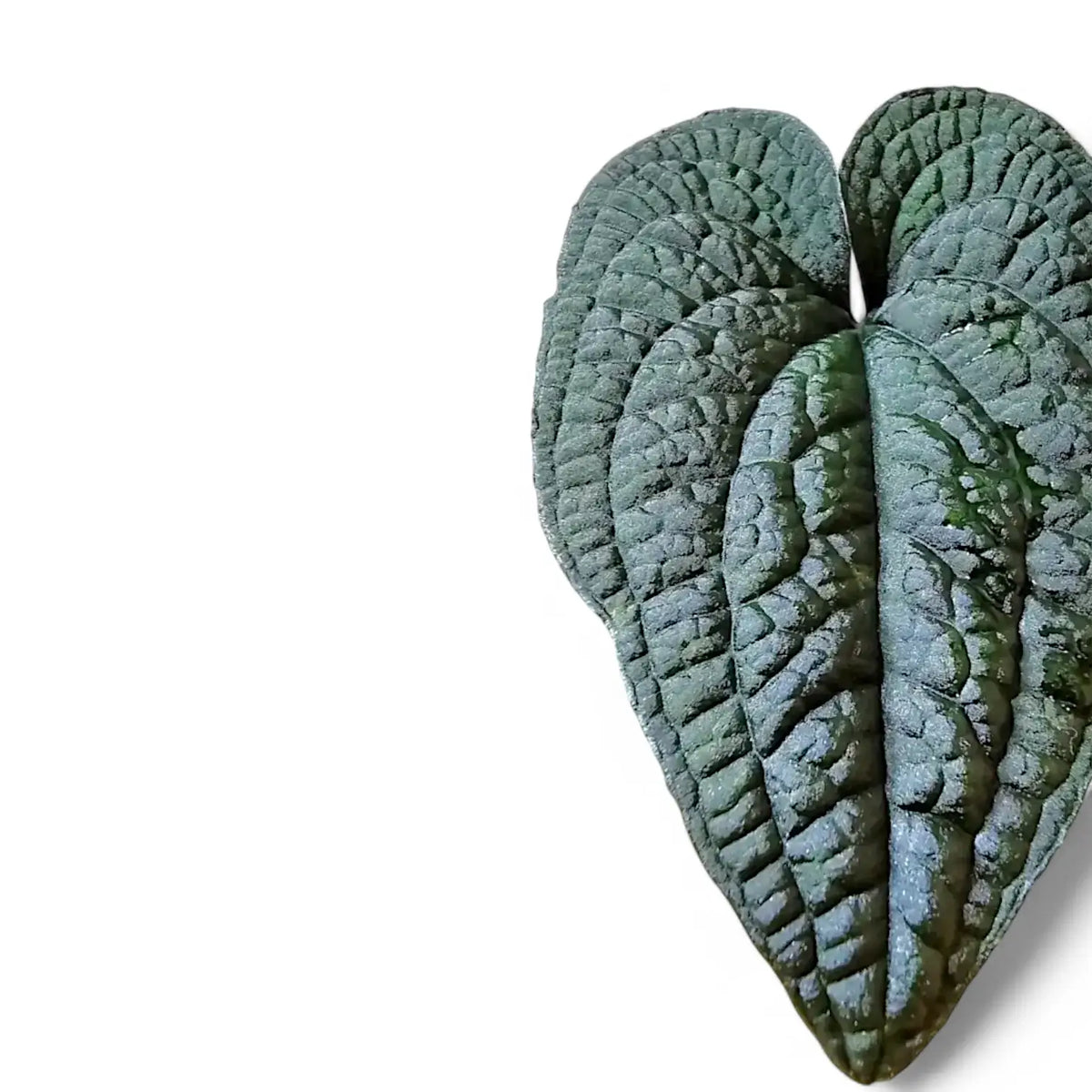
Fine scandent stems carry the compact, bullate leaves of Anthurium clidemioides. The blades are cordate, matte green above and textured by sunken basal veins, giving the plant a detailed surface on small, closely held leaves.
The thin internodes can suffer if they sit wet inside dense substrate. Keep the base visible above the mix so moisture drains away from the stems while the roots remain lightly moist.
Foliage and stem details on Anthurium clidemioides
- Leaf size: Botanical descriptions record small blades around 7–14 cm long and 4–9.5 cm wide.
- Leaf shape: The blades are ovate-cordate, with a soft heart-shaped outline.
- Texture: A bullate surface gives the leaves a raised, puckered look.
- Colour: The upper side is matte green, while the underside is paler.
- Stems: Thin elongated internodes give the plant a fine scandent habit.
- Internodes: The stems can show corky, lenticel-like texture along the elongated sections.
- Petioles: Short petioles keep the small leaves close to the stem.
Small scandent growth indoors
Anthurium clidemioides is native from Costa Rica to Colombia, with records in Costa Rica, Panama and Colombia. It grows as a small scandent epiphyte, so indoor care should focus on humidity, airflow and a root zone that drains quickly.
A small support, rough surface or careful tie can guide extending stems without bending or compressing them. Keep the base visible above the substrate so thin internodes are not held wet after watering.
Care for fine-stemmed Anthurium clidemioides
- Support: Guide extending stems gently; tight ties can bruise fine growth.
- Light: Bright filtered light suits the small leaves and helps keep internodes from stretching too far.
- Humidity: Higher humidity keeps the bullate leaves from drying or puckering unevenly.
- Water: Keep the mix lightly moist, then allow the upper layer to begin drying before watering again.
- Substrate: Use a fine but airy Anthurium mix. The roots need moisture, but the thin stems need air.
- Temperature: Stable warmth keeps growth moving. Cold damp conditions can stall the plant quickly.
Thin-stem stress signs on Anthurium clidemioides
- Stem rot: Check whether thin internodes are buried, pressed into wet mix or kept against a damp surface.
- Dry leaf edges: Usually linked to low humidity or watering gaps around a small root system.
- Stalled growth: Cold conditions, compact mix or root damage can stop new leaves for a long period.
- Bruised leaves: Bullate blades can mark if they are pressed against pots, covers or other plants.
- Long bare sections: Give brighter filtered light and guide stems before they extend too far from the pot.
Sap safety for Anthurium clidemioides
Anthurium clidemioides should be kept away from pets and children. Damaged plant tissue and sap can irritate the mouth, throat, eyes and sensitive skin.
Botanical notes on Anthurium clidemioides
Anthurium clidemioides was described by Paul C. Standley and published in Publications of the Field Museum of Natural History, Botanical Series 22:3 in 1940. The epithet clidemioides means Clidemia-like, referring to a resemblance between its textured leaves and those of Clidemia, a genus in Melastomataceae. The species is defined by small bullate leaves and fine scandent stems.
Shipping Notes
- Free Standard Shipping on $100+ Orders to the USA.
- Except Preorder products are shipped in 48 hours.
- Delivery to the USA:
- Standard Shipping : 3-10 business days
- If time is of the essence, please consider selecting expedited delivery for faster service.
Exchange/Return Notes
- We offer a 30-day return/exchange service after receiving.
- Final sale items are not eligible for returns or exchanges.
- To process your return/exchange, please contact us at [email protected]
- Please click here for more details>>> Return & Exchange Policy