Pay in installments of $6.13 with
 ,
,
 and
and

Shipping Estimate
USA
- USA
- CAN
- USA
- CAN
Ships within 48 hours · Estimated delivery Sep 29 - Oct 4
 Promo Codes Available:
For Your Every Summer RSVP, with Code: SUMMER15
Description
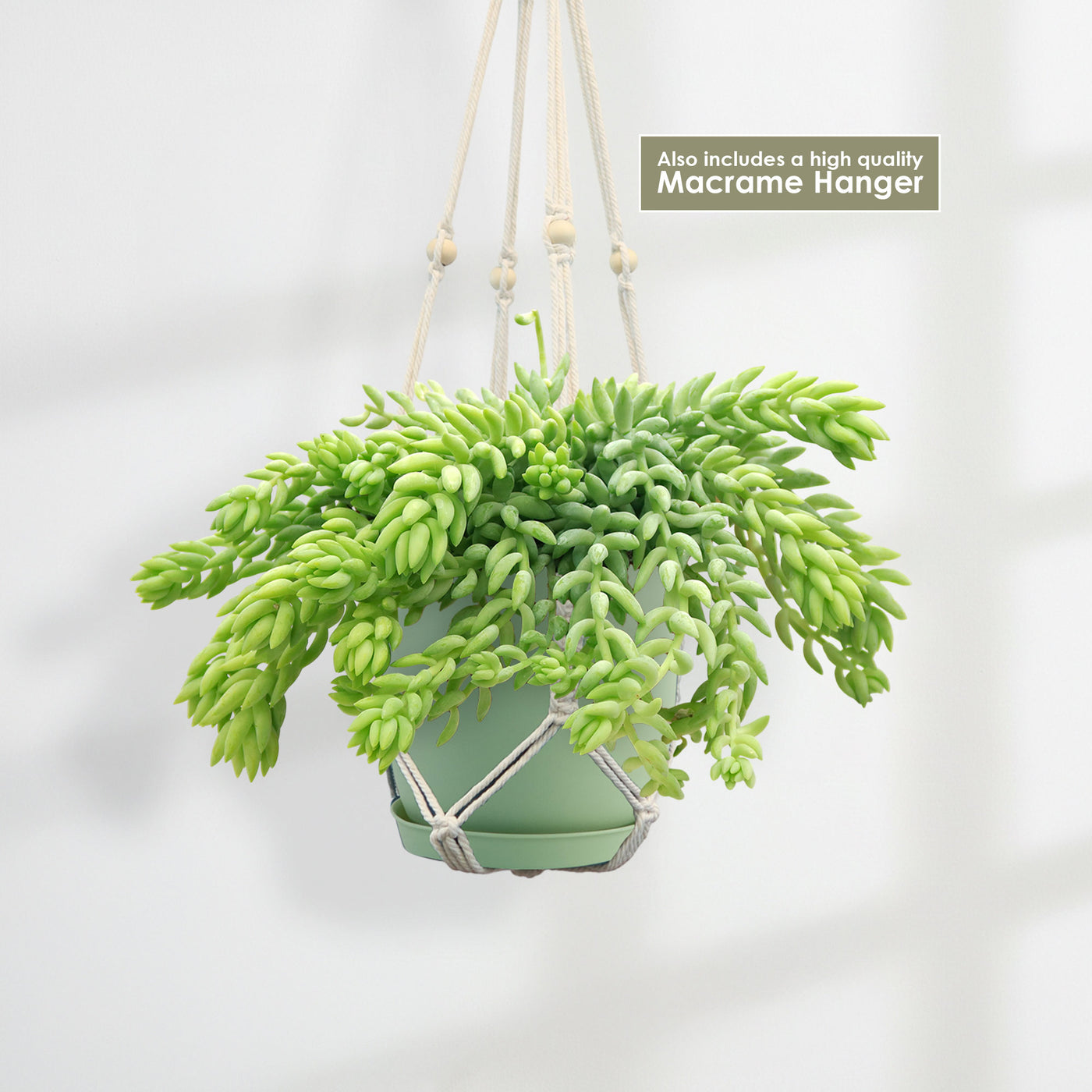
burro's tail hanging plant Sedum morganianum Burro's Tail 4" PotIntroducing the donkey tail plant, known as Sedum morganianum, which is a popular hanging plant that belongs to the Sedum genus. Native to Mexico, the donkey tail plant has several other common names such as Donkey's Tail, Lamb's Tail, and Horses' Tail. The donkey tail succulent doesn't just settle for being ordinary; it goes all out. Its bluish green foliage, which occasionally even has a whitish bloom. Initially, its stems grow upright like an
Introducing the donkey tail plant, known as Sedum morganianum, which is a popular hanging plant that belongs to the Sedum genus. Native to Mexico, the donkey tail plant has several other common names such as Donkey's Tail, Lamb's Tail, and Horses' Tail.
The donkey tail succulent doesn't just settle for being ordinary; it goes all out. Its bluish-green foliage, which occasionally even has a whitish bloom.
Initially, its stems grow upright like an ambitious little sprout. These magnificent donkey tail plants soon trail down and become pendulous wonders.
The growth pattern of donkey tail plant stems is indeed unique, as they grow downwards, cascading gracefully from hanging baskets.
It is easy to care for and can thrive in a variety of environments, making it a great choice for both beginner and experienced plant owners.
The donkey tail plants can grow up to about 4 feet long and 2 feet wide, with their trailing stems filled with chubby, succulent leaves. Its leaves store water, making it a drought-tolerant plant. Plus, it's known for its distinctive trailing growth habit, making it a popular choice for hanging baskets or as a trailing plant in arrangements.
Important Fact to Understand
The donkey tail plant is mistakenly used interchangeably with Burro's tail plants (as in Spanish, Burro's is known as a donkey) by other websites, but they are in fact completely different plant. These two succulent plants have distinctively shaped plump leaves; the burro's tail plant's leaves are more teardrop-shaped, whereas the donkey's tail plant's leaves are banana-shaped.
The donkey tail plant bloom in summer with vibrant star-shaped pinkish-red blooms. The flowers attract butterflies and hummingbirds with their sweet nectar, adding a pop of color to your garden during the warmer months.
The propagation of the donkey tail plant is typically done through stem cuttings, which should be allowed to be callous before being placed in well-draining soil. It is important to provide bright indirect light and avoid overwatering to promote healthy growth.
From its light requirements to water needs, this plant is relatively easy to care for and is a friendly plant both for humans and pets.
Watering Needs
Like other succulents, they thrive on a little neglect; even if you forget to water them once or twice, they'll still survive just fine. It's important to let the soil dry out completely between waterings. Overwatering can cause the roots to rot, which can lead to the death of your Sedum morganianum. The best way to water the donkey's tail succulent is to give it a good soaking and then let the soil dry out completely before watering again.
In the spring and summer, during the growing season, you can water your Donkey Tail plant more frequently, about once every 2-3 weeks, or when the top inch of soil feels dry. Be sure to water thoroughly but allow excess water to drain out of the pot to prevent water accumulation at the roots.
In the fall and winter, when the plant is in its dormant period, you'll want to reduce watering to about once a month or even less, as the plant requires less water during these cooler months.
Remember, ensure that the pot has good drainage to prevent water from sitting in the bottom of the pot.
Light Requirements
When growing indoors, the donkey tail succulent prefers a window that receives indirect bright light. It can also tolerate some direct sunlight, but it's important to avoid exposing the donkey's tail to too much direct sunlight, as this can cause the leaves to burn.
For outdoor cultivation, they prefer full sunlight to partial shade. Remember, it is important to provide at least 4-6 hours of bright light for the plump and healthy stem in the hanging basket.
If you notice that the blue-green leaves are turning yellow or brown, it may be a sign that this Sedum donkey tail is getting too much direct sunlight.
Optimal Soil & Fertilizer Needs
The donkey's tail thrives in well-drained soil that's rich in nutrients. A good soil mix for this succulent is a combination of cactus soil, perlite, and sand. It's important to make sure that the soil is well-draining, as the donkey tail plant is susceptible to root rot. We believe the best option is to use our specialty succulent potting mix that contains over 5 natural substrates and organic mycorrhizae to promote the development of a strong root system that helps your succulent to thrive.
When it comes to fertilizing, the donkey tail succulent doesn't need a lot of fertilizer. You can fertilize the plant once a year in the spring with a balanced fertilizer NPK (5-10-5). It's important to avoid over-fertilizing the succulents as it can cause even death of the plant.
Hardiness Zone & More
When growing indoors, the donkey tail succulent plants thrive in average room temperatures ranging from 65-75°F. As for humidity, these plants are adaptable to typical indoor humidity levels, so no special adjustments are usually needed. Just ensure good air circulation around the plant to prevent any issues related to stagnant air.
For outdoor cultivation, they are best suited for USDA hardiness zones 10-11, where temperatures remain above 30°F. They enjoy full sun to partial shade outdoors and can handle higher temperatures if provided with adequate water and some protection from intense afternoon sun.
If you live in a colder climate, you should put them in a pot, and they can then be kept outdoors during the summer and brought in as the temperature drops. While household humidity is generally good enough, these donkey tail plants will do even better with some extra moisture in the air. Set up a humidifier nearby or grow them in naturally humid rooms like your bathroom or kitchen.
Final Thoughts
Overall, the donkey's tail sedum makes a vibrant trailing houseplant that is a low-maintenance succulent plant that doesn't require a lot of attention. Be sure to add Sedum morganianum - a donkey tail plant to your home or garden and enjoy its low-maintenance care while admiring its impressive display year after year.
Shipping Notes
- Free Standard Shipping on $100+ Orders to the USA.
- Except Preorder products are shipped in 48 hours.
- Delivery to the USA:
- Standard Shipping : 3-10 business days
- If time is of the essence, please consider selecting expedited delivery for faster service.
Exchange/Return Notes
- We offer a 30-day return/exchange service after receiving.
- Final sale items are not eligible for returns or exchanges.
- To process your return/exchange, please contact us at [email protected]
- Please click here for more details>>> Return & Exchange Policy