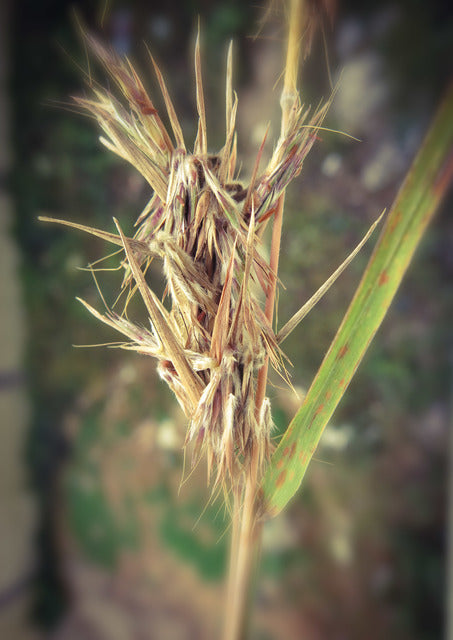
SKU: 72324974882
lemon grass seeds for planting

lemon grass seeds for planting Lemon Grass

Sale price$24.84 Regular price$27.60
Save 10%

Pay in installments of $6.90 with ShopPay, AfterPay and Klarna

Shipping Estimate
USA
  • USA
  • CAN

Ships within 48 hours · Estimated delivery Sep 29 - Oct 4

Promo Codes Available:

For Your Every Summer RSVP, with Code: SUMMER15

Description

lemon grass seeds for planting Lemon GrassGermination Days: 7 14 Hardiness Zones: Annual 3 9 (Perennial 10 11) Planting Depth: 1 Plant Spacing: 6 8 Growth Habit: Grassy Mound Soil Preference: Rich and well drained, 5. 5 7. 5 pH Temp Preference: Warmer Light Preference: Full sun Days to Maturity: 90 100 Pests diseases: No serious problems, but watch for aphids. NOTE: LEMONGRASS PLANTS DO SEED!! Lemongrass West Indian (Cymbopogon flexuosus) is a unique and highly sought after variety of

Germination Days: 7-14
Hardiness Zones: Annual 3-9 (Perennial 10-11)
Planting Depth: 1”
Plant Spacing: 6-8”
Growth Habit: Grassy Mound
Soil Preference: Rich and well-drained, 5.5 – 7.5 pH
Temp Preference: Warmer
Light Preference: Full sun
Days to Maturity: 90 -100
Pests/diseases: No serious problems, but watch for aphids.


NOTE: LEMONGRASS PLANTS DO SEED!!

Lemongrass West Indian (Cymbopogon flexuosus) is a unique and highly sought after variety of lemongrass that is prized for its delicate and flavorful leaves. This heirloom variety has been passed down through generations of gardeners and farmers, and is known for its superior taste and quality.

The origin of Lemongrass West Indian can be traced back to the West Indian islands, where it has been used for centuries in traditional cooking, as well as in herbal medicine. The leaves of the plant are known for their citrusy and lemony scent and flavor, making them a popular ingredient in many dishes.

Lemongrass West Indian is a tall and robust grass, reaching up to 4 feet in height. The leaves are long and slender, with a bright green color and a slightly woody texture. They have a strong lemony and herbaceous flavor, with a subtle sweetness, making them a perfect addition to any dish.

This variety of lemongrass is commonly used in many traditional West Indian dishes, such as curries, stews, and soups. It is also used to infuse teas, marinades, and dressings, and can be used as a garnish or in a bouquet garni to add flavor to soups and stews.

Lemongrass West Indian is also known for its medicinal properties, and is commonly used to relieve stress and anxiety, and to help with digestion. It also has anti-inflammatory and anti-bacterial properties, making it a popular ingredient in natural skincare and beauty products.

Lemongrass West Indian is easy to grow, and can be planted in a variety of soil types and climates. It prefers full sun and well-drained soil. It is also a great option for those who are looking for an heirloom variety that is non-GMO and chemical-free.

Overall, Lemongrass West Indian is a versatile and flavorful addition to any garden or kitchen. With its rich history, superior taste, and medicinal properties, it is a must-have for any gardener or chef who is looking to add a unique and high-quality ingredient to their dishes.

Two varieties are commonly found in nurseries: East Indian lemon grass (Cymbopogon citratus) and West Indian lemon grass (Cymbopogon flexuosus). Both can be used for cooking, but the thicker West Indian variety is better.

Cymbopogon flexuosus, or commonly referred to as Lemon Grass, is a tropical perennial that is a well-known herb for Asian foods and for other culinary uses. 

Lemon grass plants forms a clump, reaching 36 – 60 inches in height and 24 – 36 inches in width. It is very much like an ornamental grass with strap-like leaves reaching 36 inches and arching.
This grass plant has a strong lemon aroma, and is used in making oil. It is used in fish and chicken dishes, soups and sauces, and in hot teas. It also is a natural mosquito repellent.
These Non-GMO plants prefer full sun to partial shade and well-drained soil. Space plants 36 - 48 inches apart. Lemon Grass will grow as an annual in cold areas. It also will do well planted in a container so that it can be brought indoors during the winter.
Sowing rate: Sow 2 - 3 heirloom seeds per plant and start repelling mosquitoes or use for culinary purposes.

Shipping Notes
  • Free Standard Shipping on $100+ Orders to the USA.
  • Except Preorder products are shipped in 48 hours.
  • Delivery to the USA:
  1. Standard Shipping : 3-10 business days
  • If time is of the essence, please consider selecting expedited delivery for faster service.
Exchange/Return Notes
  • We offer a 30-day return/exchange service after receiving.
  • Final sale items are not eligible for returns or exchanges.
  • To process your return/exchange, please contact us at [email protected]
  • Please click here for more details>>> Return & Exchange Policy
SKU: 72324974882

Discover Niche Categories That Outsell lemon grass seeds for planting

Top-Converting Item to Boost Your Average Order

4.2 ★★★★★
Based on 7 reviews
Sort
Highest Rating
Newest First
Oldest First
Product Reviews
A
Verified Purchase
Andres Rivera
Lexington, US
★★★★★ 5
Nice book
Format: Paperback
Nice historical book.
WAS THIS REVIEW HELPFUL?YesReportShare
Reviewed in the United States on May 9, 2026
C
Verified Purchase
CBRNCougar59
Waukegan, US
★★★★★ 3
Poor Editing - header misprint
Format: Paperback
Chapter 3 - 'Manipulation of Risk' header mislabeled as chapter 2
WAS THIS REVIEW HELPFUL?YesReportShare
Reviewed in the United States on January 10, 2023
D
Verified Purchase
DiBeth
Dallas, US
★★★★★ 5
Wow!
Format: Paperback
I do not understand how the authors got so much information so comprehensibly into such a short book. It's 272 pages but it felt so short because the information is jam-packed in there and presented so well. It's one thing to know your stuff, it's a whole other ballgame to present it so people (without the level of training the author's have) can dive deep and really understand what you're saying and these authors nailed it. Great book, so interesting and easy to read.
WAS THIS REVIEW HELPFUL?YesReportShare
Reviewed in the United States on April 2, 2026
J
Verified Purchase
John M. Ford
Carnegie, US
★★★★★ 5
"Don't Practice on Your Significant Other"
Format: Kindle
This book's authors have many years of experience interviewing CIA assets, CIA employees, and a variety of ordinary people in non-CIA settings. Their specialty is in determining when someone is lying. And they are good at it. This skill in detecting deception has done a lot of good, helping their clients make better decisions about hiring the right new employee, trusting the right baby sitter, and prosecuting the person who really "did it." Sometimes the skills bring pain, making clear that the waiting doctor's politeness covers bad news or that a spouse isn't really joking about "her boyfriend." Still, it's better to know, isn't it? Detecting deception isn't magic and it isn't infallible. But it is possible to become better at it than most of us are now. The book identifies several barriers to accurately detecting deception. We expect most people to tell the truth, we ask the wrong questions, and we look for the wrong "tells" in other people's behavior. And we try to watch everything they do instead of focusing on a small number of reliable indicators. Such reliable indicators of deception include certain kinds of verbal hesitations and evasions as well as specific body movements of which a deceiver is largely unaware. Readers learn to ask questions that require different mental processing from guilty versus innocent suspects. One technique is to ask questions a good guy will answer with an immediate--and perhaps angry--"No!" while the bad guy will need to give a longer, more carefully worded response. We watch for deception indicators that begin in the first five seconds after a question. And we look for clusters of indicators rather than for single actions. There is more to it, of course, but this is the core methodology the book presents. It's good stuff. And it's learnable. I attended a training session conducted by the authors' company (QVerity, in partnership with hemsleyfraser) this week. I had listened to roughly three-quarters of the audiobook during a long car ride the day before. Based on what I learned from the book I was able to do well in the video pre-test, successfully distinguishing a lying suspect from the four who told the truth. Almost everyone was also able to do this after two hours of training. So it seems to me that the book is nearly as valuable as being taught these skills by the authors themselves. It is a well-written, fascinating book on a very useful topic. I highly recommend it. A final comment. The book closes with a warning to use these skills only for good. And to not practice them on our significant others. Apparently catching your spouse in all of those little white lies can put unnecessary stress on the relationship. I may have made a variation of this error by giving my wife a copy of the book and inviting her along to the training. Not sure that was such a good idea. We'll see.
WAS THIS REVIEW HELPFUL?YesReportShare
Reviewed in the United States on July 20, 2012
B
Verified Purchase
Bernice Tett
Belleville, US
★★★★★ 4
My honest review of the book . Spy The Lie
Format: Paperback
Spy the Lie" by Philip Houston is a practical and fascinating guide that teaches you how to spot deception using the same proven techniques developed by the CIA. Instead of looking for unreliable body language "clues," it focuses on identifying specific verbal and non-verbal behaviors that people show when they are feeling the stress of a lie. It’s written in very clear, everyday language with plenty of real-world examples, making it a great tool for anyone who wants to communicate more effectively and know who they can really trust.
WAS THIS REVIEW HELPFUL?YesReportShare
Reviewed in the United States on February 4, 2026

recommand products