Pay in installments of $6.76 with
 ,
,
 and
and

Shipping Estimate
USA
- USA
- CAN
- USA
- CAN
Ships within 48 hours · Estimated delivery Sep 19 - Sep 24
 Promo Codes Available:
For Your Every Summer RSVP, with Code: SUMMER15
Description
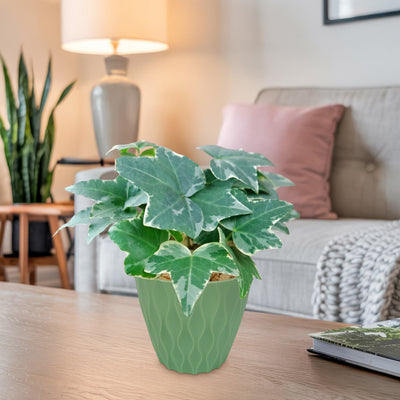
best plant food for indoor ivy Glacier Ivy Plant – Hedera Helix ‘Glacier Ivy’ 4" Pot / Self Watering / With PotThe Glacier Ivy, known as Hedera helix Glacier, is a striking variety of English ivy known for its elegant, variegated foliage. This evergreen climbing or trailing plant is widely appreciated for its adaptability, resilience, and aesthetic appeal. It is a favorite among gardeners, indoor plant enthusiasts, and landscapers due to its ability to thrive in diverse conditions. Whether used as ground cover, a trailing houseplant, or a vertical accent on
The Glacier Ivy, known as Hedera helix ‘Glacier’, is a striking variety of English ivy known for its elegant, variegated foliage. This evergreen climbing or trailing plant is widely appreciated for its adaptability, resilience, and aesthetic appeal. It is a favorite among gardeners, indoor plant enthusiasts, and landscapers due to its ability to thrive in diverse conditions. Whether used as ground cover, a trailing houseplant, or a vertical accent on trellises and walls, Glacier Ivy adds a sophisticated charm to any setting.
Glacier Ivy is commonly referred to as Variegated English Ivy due to its striking white and green foliage. Native to Europe and western Asia, it thrives in woodland environments, climbing trees and creeping along forest floors. Although Glacier Ivy itself is a cultivated variety, it retains the adaptability of its wild counterpart and can be grown in various climates, particularly in temperate regions. It has become naturalized in parts of North America, where it is commonly used in landscaping and erosion control.
One of the most distinguishing features of Glacier Ivy is its variegated leaves, which have a unique blend of silvery-green centers and creamy-white margins.
The foliage is small to medium-sized, with a classic ivy shape consisting of three to five lobes.
This cultivar is particularly valued for its compact growth habit, making it an excellent choice for hanging baskets, container gardening, or indoor decoration.
It is also more tolerant of indoor conditions compared to some other ivy varieties, thriving with moderate care.
When grown outdoors, Glacier Ivy can spread rapidly, reaching 10 feet long as a ground cover or climbing vine.
Indoors, its growth is more contained, typically extending 5 feet in trailing arrangements. Its moderate growth rate makes it easy to manage while still providing lush greenery for walls, trellises, or pots. Regular pruning can help control its spread and encourage bushier growth.
Glacier Ivy blooms from late summer to early fall with greenish-yellow flowers, just like other ivy varieties. However, it rarely flowers when grown indoors or in controlled landscapes, as flowering typically occurs on mature, unpruned vines in outdoor settings. When the flowers do appear, they are followed by small blackish-purple berries, which provide a food source for birds but are toxic to humans and pets if ingested.
One of the key advantages of Glacier Ivy is its versatility. It can be used as a climbing plant, an indoor trailing plant, or as ground cover to suppress weeds and prevent soil erosion. Unlike some other ivy varieties, it has slightly better tolerance to lower light conditions, making it an ideal choice for indoor spaces with indirect sunlight. Additionally, it's frost tolerance makes it a reliable evergreen option in colder climates. However, care should be taken in warmer regions where it can become invasive if not maintained.
When and How to Water Your Hedera Helix Glacier Ivy
The Glacier Ivy is a drought-tolerant plant, making it an excellent choice for low-maintenance gardens and indoor spaces. Once established, it can survive with minimal watering, making it an ideal option for those looking for hardy, adaptable greenery. Its variegated leaves not only add visual appeal but also help it withstand different environmental conditions, including occasional dry spells. This ivy plant thrives when planted in the spring or early fall, allowing its roots to establish before extreme temperatures set in.
In spring and summer, during the active growing season, your Ivy plant requires moderate watering, ensuring that the soil remains slightly moist but not soggy. Overwatering can lead to root rot, so well-draining soil is essential. Indoors, it benefits from occasional misting to maintain humidity levels.
In winter, during the dormancy period, Glacier Ivy plant requires less frequent watering, as the growth slows down. Water only when the soil feels dry to touch. It can tolerate cooler temperatures but should be protected from frost when grown outdoors in colder regions.
Light Requirements – Where to Place Your Hedera Helix Ivy Plant
When grown indoors as a houseplant, Glacier Ivy plant thrives in bright, indirect light for at least 4-6 hours a day.
A north- or east-facing window is ideal to provide the plant with enough light without scorching its delicate leaves.
It can tolerate low-light conditions, but this may slow down its growth.
If placed in an area with limited natural light, supplementing with grow lights can help maintain healthy foliage.
For outdoors cultivation, this ivy plant performs best in partial shade to full shade, as too much direct sunlight can scorch its leaves.
Ideally, it should receive about 3-4 hours of filtered or dappled sunlight each day. If planted in a sunnier location, providing afternoon shade can help prevent leaf damage.
Optimal Soil & Fertilizer Needs
Glacier Ivy prefers well-drained, nutrient-rich soil with a slightly acidic to neutral pH 6.0-7.0. A mixture of potting soil with added perlite or sand works well for container-grown plants, ensuring proper aeration and moisture retention. Instead, make or buy a well-draining potting mix, or ideally use our specialized potting mix that contains 5 natural substrates and mycorrhizae to promote the development of a strong root system that helps your Ivy plant to thrive.
Fertilizing once a year during the growing season with a balanced, water-soluble NPK fertilizer with a ratio of about 5-10-5, promotes lush growth. A diluted liquid fertilizer or slow-release granules can be used, but over-fertilization should be avoided as it may lead to leggy growth. During the dormant season, fertilization should be stopped to allow the plant to rest. Ensuring proper soil conditions and minimal feeding in winter supports healthy growth once the active season resumes.
Hardiness Zones & More
When grown indoors as a houseplant, your Hedera helix ivy plant thrives at temperatures between 60-75°F with moderate humidity levels. While it can tolerate dry indoor air, occasional misting or using a humidity tray helps prevent leaf drying. It requires bright, indirect light for optimal growth and should be rotated occasionally for light exposure.
For outdoors cultivation, the Glacier Ivy is hardy in USDA zones 5-11.
It can withstand a range of temperatures but should be sheltered from harsh winter conditions in colder regions.
It thrives in shaded to partially shaded areas and benefits from consistent humidity levels.
Mulching around the base can help retain moisture and protect the roots from extreme temperatures.
Wildlife – Hedera Helix Flowers Attract the Following Friendly Pollinators
The greenish-yellow flowers of Glacier Ivy attract a variety of pollinators, including bees and butterflies. These pollinators help promote biodiversity in gardens and natural landscapes.
According to the ASPCA, the Hedera helix is mildly toxic to humans and pets, including cats, dogs, and horses. Ingesting its leaves or berries can cause vomiting, diarrhea, and other symptoms. However, it is safe to touch and handle, making it a popular choice for indoor and outdoor decor.
How to Propagate Your Glacier Ivy
Glacier Ivy can be easily propagated through stem cuttings. Select a healthy, 4–6-inch stem cutting with several leaves. Remove the lower leaves and place the cutting in water or directly into a pot with moist, well-draining soil. If rooting in water, wait for roots to develop (typically within 2-3 weeks) before transplanting into soil. Keep the newly planted cutting in a warm, humid environment with indirect light for successful establishment.
Key Takeaways
- The Glacier Ivy plant features silvery-green leaves with creamy-white edges, making it a striking addition to indoor and outdoor spaces.
- It can climb walls, cascade from hanging baskets, or spread as ground cover, adapting well to different gardening styles.
- This ivy remains evergreen year-round and hardy in USDA zones 5-11, making it an excellent choice for colder climates.
- Once established, it can survive with minimal watering, making it an ideal option for those looking for hardy, adaptable greenery.
- Unlike some other ivies, this variety can tolerate lower light levels indoors, making it a great houseplant.
The Bottom Line
Overall, the Glacier Ivy (Hedera helix ‘Glacier’) is a beautiful and adaptable plant that enhances both indoor and outdoor spaces with its unique variegated foliage. Its ability to thrive in various conditions, combined with its moderate growth rate and versatility, makes it a popular choice for homeowners and landscapers alike. While it requires moderate light and well-draining soil, it is adaptable and can withstand occasional dry spells. Whether grown in a hanging basket, allowed to trail elegantly along a shelf, or used as a ground cover in gardens, Glacier Ivy is a timeless and practical addition to any plant collection.
Shipping Notes
- Free Standard Shipping on $100+ Orders to the USA.
- Except Preorder products are shipped in 48 hours.
- Delivery to the USA:
- Standard Shipping : 3-10 business days
- If time is of the essence, please consider selecting expedited delivery for faster service.
Exchange/Return Notes
- We offer a 30-day return/exchange service after receiving.
- Final sale items are not eligible for returns or exchanges.
- To process your return/exchange, please contact us at [email protected]
- Please click here for more details>>> Return & Exchange Policy