SKU: 81941896600
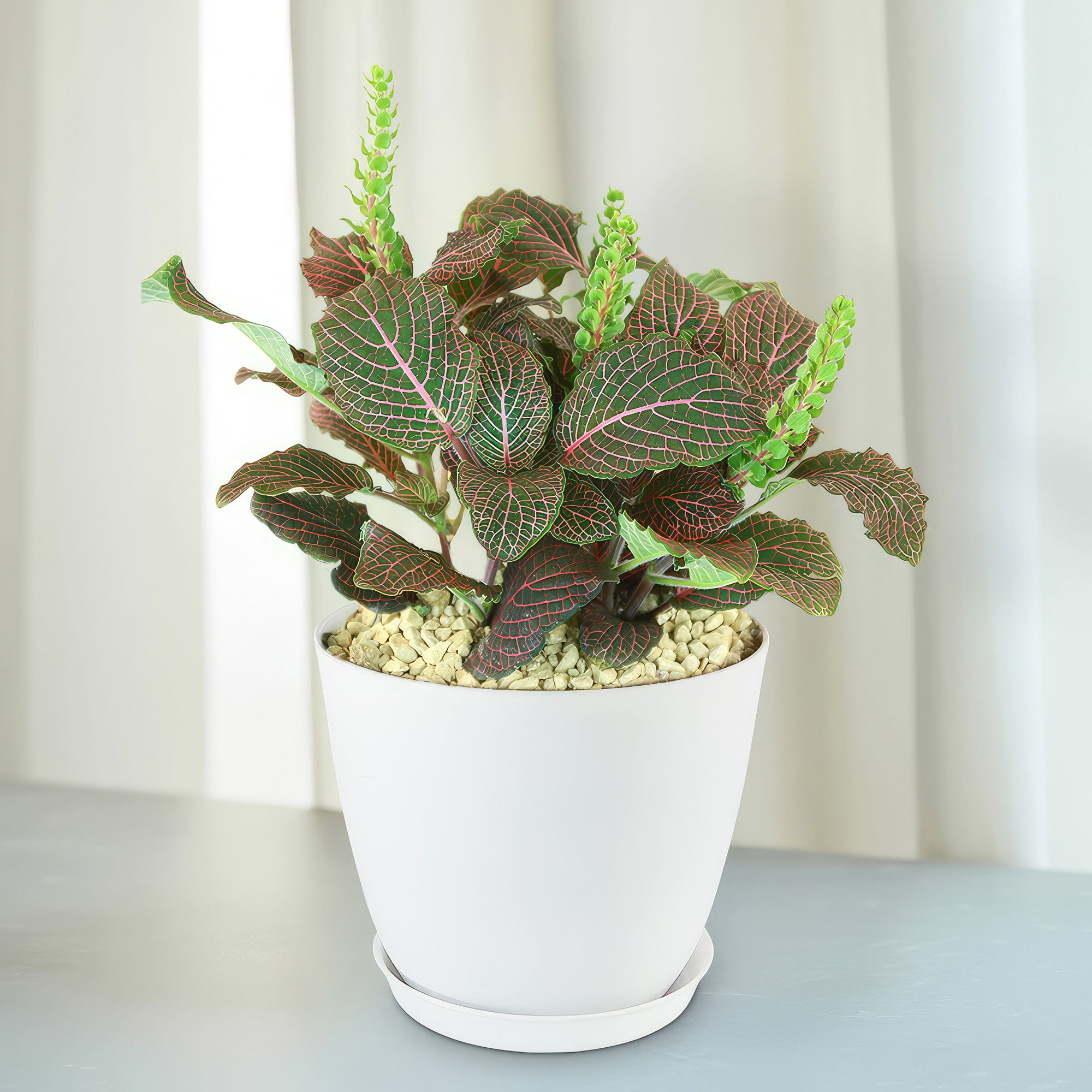
red green indoor plant

red green indoor plant Red Nerve Plant

Sale price$21.22 Regular price$23.58
Save 10%

Pay in installments of $5.89 with ShopPay, AfterPay and Klarna

Shipping Estimate
USA
  • USA
  • CAN

Ships within 48 hours · Estimated delivery Jul 22 - Jul 27

Promo Codes Available:

For Your Every Summer RSVP, with Code: SUMMER15

Description

red green indoor plant Red Nerve PlantKey Highlights Red Nerve Plant The Red Nerve Plant is known for its deep green leaves with bold red veins, creating a stunning contrast that adds color and texture to any indoor space. Fittonia Red Anne has a compact, trailing growth, making it ideal for hanging baskets, terrariums, or as ground cover in indoor plant arrangements. It thrives in low to medium indirect lighting, making it ideal for homes and offices. It also enjoys high humidity, making

Key Highlights – Red Nerve Plant

  1. The Red Nerve Plant is known for its deep green leaves with bold red veins, creating a stunning contrast that adds color and texture to any indoor space.
  2. Fittonia ‘Red Anne’ has a compact, trailing growth, making it ideal for hanging baskets, terrariums, or as ground cover in indoor plant arrangements.
  3. It thrives in low to medium indirect lighting, making it ideal for homes and offices.
  4. It also enjoys high humidity, making it a great choice for bathrooms or terrariums.
  5. According to the ASPCA, red Fittonia is non-toxic to cats and dogs, making it a safe option for pet owners.

The Red Nerve Plant, known as Fittonia albivenis 'Red Anne', is a striking variety of the classic Fittonia, known for its vibrant, red-veined foliage that creates a bold contrast against its deep green leaves.  

This evergreen perennial is a popular choice for indoor plant because it works great in terrariums, hanging baskets, and indoor planters. Its spreading, trailing growth habit makes it an excellent ground cover in humid environments, while its compact size and low-maintenance nature make it ideal for tabletops and small spaces. 

The Red Nerve Plant is native to the tropical rainforests of South America, particularly Peru and Colombia. In the wild, Fittonia grows as a creeping ground cover, spreading beneath taller plants and trees, benefiting from the dappled sunlight that filters through the canopy above. 

The ‘Red’ variety is sometimes called the Red Fittonia, or Red Mosaic Plant because of its richly pigmented veins, which range from bright crimson to deep burgundy.  

Fittonia albivenis 'Red' is an evergreen perennial with a trailing or spreading growth habit.

Its leaves are small, oval-shaped, and slightly textured, with a dark green base color and intense red veins that stand out vividly.

The plant has a moderate growth rate and remains relatively compact, making it an excellent choice for terrariums, dish gardens, and small indoor spaces.

The Fittonia also comes in a variety of colors such as white and pink  nerve plant, opens in a new tab.

Like other Fittonia varieties, it prefers high humidity and does best when misted regularly or placed in a humid environment. 

When grown indoors, this Fittonia red typically grows up to 6 inches tall and can spread up to 18 inches wide.

Its low-growing, creeping nature makes it ideal for filling in gaps in tropical arrangements or serving as a lush ground cover in humid greenhouse conditions. Regular pruning and pinching back the stems encourage fuller, bushier growth and prevent legginess. 

The blooms of red Fittonia are small, inconspicuous, spike-like, and pale yellow to off-white in color. However, flowering is rare indoors, as the plant tends to focus its energy on its vibrant leaves. Many growers choose to remove the flowers to encourage continued leaf growth and maintain the plant’s aesthetic appeal. 

When and How to Water Your Red Nerve Plant 

One unique feature of Fittonia is its dramatic response to dehydration—if the soil dries out, its leaves will droop significantly but quickly recover once watered. This makes it an excellent indicator plant for moisture levels, helping you know exactly when it needs water. 

Despite its delicate and lush appearance, the Red Nerve Plant is surprisingly drought-tolerant. This tropical plant prefers moist soil but can withstand short periods of dryness. However, allowing the soil to dry out completely for too long may cause wilting. It is crucial to find a balance by maintaining moderate moisture without overwatering, as excessive water can lead to root rot.

In the spring and summer, during its growing season, the Red Nerve Plant requires more frequent watering. Water the plant when the top inch of soil feels dry, usually about once or twice a week, depending on humidity levels. In higher humidity conditions, watering frequency may decrease. Always use room-temperature water and ensure proper drainage to avoid soggy roots. 

In fall and winter, in its dormant season, your Nerve Plant requires less frequent watering. Reduce watering to about once every 10–14 days, ensuring the soil remains slightly moist but never completely dry. The plant’s growth slows during this time, meaning it requires less hydration. However, maintaining adequate humidity remains essential to prevent leaf curling and browning. 

Light Requirements – Where to Place Your Red Fittonia

When growing indoors as a houseplant, place the Red Nerve Plant in bright, indirect light, such as near an east or north-facing window.

It thrives in filtered sunlight but is sensitive to direct sun exposure, which can scorch its delicate leaves.

Artificial grow lights can also be used to supplement light levels in low-light conditions.

When grown outdoors, it is best to place the Red Fittonia in a shaded or partially shaded location, where it receives around 2–4 hours of morning sunlight.

Avoid harsh afternoon sun, as it can damage the foliage.

If growing in a garden, plant it under larger foliage plants to provide natural shade. 

Whether grown indoors or outdoors, the Plant benefits from stable light conditions. Avoid moving it frequently between bright and dim environments, as sudden changes in light can cause stress and leaf drop. 

Optimal Soil & Fertilizer Needs 

The Red Nerve Plant thrives in a well-draining, nutrient-rich soil mix. A combination of peat-based potting mix with perlite or sand ensures proper drainage and aeration. The ideal pH range is between 5.5 and 6.5, slightly acidic. Planet Desert has specialized potting soil, opens in a new tab that includes an organic substrate with mycorrhizae to help with the growth of a healthy root system to help your succulents thrive.   

Fertilization is essential for vibrant foliage and steady growth. During the growing season, apply a balanced liquid NPK fertilizer once a year in the spring. Organic compost or worm castings can also provide additional nutrients. Over-fertilizing in winter can lead to salt buildup in the soil, which may cause leaf burns. 

Hardiness Zones & More 

When grown indoors as a houseplant, the Fittonia red prefers temperatures between 65°F and 80°F. It thrives in high humidity levels of 60% or more, making it ideal for terrariums or bathrooms. Avoid placing it near air vents or drafts, as sudden temperature fluctuations can cause stress. 

For outdoor cultivation, the Red Nerve Plant is best suited for USDA Zones 10–11, where temperatures remain warm year-round.

It requires consistently humid conditions and partial to full shade to prevent leaf burning.

In colder climates, it must be brought indoors before temperatures drop below 55°F. 

Wildlife – Red Nerve Plant Attracts the Following Friendly Pollinators  

The Red Nerve Plant is known to attract beneficial pollinators like butterflies, hummingbirds, and small bees when grown outdoors. While its tiny blooms are not highly fragrant, they can still serve as a food source for these insects in certain conditions.

Butterflies
Bees
Hummingbirds
Lady Bugs
Multi Pollinators
Other Birds

According to the ASPCA, the Red Nerve Plant is non-toxic to humans, cats, dogs, and birds. This makes it a safe choice for households with pets, as it does not pose a risk of poisoning if ingested. 

How to Propagate Your Fittonia Red 

The Red Nerve Plant is easily propagated through stem cuttings. Select a healthy stem with at least two leaf nodes, and trim it just below a node. Remove the lower leaves and place the cutting in water or moist soil. Rooting typically occurs within 2–4 weeks, after which the new plant can be transferred into its own pot. Keep the soil consistently moist and provide high humidity to encourage growth.

The Bottom Line 

Overall, the red nerve plant is a stunning, low-maintenance evergreen perennial that brings a tropical touch to indoor spaces with its unique, red-veined foliage. Its adaptability to terrariums, hanging planters, and indoor gardens make it a favorite among plant enthusiasts, while its compact growth habit ensures it fits well in small spaces. With proper care—consistent humidity, indirect light, and regular misting—this pet-safe, easy-to-care-for houseplant will thrive, adding a burst of color to any collection. Whether paired with other Fittonia varieties or used as a standalone accent, the Red Nerve Plant is a true showstopper for plant lovers seeking bold, tropical beauty.

Shipping Notes
  • Free Standard Shipping on $100+ Orders to the USA.
  • Except Preorder products are shipped in 48 hours.
  • Delivery to the USA:
  1. Standard Shipping : 3-10 business days
  • If time is of the essence, please consider selecting expedited delivery for faster service.
Exchange/Return Notes
  • We offer a 30-day return/exchange service after receiving.
  • Final sale items are not eligible for returns or exchanges.
  • To process your return/exchange, please contact us at [email protected]
  • Please click here for more details>>> Return & Exchange Policy
SKU: 81941896600

Discover Niche Categories That Outsell red green indoor plant

Top-Converting Item to Boost Your Average Order

4.7 ★★★★★
Based on 25 reviews
Sort
Highest Rating
Newest First
Oldest First
Product Reviews
B
Verified Purchase
B Lee
Fort Morgan, US
★★★★★ 5
Extremely helpful and applicable.
This week I received my copy of Tactics: A Game Plan for Discussing Your Christian Convictions by Greg Koukl. I was anxious to have a look at the book, as I have been following Greg Koukl's ministry of Stand to Reason for a number of years. On one hand, I was excited to see in book form what I have heard Koukl demonstrate so many times on his live radio program: an effective and gracious way to communicate one's faith in an articulate and winsome way. On the other hand, my familiarity with Koukl's Tactics audio program made me wonder if this was just a repackaging of the same material. I was thoroughly surprised. I'm a reader - but it's been a while since I have devoured a book. Tactics is an immediately practical book. The author's heart is that Christians be equipped to be good ambassadors. An ambassador has three skills: "knowledge, an accurately informed mind; wisdom, an artful method; and character, an attractive manner." Koukl describes the goal of a tactical approach - one that seeks to converse more persuasively by being thoughtful and reasonable, rather than emotional, about one's convictions. In a very balanced way, Koukl carefully introduces this approach and neutralizes some of the negative connotations that come with sharing and defending the faith. Some people immediately object at the idea of argumentation or "methods." However, Koukl summarizes a more biblical approach: "Here's the key principle: Without God's work, nothing else works; but with God's work, many things work. Under the influence of the Holy Spirit, love persuades. By the power of God, the gospel transforms. And with Jesus at work, arguments convince. God is happy to use each of these methods." Now Koukl dives into the meat of the book. He presents about a half dozen "tactics," as he calls them - each with a memorable name, such as, "Columbo," "Suicide," and, "Taking the Roof Off," among others. As he teaches you these tactics, Koukl's experience and mastery in this area immediately become evident. He is not a theorist presenting untested ideas. Instead, he is a veteran, discussing situation after situation gleaned from countless personal encounters, public debates, radio interviews, and friendly conversations. The phenomenal part is that these approaches are simple and the applications are immediately accessible to the reader. One particular insight Koukl shares should bring relief to those who feel fear come over them at even the thought of discussing their faith: you don't have to hit home runs. In fact, Koukl stresses that you don't even have to get on base. The goal is to leave them with something to think about. His advice: simply leave them with "a stone in their shoe." Navigating through the book, you will find gem after gem of wisdom. So many of the common objections that the Christian encounters are found here - but with answers that are actually useful in conversation. Although much of the substance is philosophical in nature, Koukl drops the jargon and replaces it with practical expressions. This is a handbook suitable for the layman and professional apologist alike. After passing the halfway point in the book, you will realize that you are not just learning how to steer safely through a conversation - you are learning how to think. Koukl will sharpen your thinking skills and your ability to spot fuzzy logic and faulty arguments. You will realize that this is a book about truth. By the time you reach the end (it's about 200 pages), you will be amazed at the amount of wisdom, insight, and courage you have gleaned. A second reading is definitely in order. Koukl's Tactics is endorsed by a long list of notable apologists and Christian thinkers: Norman Geisler, William Lane Craig, Gary Habermas, J. P. Moreland, Hank Hanegraaff, Jay Wesley Richards, David Noebel, Justin Taylor, Paul Copan, Sean McDowell, Frank Turek, and Craig Hazen. For those familiar with Koukl's Tactics audio program, many of the same personal encounters are cited. However, this is not a repackaging of old material. I found the book to be immensely helpful even after recently re-listening to Greg Koukl's Tactics in Defending the Faith audio program. In addition to the expanded and fresh material, I found the summaries at the end of each chapter to be particularly helpful. Greg Koukl's Tactics: A Game Plan for Discussing Your Christian Convictions is not designed to give you pat answers or lists of facts to bring to your conversations. Far from being "another evangelism book," Tactics is a book that will challenge you to be a critical thinker, a logical communicator, and a gracious ambassador for Jesus Christ.
WAS THIS REVIEW HELPFUL?YesReportShare
Reviewed in the United States on February 3, 2009
D
Verified Purchase
David C. Leaumont
Chelsea, US
★★★★★ 5
This is the all-important second-side of apologetics
Apologetics requires two sides of a person - the knowledgeable reasoning side and the compassionate, calm-but-tactical side. Both are key, whether you are a presuppositional apologist or an evidentiary apologist. Regardless of the facts you put on the forefront of your apologetic, this book helps make your conversations more fruitful, last longer, and reach more people for Christ. This book is a supreme source to help develop this second side. Greg Koukl is an apologetics professor at Biola University and has his own radio talk show where he defends the Christian worldview. He also conducts an online ministry at str dot org. (STR = stand to reason) The focus of this book is to provide easy-to-remember and usable tactics for discussing your faith and conversing with people of different viewpoints in ways to open their minds to the Christian worldview. Koukl begins with a discussion on the need to keep discussions from being trench warfare. Too many discussions about Christian apologetics are cut short by harsh arguments that do little. Christians must be all things to all people and find a way to share the faith while not scaring off those we want to have hear it. In short, Koukl writes "If anyone in the conversation gets angry, you lose." Greg's underlying principle is not to take everyone to the cross with every discussion. Some people are way too far away from belief to make such a trek in such a small amount of time. The need to help open the other person's mind to Christ and plow the field to make the ground of the heart fertile is most necessary in many people. That is why he focuses on putting a rock in everyone's shoe. What he means by this is he wants to put an idea in their head that they will likely spend a lot of time thinking about. He wants to be the rock in the shoe that noone forgets about. Through this, he plants a seed of thought in the person and leaves the rest up to God. While the intent of this book is not to give ready-made answers to specific arguments critics have, there are specific examples he discusses while he is giving examples of how a tactic might work. For example, the belief in moral relativism is discussed when he discusses the tactic of "Practical Suicide" (an argument that cannot stand because it is self-refuting.) The reviews of this book included inside the cover are a who's-who of Christian apologists. And, after reading the book, I see what they were all raving about. This book is one of the top apologetic resources I have read, and it serves as a practical guide for all discussions. I give this book my highest recommendation for anyone interested in Christian apologetics regardless of your experience or knowledge level. This book will be suc a huge blessing to all Christians and to their ability to discuss Christ more effectively.
WAS THIS REVIEW HELPFUL?YesReportShare
Reviewed in the United States on June 6, 2010
P
Verified Purchase
Phillips Family
Whiting, US
★★★★★ 5
great book
Gregory Koukl does an excellent job of equipping believers to engage in meaningful and respectful conversations with skeptics. Rather than teaching readers how to win arguments, he provides practical tools for asking thoughtful questions and fostering productive dialogue. This book not only prepares Christians to defend their faith with confidence, but it also offers valuable insights into effective communication in general. As I read, I found that it strengthened my understanding of my own beliefs and helped me think more deeply about why I believe what I do. The result is a greater confidence in sharing and discussing faith with others. I highly recommend this book to anyone who wants to become a more effective communicator and a more thoughtful ambassador for Christ.
WAS THIS REVIEW HELPFUL?YesReportShare
Reviewed in the United States on June 3, 2026
A
ajoe john kattoor
Omaha, US
★★★★★ 4
good book
Format: Kindle
Good selection of cases depicting complications and management More tips and tricks involving structural cases would have been useful Thanks
WAS THIS REVIEW HELPFUL?YesReportShare
Reviewed in the United States on April 6, 2024
I
Verified Purchase
Iesous
Phoenix, US
★★★★★ 5
Foundational and renewing
Format: Kindle
Throughout history, religions have contributed to major atrocities and injustice to some. It is not unusual in my eyes to see a world sceptical of an organization that has these historical marks of shame. At the same time, I have seen religions pulling people together. Communities of believers caught up in something bigger than themselves. Living out a life of love and sacrificing for the good of those who are vulnerable. The one thing I have seen that is common among the negative experiences is that at their root, it is "men" thinking they can play God. People have had horrible experiences through "men" claiming to represent God, yet their behavior couldn't be further from what we are called to as part of our faith, hope, and belief. To those that read this, I am sorry for what you have gone through if you have fallen victim to "man's" institution of the Christian faith. God's Word should never be used as a means to justify injustice, racism, condemnation, and other bouts of un-Christian behavior and then using God's name as a crutch. I can tell you, these hypocrites will reap their just reward, and these rewards will not be what they expect. This book is a refreshing introduction into understanding the roots of faith and Christianity. It can speak as an introduction to those who have never been exposed to Christianity, lying a great foundation. It can speak to those who have fallen away due to bad experiences, allowing one to sift through the experiences exacted by the stupidity of man versus the calling that comes when confessing that YHWH is Creature and LORD. It also can renew ones mind and strengthen ones understanding of the faith they confess and what that means for exacting love into this world and not judgement. I wouldn't say that this is a conversion book, however it is written from the perspective of one, N. T. Wright, who believes and would love others to come to the same conclusion. I would say that it is more of a fresh introduction into Christianity that challenges those that confess their faith to think twice of how their lives represent their confession. With sorrow for those that have been burned by their Church experience, to those that need to take a step back and renew their understanding of the faith they profess in Christianity, and to those that are the good Samaritan of the Christian faith, this book is great!
WAS THIS REVIEW HELPFUL?YesReportShare
Reviewed in the United States on November 22, 2022

recommand products