Pay in installments of $7.40 with
 ,
,
 and
and

Shipping Estimate
USA
- USA
- CAN
- USA
- CAN
Ships within 48 hours · Estimated delivery Sep 26 - Oct 1
 Promo Codes Available:
For Your Every Summer RSVP, with Code: SUMMER15
Description
anthurium wendlingeri growth rate Anthurium wendlingeriAnthurium wendlingeri Anthurium wendlingeri is an epiphytic strap leaved Anthurium with long pendent blades and a mature inflorescence that can form a distinctive corkscrew shaped spadix. The leaves emerge from a short crown, then hang in narrow, dark green bands when the plant is grown above eye level. The foliage is firm, elongated and narrow, with a central midrib running through each blade. Mature plants can gain impressive length while keeping
Anthurium wendlingeri
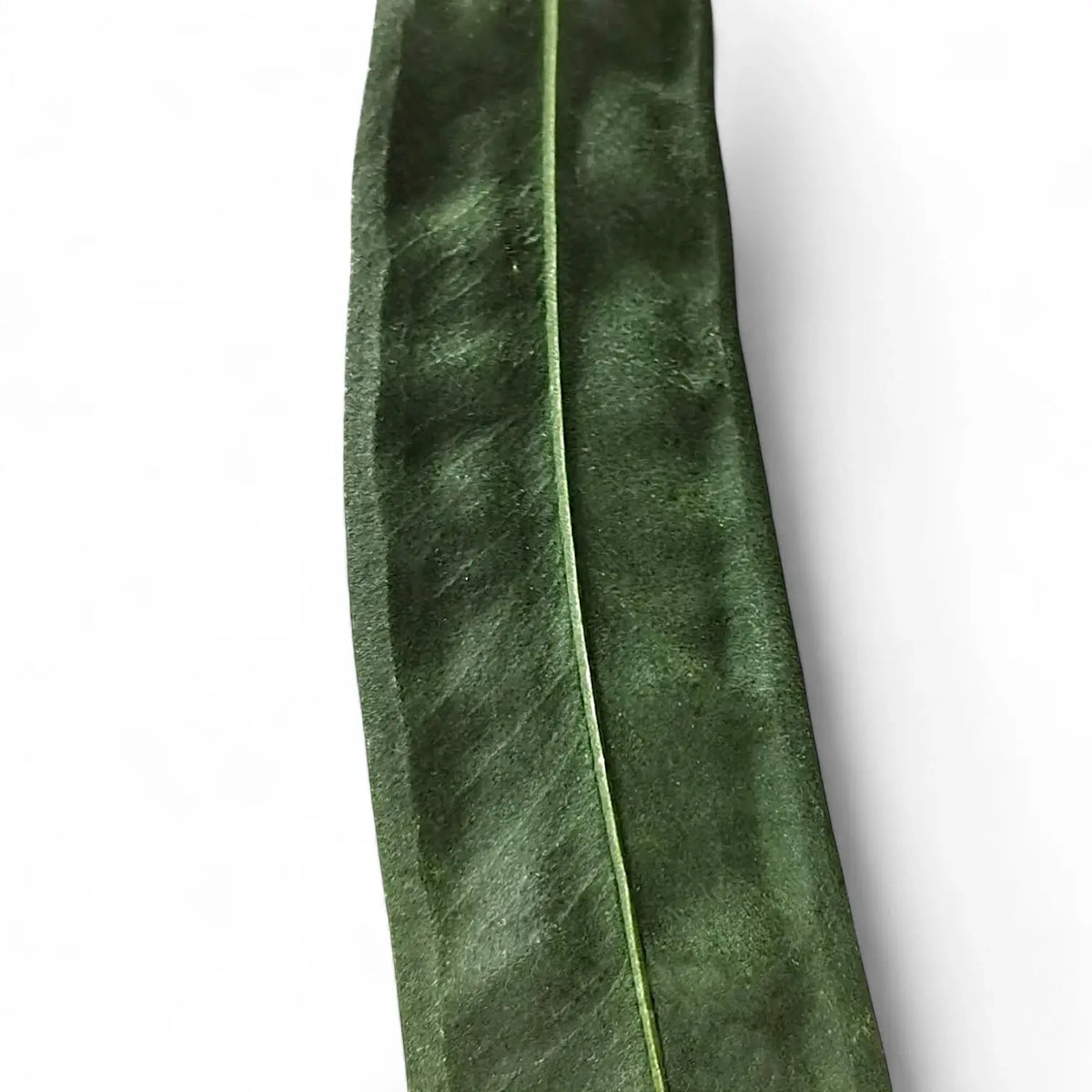
Anthurium wendlingeri is an epiphytic strap-leaved Anthurium with long pendent blades and a mature inflorescence that can form a distinctive corkscrew-shaped spadix. The leaves emerge from a short crown, then hang in narrow, dark green bands when the plant is grown above eye level.
The foliage is firm, elongated and narrow, with a central midrib running through each blade. Mature plants can gain impressive length while keeping the crown relatively compact, so clear drop space below the pot becomes important as the leaves extend.
Anthurium wendlingeri leaf and inflorescence features
- Growth habit: Epiphytic Anthurium with short stems and long pendent leaves.
- Leaf form: Strap-shaped, leathery blades that hang cleanly from the crown.
- Leaf surface: Dark green, firm and narrow, with a defined central midrib.
- Inflorescence: Mature plants may produce a pale, coiling spadix with a compact spathe.
- Container behaviour: Raised growth gives the leaves room to descend naturally.
Forest origin and mature growth of Anthurium wendlingeri
Anthurium wendlingeri is native from southeastern Nicaragua through Costa Rica and Panama to northwestern Colombia. It grows as an epiphytic subshrub in wet tropical conditions, using elevated forest positions where roots receive frequent moisture, airflow and loose organic material.
In cultivation, Anthurium wendlingeri needs moisture with oxygen, warmth with airflow and enough humidity for new leaves to extend smoothly. Mature specimens also need physical space below the pot, especially once longer leaves begin to form.
Anthurium wendlingeri care guide
- Light: Provide bright filtered light. Direct midday sun can leave pale scars or dry patches on the long blades.
- Watering: Keep the root zone lightly moist, then water again as the upper substrate begins to dry.
- Substrate: Use a coarse epiphyte mix with bark, coco chips, pumice or perlite, charcoal and a modest moisture buffer.
- Pot choice: A hanging basket, slotted pot or raised planter improves airflow and gives the leaves room below.
- Temperature: Keep warm at roughly 20–29 °C, with protection from cold draughts and cool wet substrate.
- Humidity: Aim for 60–80% humidity, especially while new strap leaves are expanding.
- Airflow: Gentle air movement clears moisture from around the crown and leaf bases.
- Feeding: Use a diluted balanced fertiliser during active growth; flush occasionally to reduce salt accumulation.
- Repotting: Refresh broken-down substrate carefully, holding long leaves so they do not crease during handling.
- Flowering: Mature, stable plants may produce the coiling spadix; flowering depends on age, health and growing conditions.
- Propagation: Division or stem sections with active nodes are the most reliable methods for established plants.
- Mineral substrate: Mineral or semi-hydro substrates can suit rooted plants when warmth, nutrients and moisture remain steady.
Growth issues in Anthurium wendlingeri
- Stuck or rippled new leaves: Check humidity, watering consistency and airflow around the emerging blade.
- Cracked leaf tips: Review handling and placement; long leaves are easily bent against shelves, walls or pot edges.
- Yellowing near the crown: Inspect the roots and lower substrate for compaction, excess moisture or low temperature.
- Brown patches: Check for direct sun, cold damage, fertiliser concentration or repeated drying.
- Distorted growth: Examine the midrib, undersides and new leaves for thrips, mites or other sap-feeding pests.
Leaf length increases gradually as the plant establishes a strong root system. A high growing position keeps mature blades clear of surfaces and preserves the pendent outline of the species.
Anthurium wendlingeri toxicity and safety
Anthurium wendlingeri should be kept away from pets and children that may chew plant material. Like Anthurium generally, it contains calcium oxalate crystals that can irritate the mouth, throat, skin and eyes if chewed or if sap contacts sensitive skin. Keep it away from pets and children, and wash hands after pruning or repotting.
Anthurium wendlingeri name origin and botanical background
Anthurium wendlingeri belongs to the Araceae family and was published by G.M. Barroso in 1965. In Anthurium, the genus name draws on Greek roots meaning “flower” and “tail”, linked to the spadix. The species epithet wendlingeri honours Kurt Wendlinger, connected with the original Costa Rican collection history of this species.
Anthurium wendlingeri combines long strap leaves with the possibility of a coiling mature spadix on established plants.
Shipping Notes
- Free Standard Shipping on $100+ Orders to the USA.
- Except Preorder products are shipped in 48 hours.
- Delivery to the USA:
- Standard Shipping : 3-10 business days
- If time is of the essence, please consider selecting expedited delivery for faster service.
Exchange/Return Notes
- We offer a 30-day return/exchange service after receiving.
- Final sale items are not eligible for returns or exchanges.
- To process your return/exchange, please contact us at [email protected]
- Please click here for more details>>> Return & Exchange Policy