How to care for String of Pearls
For a complete, in-depth growing guide covering everything from care basics to long-term maintenance, troubleshooting, and expert tips, visit our article.
Learn more →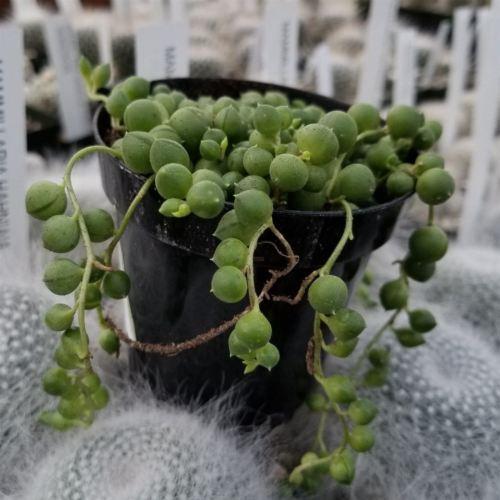
Pay in installments of $6.54 with
 ,
,
 and
and

Ships within 48 hours · Estimated delivery Sep 26 - Oct 1
 Promo Codes Available:
For Your Every Summer RSVP, with Code: SUMMER15
succulent that looks like peas in a string Shop 'String of Pearls - Senecio rowleyanus' Care and Growing GuideThe String of Pearls, also known as Senecio rowleyanus, is a unique trailing succulent from the daisy family, admired for its distinctive cascading growth habit. This plant is also commonly called string of beads, string of peas, and rosary vine. The String of Pearls gets its name from its distinctive, long, trailing stems that are adorned with small, spherical leaves that resemble pearls. Each of these bead like leaves features a unique translucent
The String of Pearls, also known as Senecio rowleyanus, is a unique trailing succulent from the daisy family, admired for its distinctive cascading growth habit. This plant is also commonly called string of beads, string of peas, and rosary vine.
The String of Pearls gets its name from its distinctive, long, trailing stems that are adorned with small, spherical leaves that resemble pearls. Each of these bead-like leaves features a unique translucent “window”, a thin, clear strip that allows light to pass into the leaf for photosynthesis. These little green pearls hang delicately from the stems, creating a beautiful cascading effect. In its natural habitat, the stems trail along the ground, rooting where they come into contact, and form dense mats.
Native to South Africa, this charming string of pearls houseplant features trailing stems with pea-like or tiny melon-shaped leaves spilling over planters and hanging baskets, much like its closely related plant string of rubiesGo to othonna capensis ruby necklace.
Your String of Pearls typically grows up to 2 feet long rather than tall, as it is a naturally trailing and hanging plant.
The moderately fast-growing nature of this string of pearls plant makes it a great choice for a variety of landscapes.
The flowers of the string of pearls bloom during the spring and summer months, with white flowers along the stalk and bright yellow anthers. However, it's important to note that String of Pearls plants are primarily grown for their unique bead-like foliage rather than their flowers. Nonetheless, if your string of pearl plants does flower, it's definitely a treat to behold!
This string of pearls also comes in another lovely variety, a variegated string of pearlsGo to senecio rowleyanus string of pearls variegated, with its white-creamy foliage.
String of Pearls is a drought-tolerant succulent that thrives with minimal watering. To keep your plant healthy, allow the soil to dry out between waterings, and only water when the top inch of soil feels dry. The spring of pearls plant prefers watering every 10-14 days in the growing season, and every 3-4 weeks in the dormant season.
During the spring and summer growing season, water every 10–14 days on average. As the plant actively grows, it may require slightly more frequent watering, especially in warm or bright environments.
In fall and winter, reduce watering to about once every 3–4 weeks. Since the plant enters a semi-dormant phase, it uses less moisture and is more vulnerable to overwatering.
Too much water can quickly kill a String of Pearls plant, so it’s always safer to underwater than to overwater. Using terracotta or clay pots helps absorb excess moisture and keeps roots healthier by preventing soggy soil conditions.
When grown indoors, place it near a window that receives bright indirect sunlight for at least 4-6 hours a day. South-facing or west-facing windows are usually the best choices. You can also use artificial grow lights to provide the necessary light if natural sunlight is limited.
When growing outdoors, your low-maintenance string of pearls prefers full sun to partial shade to thrive. Four hours of direct morning or evening sun can also be beneficial for your Senecio rowleyanus, but be careful not to expose it to intense, direct sunlight for extended periods, as it can scorch the leaves of your String of Pearls succulent.
Keep an eye on your string of pearl succulents for any signs of light stress. If the leaves start to turn yellow or brown, it could be a sign that the light is too intense. On the other hand, if the leaves become elongated and spaced out, it might indicate that your pearl succulent is not receiving enough light.
Use a well-drained soil for your Senecio rowleyanus, and NPK fertilizer (5-10-5) once a year in spring for healthy growth. Planet Desert has got your back with our specialized succulent potting mix or cactus soil mix that includes 5 natural substrates with organic mycorrhizae, perfect for promoting shallow root systems and happy String of Pearls succulents.
Apply the NPK fertilizer once a year in the spring of about 5-10-5 ratio, to provide a gentle boost of nutrients. However, during the cooler months or when your Senecio rowleyanus is in a dormant phase, it's best to avoid fertilizing altogether.
If you notice any signs of fertilizer burn, such as leaf discoloration or wilting, flush the soil with water to remove any excess nutrients.
In the United States, this is mostly an indoor plant, but if you live in southern Florida or Hawaii, then you can cultivate it outdoors in USDA zones 9-12.
When it comes to humidity, the String of Pearls is adapted to low-humidity environments.
It can tolerate average indoor humidity levels, but it's important to avoid excessive moisture around the plant.
Ensure good air circulation and avoid placing your String of Pearls in areas prone to high humidity, such as bathrooms or kitchens.
If you are growing your String of Pearls indoors, ideally, keep your plant in a warm environment. In general, it prefers average room temperatures between 60°F and 85°F, which helps it stay healthy and active. Its trailing growth habit makes it an excellent houseplant for hanging baskets, shelves, and high planters, where its cascading stems can be fully displayed and appreciated.
When in bloom, String of Pearls produces small, delicate white flowers that can attract friendly pollinators such as bees, butterflies, hummingbirds, and other beneficial insects in outdoor or greenhouse settings. These subtle blooms add ecological value while enhancing the plant’s ornamental charm.
According to the ASPCA, String of Pearls is mildly toxic to cats, dogs, and horses if ingested in large amounts. So, if you have furry friends at home, it's best to keep your string of pearls out of their reach or opt for pet-friendly alternatives.
For propagating a string of pearls Senecio rowleyanus, simply snip off a healthy stem or string of pearls plant seed (from leaf tips) and place it in well-draining soil. After a few weeks, you should start to see roots forming, indicating successful propagation by stem cuttings.
Key highlights
- String of Pearls is one of the best trailing houseplants, featuring long cascading strands that look beautiful in hanging baskets and shelves.
- This plant is highly drought-tolerant, storing water in its round leaves and requiring minimal watering.
- String of Pearls remains compact and space-efficient, making it ideal for small homes, desks, and modern interiors.
- The plant can produce delicate, fragrant white flowers under the right growing conditions, adding subtle ornamental value.
Overall, the String of Pearls plant is a unique and eye-catching succulent that is loved for its trailing stems adorned with small, bead-like leaves resembling pearls. It's a popular choice for indoor gardens and hanging baskets, adding a touch of whimsy and elegance to any space. With its distinct appearance and low-maintenance nature, the String of Pearls hanging plant is a delightful addition to any plant lover's collection!
Don't miss out on this opportunity to add something truly exceptional to your garden or in hanging baskets. Order your very own Senecio Rowleyanus string of pearls today!