Pay in installments of $5.70 with
 ,
,
 and
and

Shipping Estimate
USA
- USA
- CAN
- USA
- CAN
Ships within 48 hours · Estimated delivery Sep 26 - Oct 1
 Promo Codes Available:
For Your Every Summer RSVP, with Code: SUMMER15
Description
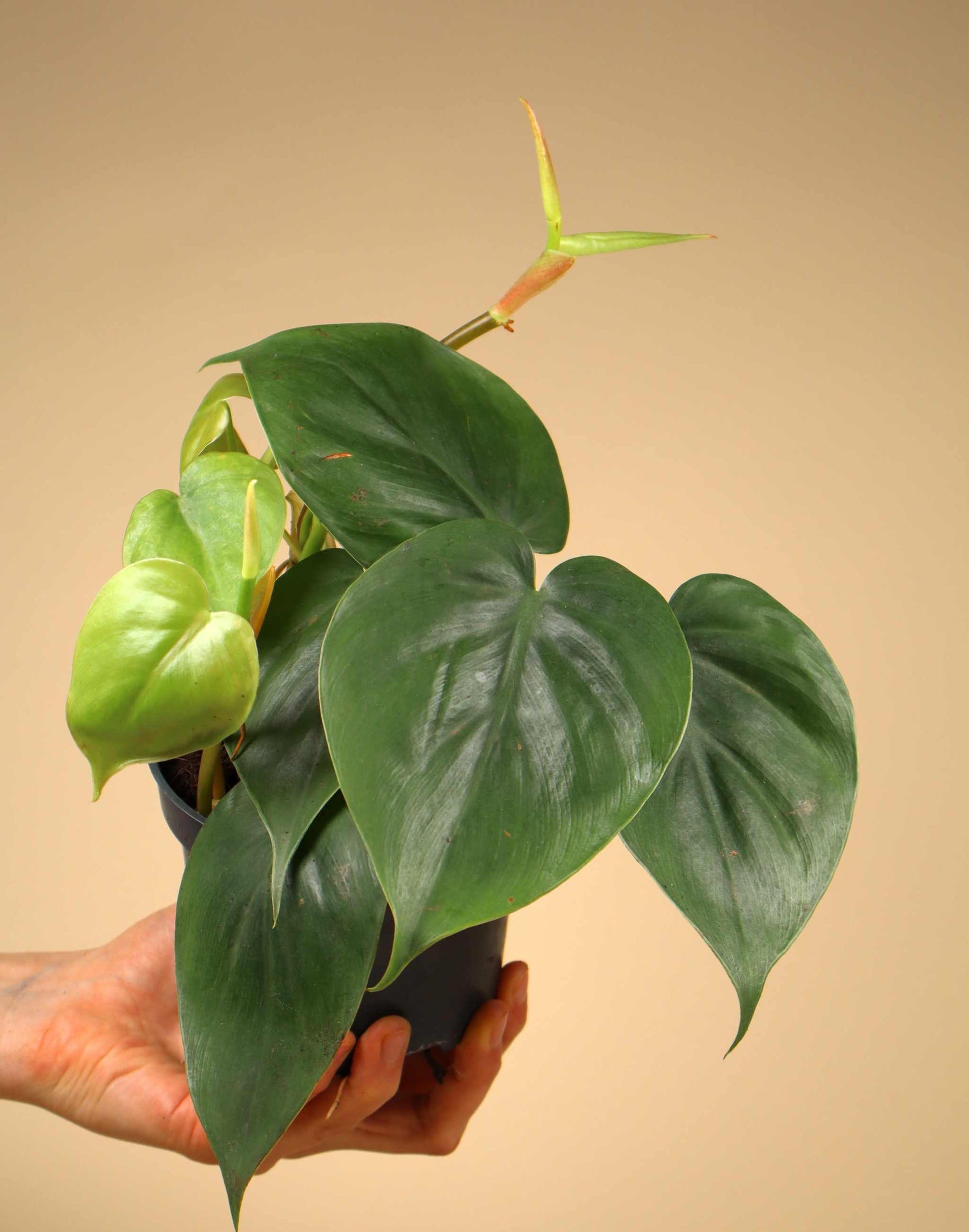
philodendron hederaceum climbing plants Philodendron Hederaceum (Climbing Plant)Common Philodendron in Central & South America Very easy to care for Philodendron hederaceum, the climbing plant, is a climbing plant of the Philodendron genus that occurs naturally in large parts of South and Central America, Mexico and the Caribbean. This is the most popular houseplant in the Philodendron genus and a hardy, easy care plant with beautiful light green, heart shaped leaves. The plant is a climber that can grow 3 6 meters tall with
Common Philodendron in Central & South America - Very easy to care for
Philodendron hederaceum, the climbing plant, is a climbing plant of the Philodendron genus that occurs naturally in large parts of South and Central America, Mexico and the Caribbean. This is the most popular houseplant in the Philodendron genus and a hardy, easy-care plant with beautiful light green, heart-shaped leaves.
The plant is a climber that can grow 3-6 meters tall with shiny heart-shaped leaves that can be up to 30 centimeters long. In young specimens, the leaves often have a burgundy underside and a velvety texture, which sometimes leads to the plant being sold as " Philodendron micans ". As the plant matures, both the red underside and the velvety texture often disappear.
The climbing plant can decorate a shelf a little way into the room or hang and dangle in a hanging basket. Long tendrils grow quickly and create a spiraling, exotic effect.
Botanical description
The name Philodendron comes from the Greek "Philo" (love) and "dendron" (tree), which refers to the plant's habit of climbing upwards, usually up tree trunks.
Philodendron hederaceum was described to science in 1829 and has since been given many synonymous names such as Philodendron scandens (1853), Philodendron micans (1854) and Philodendron oxycardium (1856). Although collectors consider these to be different species, botanists consider them to be the same plant. According to the rules of botany, the first published name is the accepted one, making Philodendron hederaceum the correct name.
The plant is widespread from sea level to 1200 meters, possibly as high as 1500 meters. In the Caribbean it occurs in the southeastern islands from Martinique south to Trinidad. In South America it extends from Bolivia and Peru west along the Los Ríos Province near the coast of Ecuador and up through Colombia, Venezuela, Guyana and Brazil.
As a hemiepiphytic liana , P. hederaceum can begin life as a seed on the ground that then climbs a tree, or as a seed placed on a tree branch in bird droppings. The plant can grow with its roots both in and out of the soil, making it a semi-epiphyte.
There is great natural variation within the species. The leaves can be broadly heart-shaped and subcoriaceous to coriaceous (leathery). The leaf blade is quite thin, especially in young leaves. Mature leaves in the wild can measure 11-40 centimeters long and 8-49 centimeters wide. When the plant is allowed to climb high in the rainforest, it can eventually produce inflorescences with greenish flower spikes that are red to purple on the inside.
Care
The climbing rose thrives in both shade and light, but avoids direct sunlight. It appreciates heat and can handle dry air, but spray irrigation of the leaves from time to time is appreciated.
Water moderately 1-2 times a week depending on the season and location. Keep the soil slightly moist but not wet. The species grows best in very porous soil that drains quickly. A mixture of orchid bark, perlite and possibly finely chopped sphagnum moss works great. You can find all these products on the 'soil' tab in the menu. We recommend this soil.
For best results, give the plant a moss stake or trellis to climb on. The higher the support, the larger the leaves can grow. The brighter the location, the larger the leaves will be. A grow light is good to use in dark rooms or during winter.
Climbing rose is easy to propagate by cuttings. Take a cutting below a node on the vine and place at least two nodes in porous soil and keep moist in a moderately bright location. You can also root the cutting in water, but rooting in soil often speeds up the process.
Why different names?
You may see climbing calla sold under many different names such as Philodendron scandens, P. micans, P. oxycardium or P. Brasil. This is because the species is very variable in appearance depending on its age and where it is grown. Young plants may have velvety, reddish leaves (sold as " micans "), while others have yellow-green leaves (sold as " Brasil "). As the plant matures, these colors often fade and the leaves turn dark green.
To botanists, all of these variations are the same species, Philodendron hederaceum, because they share the same scientific characteristics. Variation within species is natural and corresponds to how people look different but are still the same species.
Warning: Contains calcium oxalate crystals and is toxic to both humans and animals. Keep away from pets and children. If swallowed, may cause oral irritation, swelling, vomiting and difficulty swallowing.
A beautiful and easy-care Philodendron that suits everyone! Buy Philodendron scandens online!
Shipping Notes
- Free Standard Shipping on $100+ Orders to the USA.
- Except Preorder products are shipped in 48 hours.
- Delivery to the USA:
- Standard Shipping : 3-10 business days
- If time is of the essence, please consider selecting expedited delivery for faster service.
Exchange/Return Notes
- We offer a 30-day return/exchange service after receiving.
- Final sale items are not eligible for returns or exchanges.
- To process your return/exchange, please contact us at [email protected]
- Please click here for more details>>> Return & Exchange Policy