Pay in installments of $7.27 with
 ,
,
 and
and

Shipping Estimate
USA
- USA
- CAN
- USA
- CAN
Ships within 48 hours · Estimated delivery Sep 25 - Sep 30
 Promo Codes Available:
For Your Every Summer RSVP, with Code: SUMMER15
Description
ocotillo succulent Shop 'Madagascar ocotillo - Alluaudia procera' Care and InfoIntroducing the Madagascar ocotillo plant, also known as Alluaudia procera. This succulent is a unique species of the striking Alluaudia genus that belongs to the family Didiereaceae. It is native to the arid regions of Madagascar and is also known as the African ocotillo or the Madagascan ocotillo. This plant is often referred to as the "false ocotillo" because of its striking resemblance to the Fouquieria splendens. This stunning succulent is known
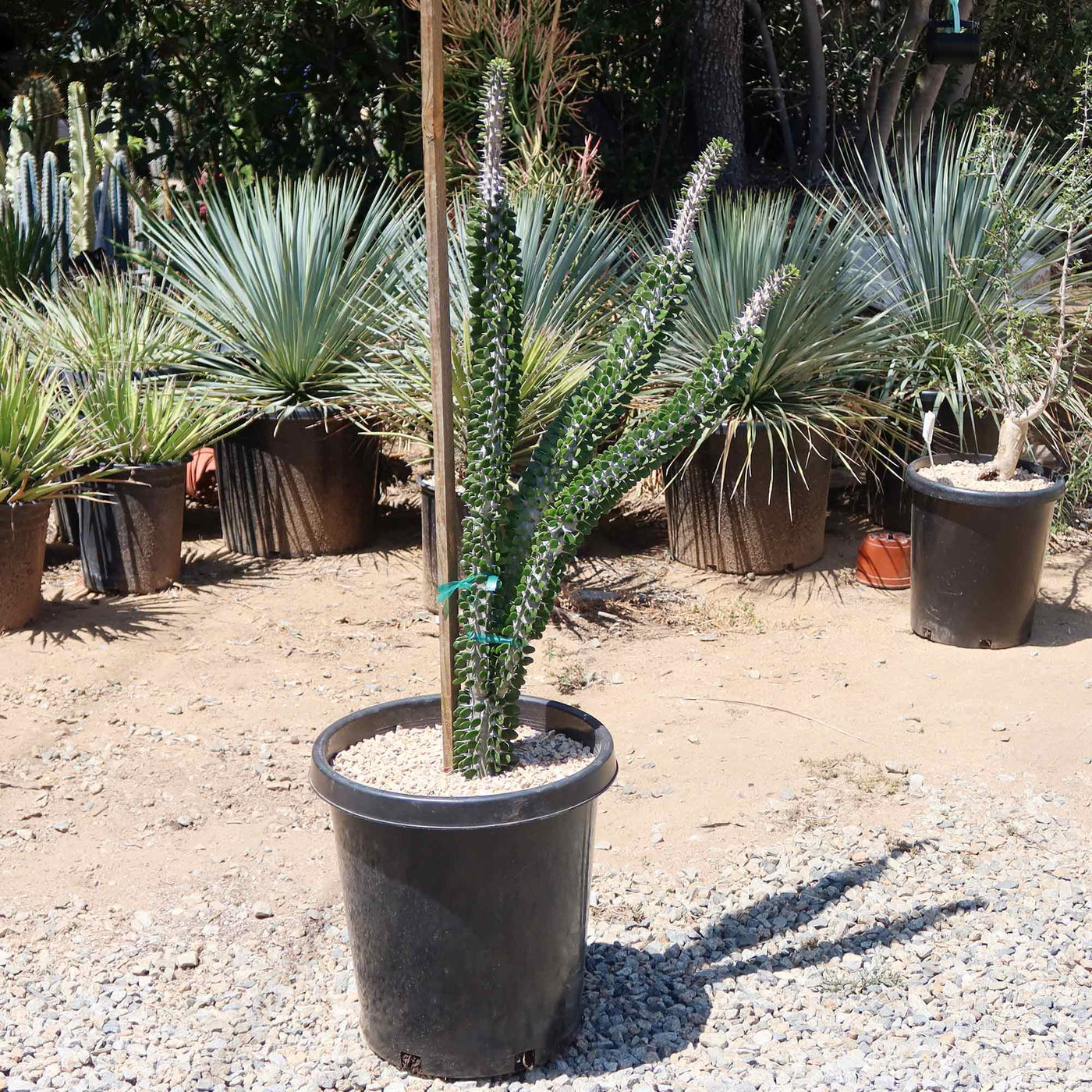
Introducing the Madagascar ocotillo plant, also known as Alluaudia procera. This succulent is a unique species of the striking Alluaudia genus that belongs to the family Didiereaceae. It is native to the arid regions of Madagascar and is also known as the African ocotillo or the Madagascan ocotillo.
This plant is often referred to as the "false ocotillo" because of its striking resemblance to the Fouquieria splendens.
This stunning succulent is known for its unique leaves and columnar stem that can grow up to 25 feet tall. Its rounded succulent leaves and grey spines create a captivating visual appeal.
The stems are covered in sharp thorns, which act as a defense mechanism against animals and help to conserve water.
Some of its greyish-green stems occasionally fork off in a pendulous direction before curving back upwards.
It takes several years for young Alluaudia procera to form a tangle of stems; during that time, a strong central stem develops.
The leaves sprout up from the main stem itself, which is mostly unbranched and grows upright. This gives the branches of the ocotillo plant an elegant and statuesque appearance.
It will only begin producing flowers once it reaches maturity, which is usually when the plant grows to at least 3 meters, or about 10 feet, tall. They are usually pale green, greenish yellow, or whitish in color, giving the plant a soft and understated appearance.
When and How to Water Your Madagascar ocotillo Plant
Optimal Soil & Fertilizer Needs
The Madagascar ocotillo plant prefers a well-draining soil mix that mimics its native arid habitat. It favors a very airy, sandy, well-drained soil mix that mimics its native arid habitat. Ideally, you can use our specialized succulent potting mix that contains 5 natural substrates and mycorrhizae to promote the development of a strong root system that helps your Alluaudia procera succulent to thrive.
When it comes to fertilizing, it doesn't require frequent or heavy feeding. A balanced, slow-release fertilizer with an NPK ratio of 5-10-5 is a good choice. You can apply the fertilizer during the growing season, which is typically spring, following the instructions for the correct dosage.
Hardiness Zone & More
In the United States, Madagascar ocotillo is mostly grown as an indoor plant, but if you live in warm regions like southern Florida or Hawaii, you can cultivate it outdoors in USDA zones 9 to 11.
It performs best in areas with warm daytime temperatures between 65°F and 85°F and can tolerate intense heat once established.
In terms of humidity, the it is adaptable and can tolerate a range of humidity levels. It can handle average indoor humidity, but it also appreciates a slightly drier environment.
If you're located in a colder region outside of these hardiness zones, you can still enjoy this succulent as a beautiful indoor plant. Just make sure to provide it with the right temperature and humidity conditions indoors to keep it happy and healthy.
How to Grow as a Houseplant
The Madagascar ocotillo can thrive as a houseplant with the right conditions and a little attentive care. You can place it near a south- or west-facing window where it can receive at least 6 hours of bright, indirect light daily.
Water it deeply until it drains freely from the bottom of the pot, then allow the soil to dry out entirely before watering again. You can use a pot with drainage holes to prevent water from pooling at the roots. keep it in a warm indoor temperatures between 60–85°F and keep it away from cold drafts, air conditioning vents, and windows during winter.
Wildlife – Madagascar Ocotillo Attracts the Following Friendly Pollinators
The Madagascar Ocotillo can attract pollinators such as bees, butterflies and hummingbirds, which are naturally drawn to its small, clustered flowers and subtle nectar. These insects help pollinate the blooms in nature. The flowers may also occasionally attract other beneficial insects that are curious about the plant's unique, towering appearance.
According to ASPCA, Alluaudia procera is not considered toxic to humans and pets. However, its sharp spines can be a physical hazard to curious pets and small children, so it is best to place it out of their reach. Wearing gloves while pruning or repotting is also advised to avoid accidental punctures.
How to Propagate Your Madagascar ocotillo Plant
You can propagate it easily through stem cuttings. Put the cutting in a warm, dry spot away from direct sunlight for 1–2 weeks to allow the cut end to dry out and form a protective layer. Water it lightly at first, just enough to slightly moisten the soil, and avoid overwatering since the cutting does not have roots yet.
Key Takeaways
- The Madagascar ocotillo is often called the "octopus tree" due to its distinctive, spiny branches that resemble tentacles.
- The Alluaudia procera is a deciduous tree, meaning it sheds its leaves during the dry season to conserve water.
- This tree is known for its fast growth rate, with some specimens growing up to 2 feet per year.
- It is highly adapted to arid environments and can tolerate extreme drought conditions.
- It attracts beneficial pollinators such as bees, butterflies, and hummingbirds when in bloom, supporting garden biodiversity.
Final Thoughts
Overall, the Madagascar ocotillo (Alluaudia procera), is a remarkable succulent plant with rounded succulent leaves, grey spines, and an upright, mostly unbranched stem. Alluaudia procera has its own unique charm and characteristics that make it a standout addition to any space. Its striking appearance and ability to thrive in arid conditions make it a popular choice among succulent enthusiasts. So, if you're looking for a captivating and low-maintenance plant, Alluaudia procera might just be the perfect choice for you!
Shipping Notes
- Free Standard Shipping on $100+ Orders to the USA.
- Except Preorder products are shipped in 48 hours.
- Delivery to the USA:
- Standard Shipping : 3-10 business days
- If time is of the essence, please consider selecting expedited delivery for faster service.
Exchange/Return Notes
- We offer a 30-day return/exchange service after receiving.
- Final sale items are not eligible for returns or exchanges.
- To process your return/exchange, please contact us at [email protected]
- Please click here for more details>>> Return & Exchange Policy